The Battor Senior High School Choir by Seth Akomeah

Something I thought was impossible became possible. In September 2023, I was posted to Battor Senior High School as a new music teacher. The head teacher, Mrs. Ahogah Gloria, asked me, "I hope you're going to give me a school choir?" I responded enthusiastically, "Yes," expecting it to be an easy task, given my previous experience forming and directing a brilliant choir during my national service.

However, reality set in. Between September and December, we had a carol service to mark the end of the year. Although the program was a success, I realized my new choir lacked experience, discipline, and skills. Teaching them songs became frustrating, and my colleagues seemed discouraged at times. I doubted my ability to keep my promise to the head teacher and maintain my dignity as an experienced music teacher.

Reflecting on my challenges, I recalled two Akan proverbs: "Barima nsi nsuo mu ansa na waham" (A man doesn't dive into the river without knowing how to swim) and "Ye nea wo be tumi ansa na wo mmre aso" (Do your best before your time expires). These proverbs helped me to collaborate with Mr. Anthony Dunya and Mr. Kofi Dadazdogbo. With help, we strengthened the choir.

The united team yielded positive results, but it wasn't easy. The experience taught me valuable lessons:

- Each individual can succeed with determination.

- Never underestimate any learner; each has unique needs and deserves special attention.

- Be a teacher who listens and encourages students, putting smiles on their faces.

- Encouragement is key!

Watch the video of the choir’s progress, showcasing the confidence and pride we have instilled in them:

Akomeah Seth Obeng is a Music and Christian Religious Studies Teacher at Battor Senior High School, Battor, Volta Region, Ghana.
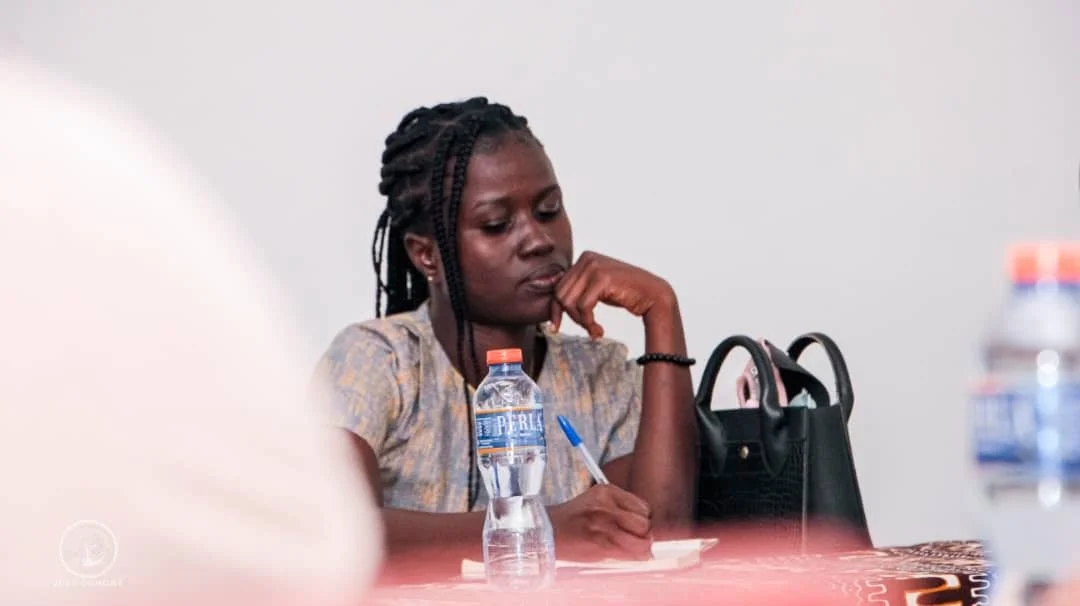
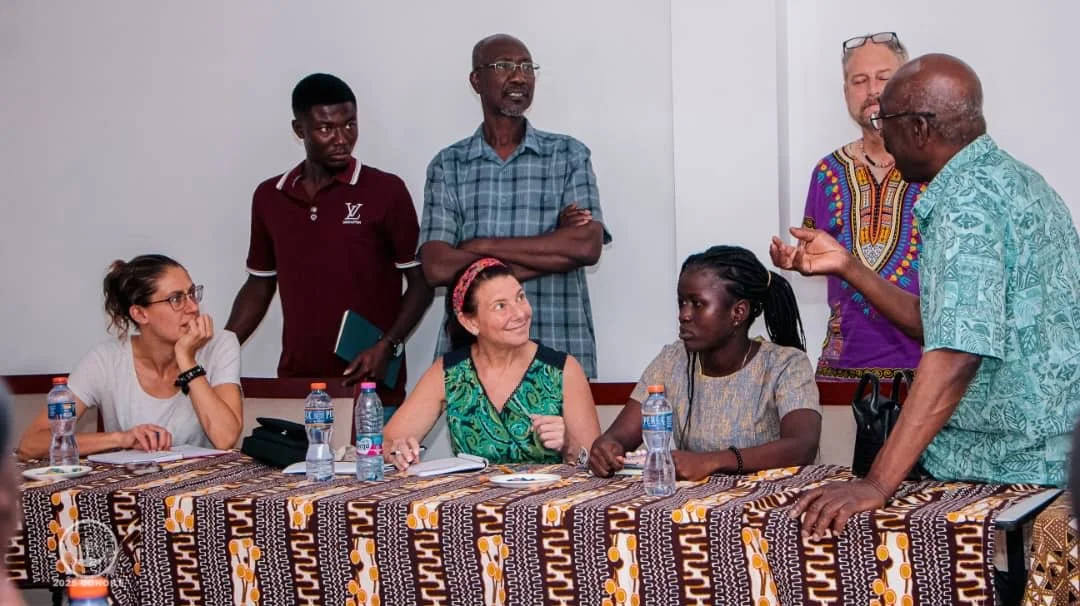
From Self - Doubt to Self Discovery: A Journey of Growth, by Patience Obeng

There were times in my life when I constantly second-guessed myself. Every decision I made, every word I spoke, every step I took felt like a test I wasn’t quite ready for.I often found myself wondering, “Am I really good enough? Smart enough? Capable enough?” Hmmmm.

It wasn’t that I lacked ambition. If anything, I had too much of it. I wanted to grow. I wanted to achieve something meaningful. I wanted to make a difference. But somehow, I started to believe that others were more equipped to do those things than I was. And that quiet inner voice of self-doubt slowly became a constant companion.

Everything began to shift the day I faced a challenge I simply couldn’t avoid: joining WTIG. Honestly, the subject matter terrified me. I feared failure. I feared being exposed as "not enough." But for the first time, I didn’t move out of pressure ,  I moved out of purpose. I knew deep down that I needed to grow. And real growth? It never comes from staying comfortable.

The first few days were tough. I questioned myself at every turn. I struggled to keep up. But then, something unexpected happened. I began to enjoy the discomfort. Every little win, a concept I grasped, a task I completed, a doubt I silenced began to build my confidence.And that’s when I realized progress doesn’t always make noise.Sometimes, it’s quiet, Gentle. Found in the courage to keep showing up. That experience didn’t just change how I learn, it changed how I see myself. As I’ve felt part of the WTIG program, I’ve stopped viewing self-doubt as a weakness. Now, I see it as a compass. It doesn’t mean I’m not good enough. It just means I’m on the edge of growth. I’ve learned to ask better questions, to reach out for support, and most importantly to be patient with my journey.

Even now, I still face challenges. I still have moments of uncertainty.But the difference is I don’t run from them anymore. I face them with a little more courage, a little more faith, and a deep understanding that every step, no matter how shaky, is still a step forward.


Patience Obeng
Career Technology and Creative Art and Design teacher at Asuboni Rails M/A Basic School in the Eastern region.

Nyansa Kuruwa by Kwasi Agyei

“What an elder sees while sitting, a youngster standing on a mountain may never see.” – Ghanaian Proverb

This proverb hits differently when you really sit with it for a while. I used to wonder — what are elders seeing that the youth don’t see?

 The answer: maybe they’ve lived? They’ve seen heartbreak, joy, loss, miracles, setbacks, love, and more. They carry a thousand life times of wisdom — not learned from printed pages but earned through experience.

During the Witness Program, something beautiful happened.

 We didn’t just sit in front of screens or textbooks. We immersed ourselves in African literature, songs, stories, dance, and rhythms that speak louder than printed words ever could.

 We learned not just with our heads  but with our hearts.


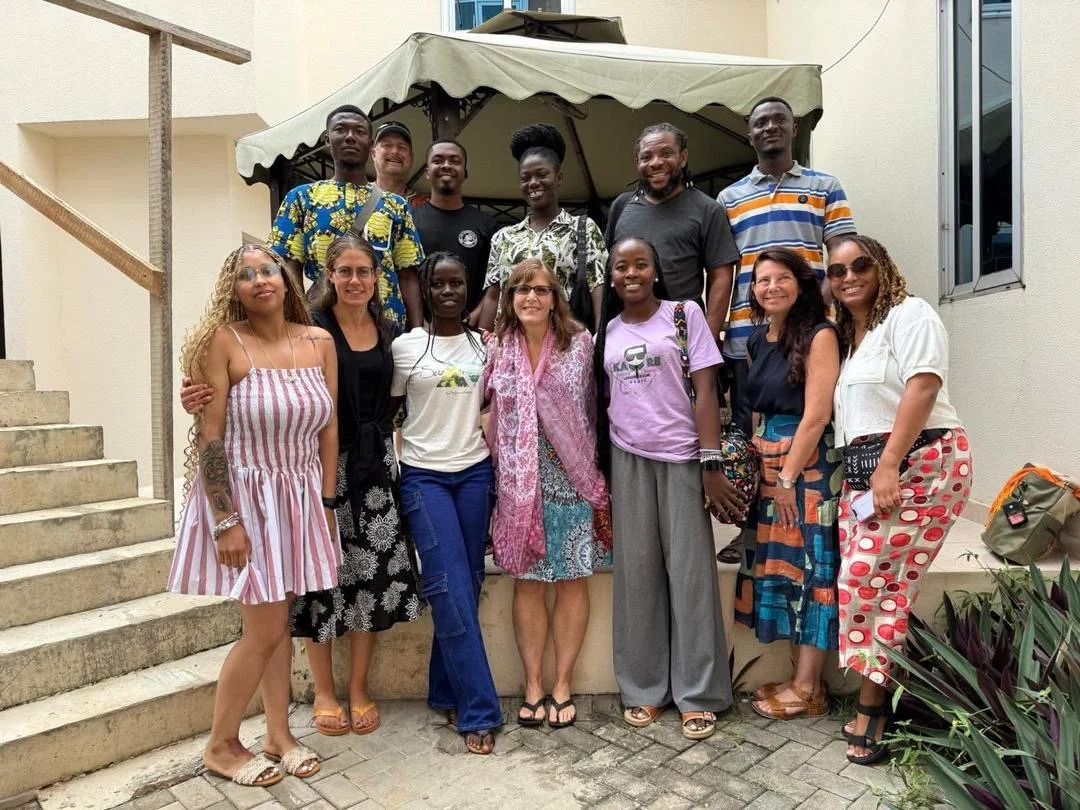
My “siblings” from both Ghana and the USA made a bold decision to find out to step out of our comfort zones, leave behind our fears, and embrace an unknown adventure.

 We have no clear roadmap. No promises. But we say to ourselves, 'Que sera, sera whatever will be, will be.'

There’s a song by the Ghanaian-Carribean Afro Rock band, Osibisa, that echoed the core and aspirations of our WTIG journey, “We are going, Heaven knows where we are going 
We know we will
. We will know we're there...
It will be hard, we know 
and the road will be muddy and rough
 but we'll get there…”


It wasn’t just music, it was our anthem. Through challenges, joy, exhaustion, and breakthroughs, this song reminded the Witness Tree cohort Nyansapo that we’re moving forward with unique learning, and we’ll succeed.

I’ve heard it too often:, “If you want to hide something from the African, put it in a book.”

 It used to sting. I thought it meant we just don’t like reading. But the truth runs deeper than that.

 It doesn’t mean we’re not curious. It means our stories, our truths, haven’t always been written in ink. They’ve been sung, danced, drummed, and spoken into generations.

Reading isn’t just about flipping pages. Africans have always read; just in ways often overlooked. We read the beat of the drum and movement.
' Glem to, Glem to , Glem to - to- to, Gi- dim, Gin - Ga. 
We read stories passed through songs.
 We read proverbs, riddles, poetry, and symbols.

Some learn by hearing. Some by seeing. Some by doing.

 So yes,  we read. And our libraries aren’t just buildings. They are people. They are moments. They are our way of life!

The Power of Gracious Space by Elise Mott

Ti koro nko agyina: one person does not hold council, is the Ashanti proverb that teaches us the importance of wisdom and deep learning that we benefit from as part of a collective. It helps us to realize that a council is a powerful force, especially when we recognize our capabilities to engage in a supportive space when we are together. 


The Witness Tree Institute’s first cohort can be guided with wisdom through their trip by creating gracious space. As a teacher who helped lead a trip two years ago, I felt that sense of collective joy and engagement, through the concept of gracious space, a foundational principle of WTIG. As defined by the Center for Ethical Leadership, “gracious space creates a foundation for building a space of belonging for a diverse group of people to engage in deep listening and shared learning in time of complexity and change.” When I apply this principle to my Ghanaian experiences, I start to realize the power of experiential learning when a gracious space is created. By building trust, our cohort was able to feel a sense of freedom and spontaniety. This translated to a collective sense of belonging through sharing, music and dance. 

As I reflect on gracious space, I think about my own transitions over the last four years. I left a school where I worked for decades, to a brand new “start up” school, and then after three years, I returned to my “old” school. There are so many reasons for why I left, and why I returned, but in the midst of it all, I am trying to think about the larger lessons and roles I’ve played and how I applied lessons from Witness Tree to my experiences.  At the “new” school, I felt a lack of community as the school was in its infancy and everyone was working to create “systems” to be able to run the school. It felt like something was missing, and I worked to connect students and faculty through music. While there was no music program (and I don’t read music) I worked to have students sing songs and create skits. In Ghana, singing and dancing are part of the informal education of all students and it’s beautifully spontaneous. Witness Tree bus trips turn into moments of gracious space, where everyone is smiling inside and out. At my “old school” I love the moments where all 350 community members sing in All School Meeeing. There’s a sense of collective joy. We are creating something together. These moments sustain me during a busy and hectic school year. 

As the first cohort gears up for their adventure, may each participant feel the beauty of gracious space that is created through songs, dance, and shared adventures. The learning from this trip will sustain you over time. It will inspire new wisdom that you can pass on to your school communities. The ripple effect of your participation in this program will be felt by everyone you touch. 

Elise Mott teaches English at The Fenn School and is on the Board of The Witness Tree Institute of Ghana. 

Juneteenth by Elizabeth U Cobblah

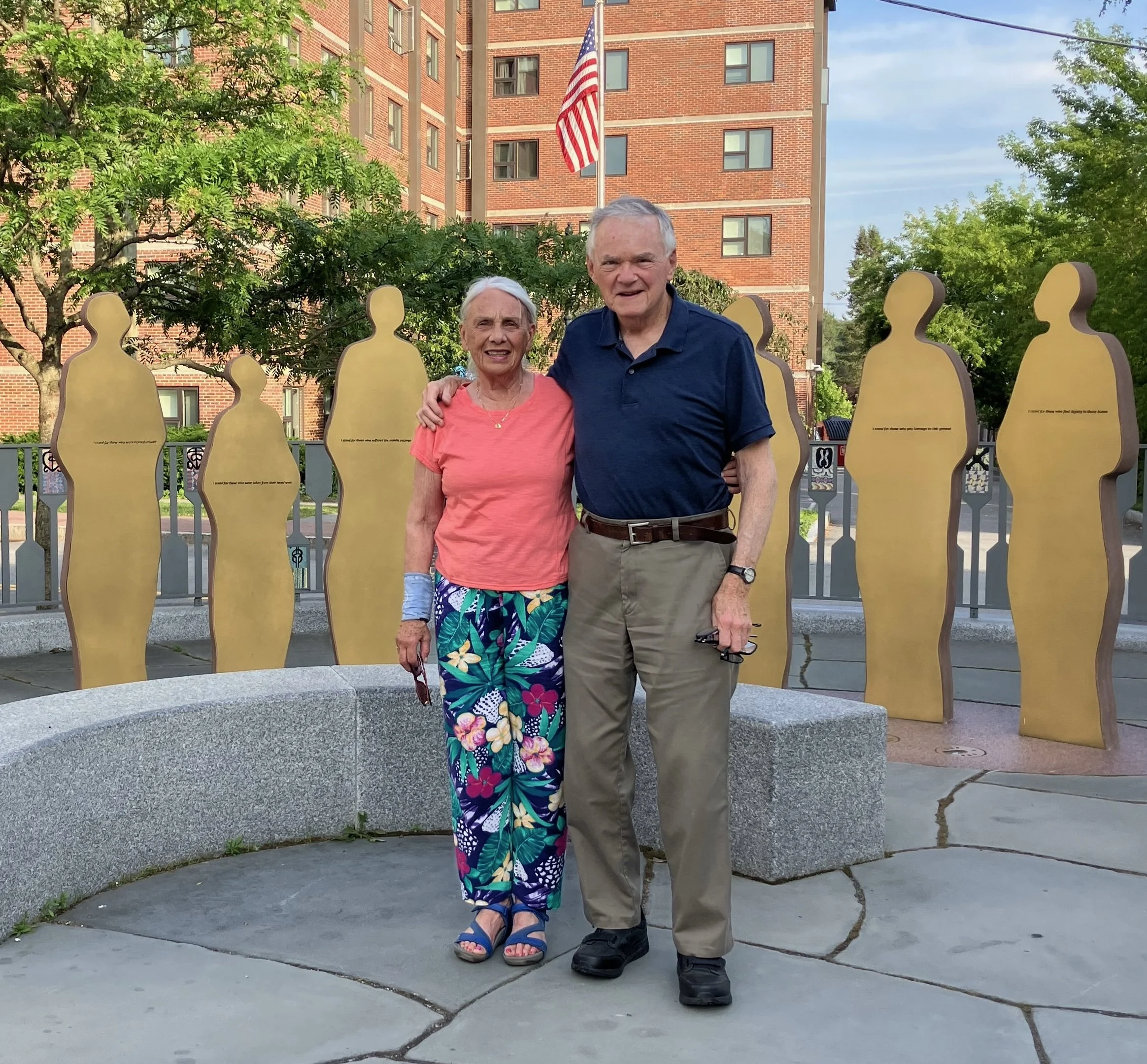
This year, with Tete already in Ghana for family obligations, the Witness Tree Board did not hold its annual June retreat; however, three board members and three supporters met in Portsmouth, New Hampshire for a Juneteenth celebration. We followed a marching band for almost a mile from Kittery, Maine across the Piscataqua River Bridge to the African Burying Ground Memorial in Portsmouth for speeches, prayers, remembrances, singing, drumming and dancing. We were reminded by the speakers that “the future of freedom rests on all our shoulders” and “Freedom is never voluntarily given by the oppressor; it must be demanded by the oppressed” (MLK) and that we ALL need to contribute to the healing of America’s troubled past - that “tough and sometimes uncomfortable conversations bring us closer.”  African Americans are a small percentage of New Hampshire’s population, but they have had an important presence there for over 300 years. The Burying Ground dates to the 1700s and is believed to be the oldest known one in New England. Many others may be lost to development, as was this one. Until it was found.

Witness Tree friends about to cross the Piscataqua River Bridge

When Juneteenth became a national US holiday in 2021, the Witness Tree Institute was preparing to run its first session. Board members met for their second annual retreat in Vermont on a weekend that auspiciously included both Juneteenth and the Summer Solstice. The month of June in New England can be so welcoming and liberating – full of fragrance from blooming catalpa, linden, milkweed, increasing warmth and long daylight hours, lending itself to feeling free and gathering outdoors! Our first retreat was in June 2020, while the pandemic was in full swing, but we could occupy green open space to do the work of WTIG, and also celebrate! The Board aims to hold its annual meeting  around this time, partly because the school year is over, but also because we derive so much energy from Juneteenth, believing that it shares some DNA with Witness Tree!

Akwaaba Ensemble of Manchester, New Hampshire approaching the African Burying Memorial

Themes of welcome (Akwaaba), affirmation, freedom, joy, shared history and (re)claiming identity all contribute to a more just and promising future for schools, communities and families. The Witness Tree Institute and Juneteenth strive to be living, adaptable bridge-builders spanning histories, races, generations and cultures. Both ask, “how can we honor our ancestors?” Both implicitly ask, “What does it mean for us today to be a good ancestor?” Both have justice at their cores and explore the many aspects of freedom that Americans continue to strive for. Both Juneteenth and Witness Tree celebrate the beloved community with shared food, song and dance following the work of the day. So, here’s to what sustains us and here’s to the planting, harvesting and eating of okra, corn, groundnuts, beans, collards, plantain, strawberries and watermelon growing on either side of the Atlantic! Here’s to witnessing and wishing the 2025 participants a joyful, productive and liberating time together.

– Elizabeth U Cobblah, retired art teacher Fenn School, Concord Massachusetts

Portsmouth friends at the African Burying Ground Memorial.