Homeward Bound by David Duane

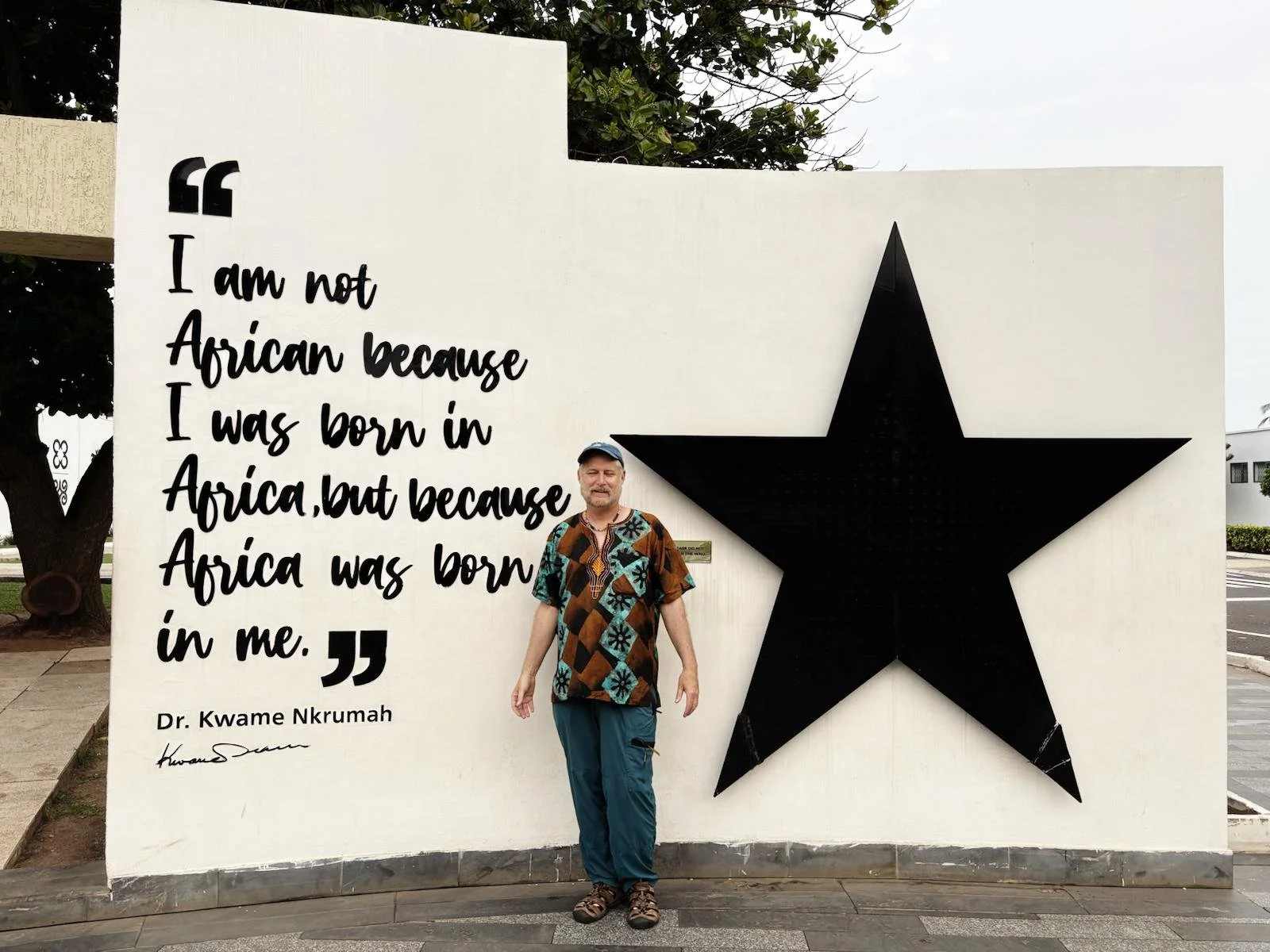
"I am not African because I was born in Africa, but because Africa was born in me"  Kwame Nkrumah

As a white American who descends from European immigrants, that quote is awkward to say.  It makes me feel like a square peg in a round hole - something that doesn't quite fit. My lineage traces primarily to Italy and Ireland, with smidgeons of other northern European ethnicities mixed in.  I am a classic mutt, but entirely from within the confines of Europe, or so I assume.  Looking at me, you would have little doubt about that assertion.  Surely, I am not born in Africa or connected to the continent.

Yet upon further reflection, the square pegs’ edges round.  I am indeed born in Africa.  Africa is born in me.  We are all of Africa.
Africa birthed us.  Our species, Homo sapiens, evolved and was born in the forests and plains of Africa.  From there intrepid souls migrated and spread out to all corners of the globe.  This heralds Africa as the birthplace of humanity. That initial human population was small, a genetic bottleneck that leads to a noteworthy and startling fact.  Genetically speaking, we are practically the same, much more so than other species.  This makes Homo sapiens a unique limb on the tree of life.  As brothers and sisters each of us is more closely related to each other than individual members of other species are related to each other.

Humans share with each other 99.9% of DNA, the material of our genes.  The genetic alphabet soup of A, T, G, and C that write our collective genetic story is nearly the same in all of us.  There are a few differently spelled words in this DNA language.  This contributes to the beautiful expression of diversity within humanity.  It is only that .1% of difference that results in all of the multitudes of variations of traits and characteristics that contribute to that beauty.

That minute difference has also caused harm and injustice.  It is because of biased interpretations and power dynamics that the mere .1% difference is distorted as the twisted rationale to the constructs of systemic racism, inequality, and injustice that can result in crimes against humanity.  But the fact remains, genetically speaking, we are as close to clones as we can get.  And the birthplace of that combination of genes was here, on the African continent.  All of humanity descended from Africa.

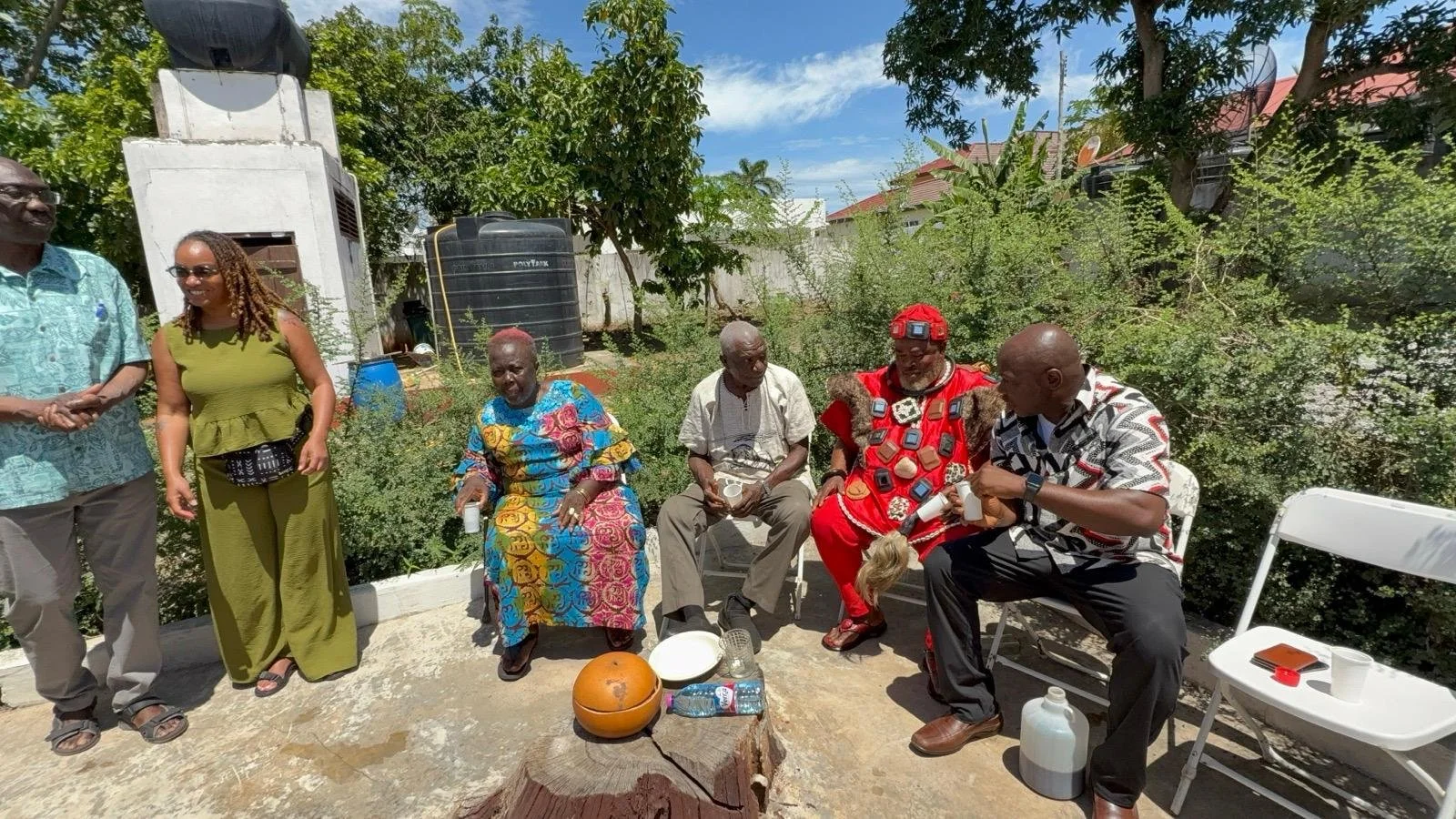
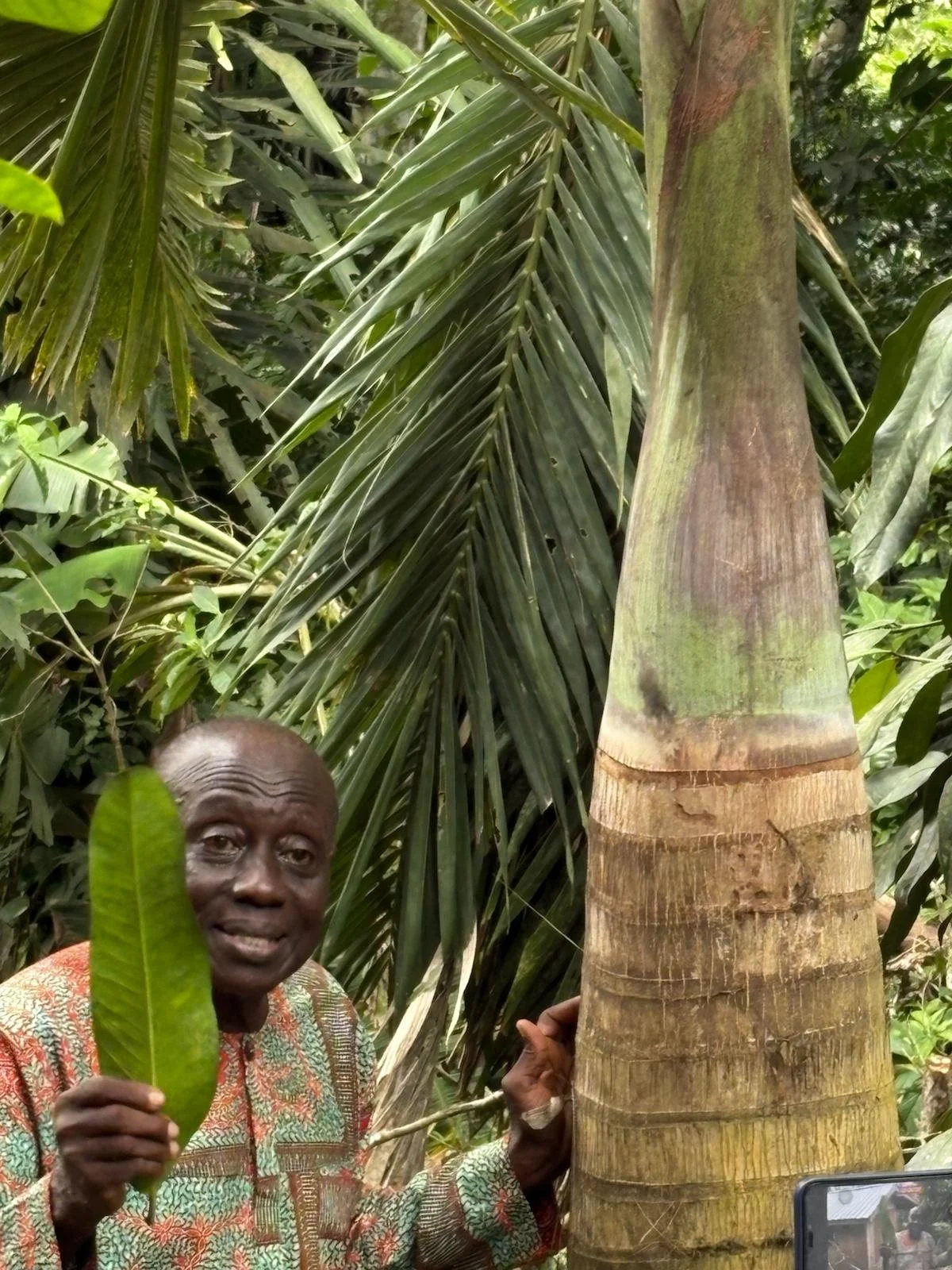
The Ga people, whose traditional lands consist of the coastal strip that encompasses Ghana's capital, Accra, acknowledge this.  They welcome us.  Specifically, they welcome us home.  They invite us to connect with humanity.  They invite us to connect with our ancestors. They invite us to re-connect to our birthplace.  In the Welcoming Ceremony the Ga Elders ask for your Ghanaian day name that is based on the day of the week you were born, and ask to cite those ancestors you brought with you. Because I was born on a Saturday, my name is Kwame.  The ancestors brought with me are Jack and Rita, Alfred and Theresa, John and Ina.  The ritual proceeds by consecrating the land with alcohol, imbibing spirits, and connecting to land physically, emotionally, and spiritually.  Welcome home!  Akwaaba!  Wherever you have been, you are welcomed, though that Twi welcome is distinct from the Ga term.
Coming home to Africa is a spiritual transformation. African spirituality is not just ancestral and a thing of the past, but is a living and breathing entity within each one of us.  It is holistic and purposeful. Ignoring the distractions and fragmentations of contemporary life to come home uncovers a wealth of connections and spirituality that our consumer oriented society prefers you to forget.

Professor Pashington Obeng reminds us of this during our visit to Aburi and Ananse Kwai, a preserve of medicinal herbs and purposeful plants.  African spirituality is a way of life that requires us to earn our 'personhood' to fully become an ancestor one day.  Achieving such requires living a moral life to become a better person that connects to the community, the land, and the ancestors.  Within this ethic is a cycle of living and learning where the beginning is the end and the end is the beginning.  This runs counter to the hyper-individualistic linear worldview that slices and dices the community with the intention to benefit the few.
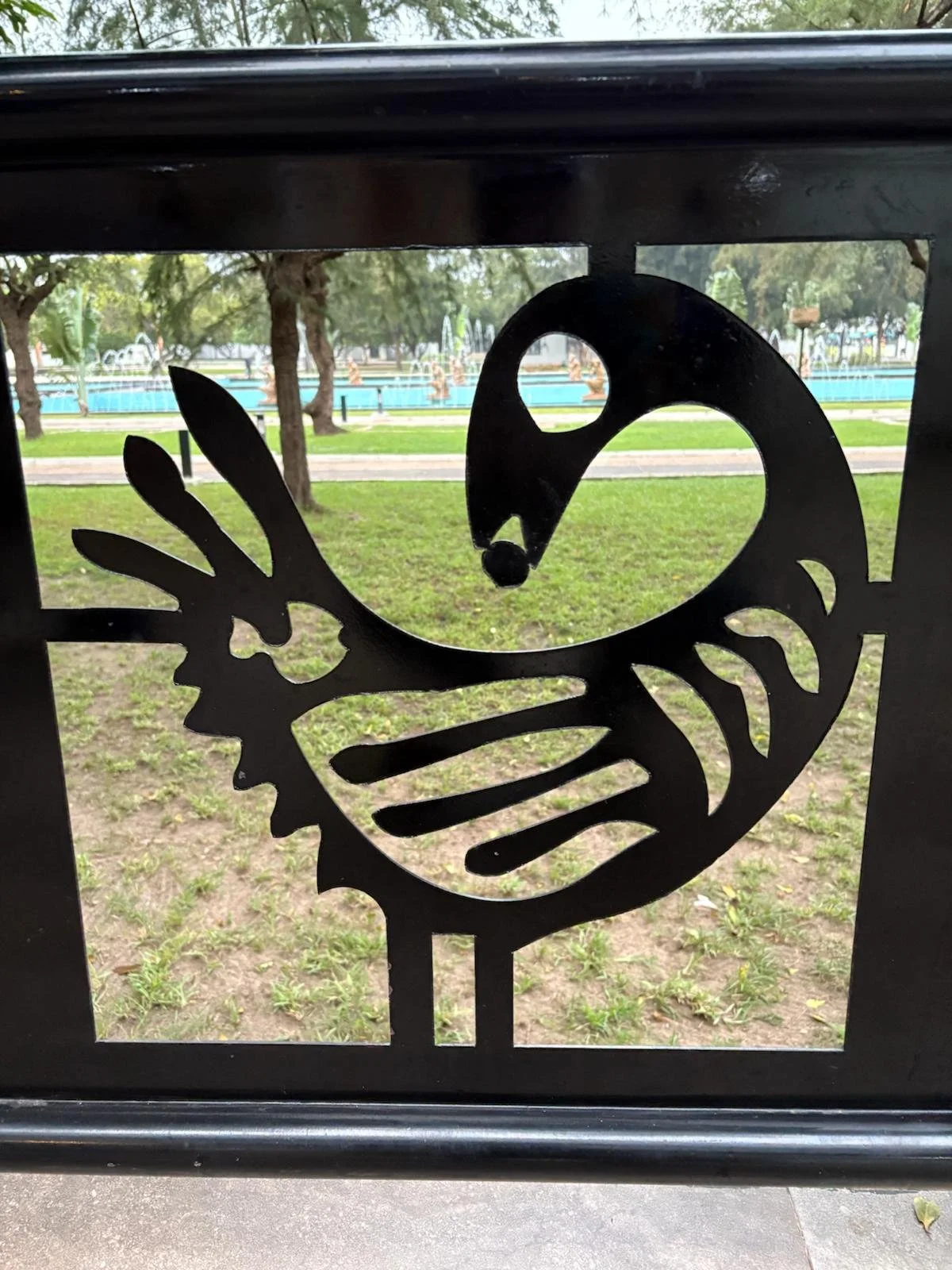
In African spirituality, birth and death are not the beginning or the end, but part of the ancient cycle of living and learning.  This dynamic is represented by the Adinkra pictograph, Sankofa - learning from the past to move forward into the future.  And it is in this sacred land, where humanity's birth is commemorated, and our human essence revealed.  Sankofa is within. The cycle continues.

The Witness Tree Institute of Ghana brings us home to that birthplace.  It is here in Ghana where we invite the stranger within to reconnect, and to shed preconceived notions of what it means to be human.  It is here in Ghana where we experience the essence of humanity.  It is here where we can state with assuredness, that Africa is born in us.
David Duane

Chair of Science Department, Fenn School and Board Member of The Witness Tree Institute of Ghana
Walking Above Fear: How a Canopy Walk in Ghana Helped Me Rise Above My Heights by Tricia Writer

There is an Akan proverb, “Nea owo aka no pen no suro sonsono,” (He who has been bitten by a snake before is afraid of a worm.) This proverb illustrates that past negative experiences can lead to heightened caution; it also implies a need to overcome lingering fears.

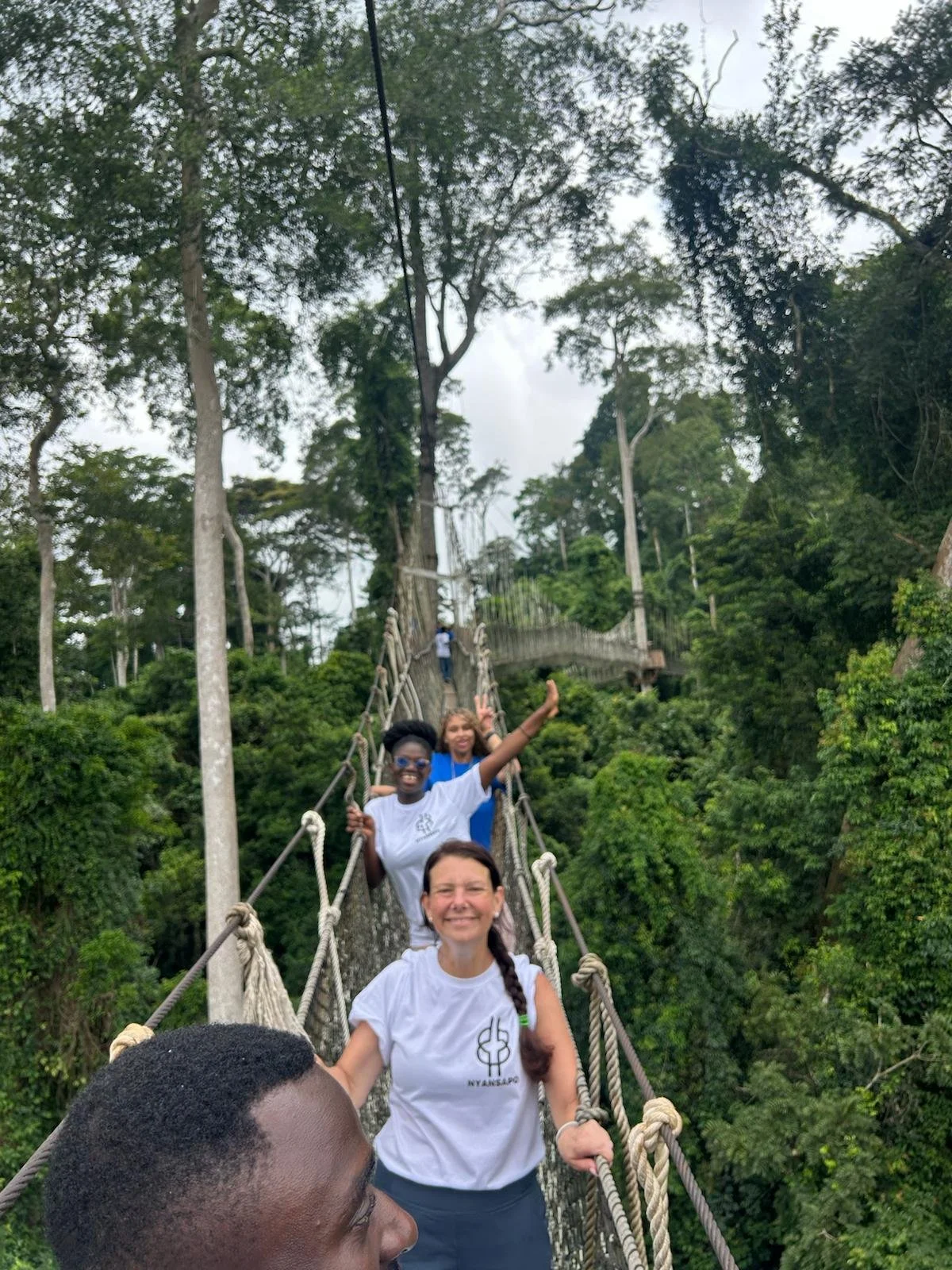
For as long as I can remember, I’ve had a fear of heights. Not the fear you can talk yourself out of easily; it tightens your chest, distorts your thinking, and renders you frozen in place. So when I first learned that our group, made up of Ghanaian and American educators, would be doing a canopy walk in Kakum National Park, the anxiety cycle began.

What I didn’t expect was how our journey leading up to that moment would prepare me more than I realized.

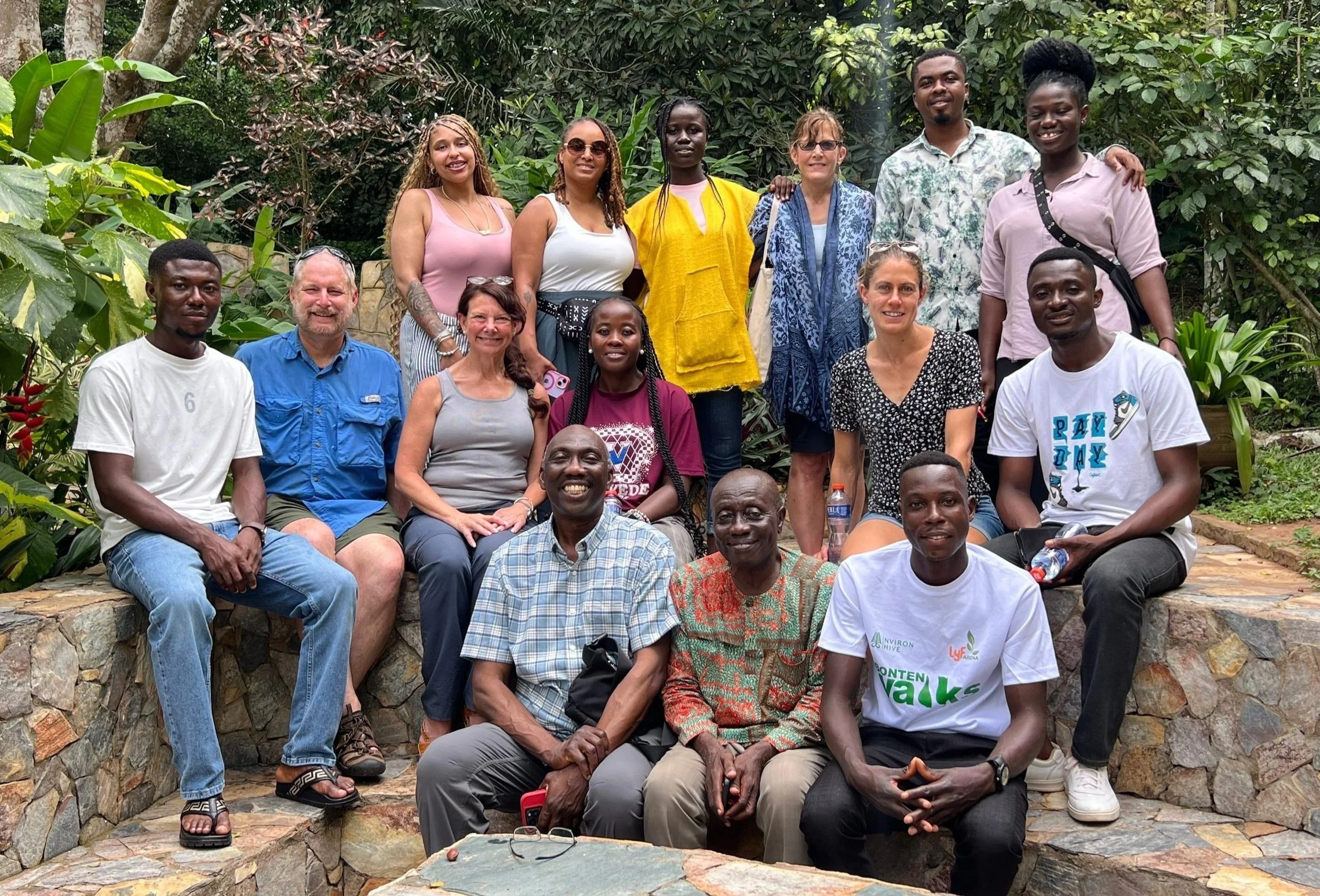
Over the course of our time together, our group of teachers shared stories, laughter, meals, educational philosophies, and personal stories. We talked of our students, our challenges, and what inspired us to teach in the first place. Slowly, we built something far more stable than the rope bridges that lay ahead; we built trust.

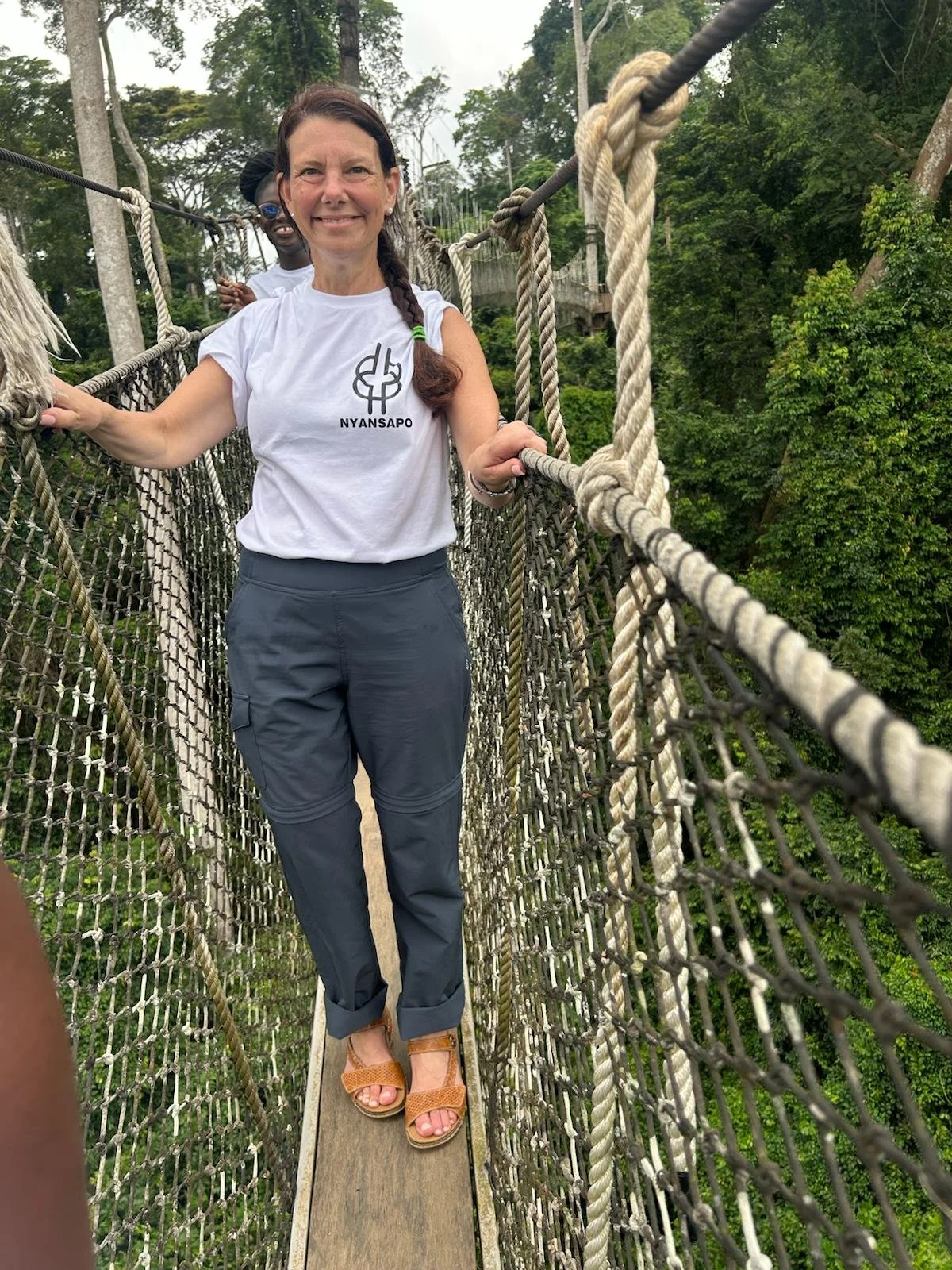
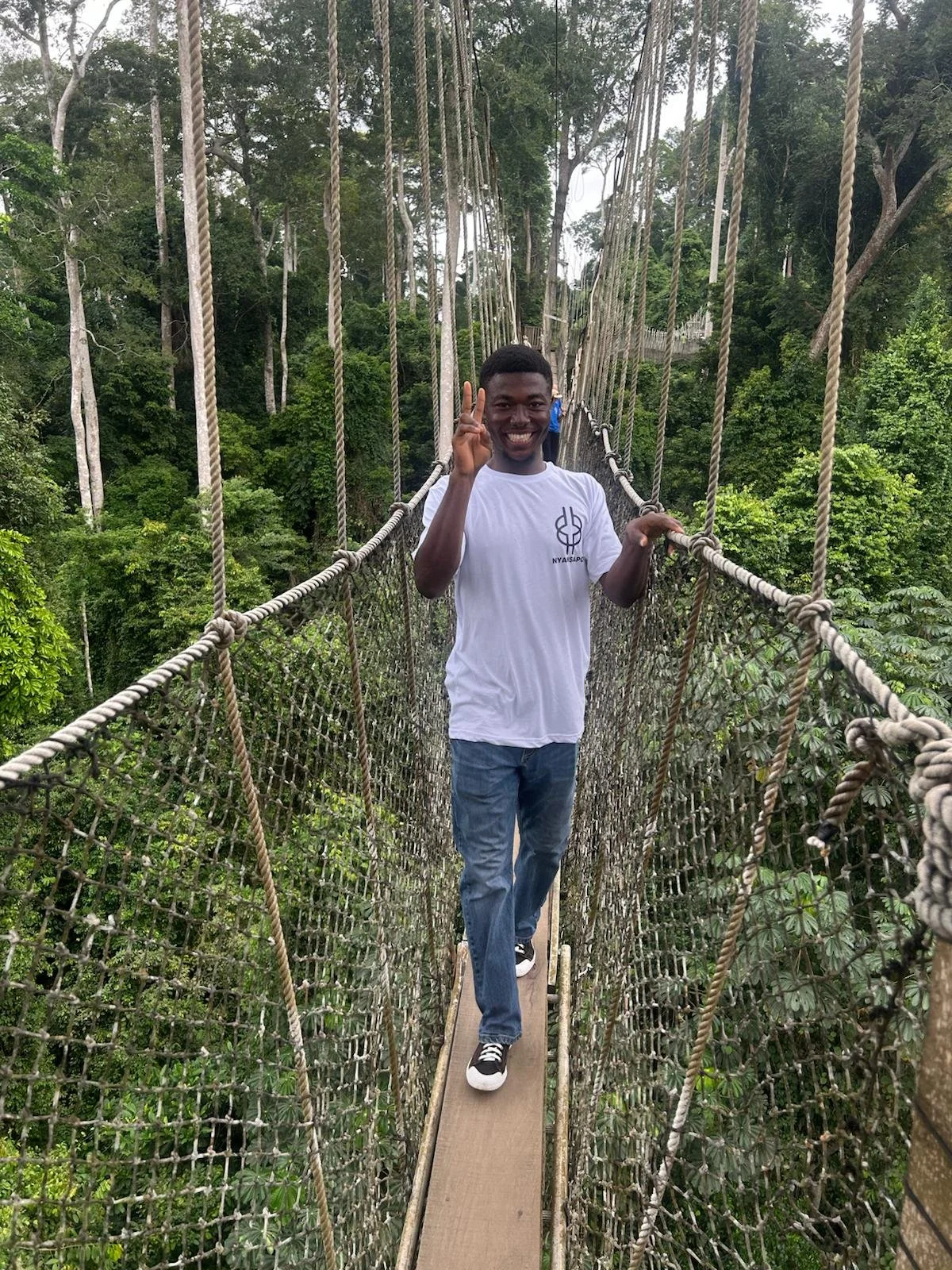
The morning of the walk, my feet planted at a crossroad, I saw before me a shortcut to the left and to the right, suspended over 50 meters (164 feet) at its highest above the rainforest floor, stretched an expansive canopy walkway: Seven narrow rope bridges swaying between ancient treetops. Spanning 330-350 meters (1080-1150 feet) in length. The walkway itself was composed of one singular plank.

Beautiful? Yes. Terrifying? Absolutely. My Ghanaian and American colleagues surrounded me, cheering me on. I was not alone. Some cracked jokes to lighten the mood. Others simply stood by me in silent support to help me summon courage.

With their encouragement, I took the first step to the right. And then another. The bridge rocked creating an unsettling creaking noise. I kept moving in pace with my friends ahead and behind. Now, with my chin up and my eyes forward, I saw my group, waiting, smiling, arms open. Step by step, remnants of fear gave way to awe. I wasn’t walking above the forest, I was walking above fear itself.

There’s a Ghanaian proverb that says: “Fear is only as deep as the mind allows.” That morning, I realized how true that is. Left to my own devices, my fear of heights might have held me back. Supported by a community that believed in me, I was able to see that fear wasn’t the end of my story, it was the beginning of something braver.

The canopy walk wasn't just about facing a fear of heights. It was about the power of shared experience, cultural exchange, and human connection. It was about rising together.

And now, when fear shows up in my life again (as it always does), I think back to that day in the treetops. I remind myself that I don’t have to be fearless. Instead, I must act as though it is impossible to fail and just keep walking.

Tricia Writer is a 5th grade Language Arts and Social Studies Teacher at The Fenn School in Concord, MA.


The Language of Humanity by Barbara Beachley

I have always been fascinated by language as the process by which humans create meaning, understand themselves, and come to understand one another. 

Helen Keller, who was born blind, deaf, and mute, described the pivotal moment when her teacher placed her hand under running water and signed the word for it. She called the discovery of language the awakening of her soul—giving it “light, hope, and freedom.” While blessed with all my senses, I’ve experienced how language opens doors to connection and understanding. When I learned French, Spanish, and later Portuguese, I recognized the power of communicating with people in their own language. Some words and concepts simply don’t exist across all cultures—not because they are untranslatable, but because they are unnamed. One such word I’ve learned in Akan is “sankofa,” which translates to “retrieve,” indicating the act of reaching into the past to retrieve valuable lessons, and using those to inform how we move forward, just as the bird in the symbol is reaching back for her egg.

The Witness Tree Institute of Ghana is rooted in the idea that “if we pay close attention to our lives and our responsibilities to one another, we will see that we are all witness trees bearing quiet testimony to the historical, emotional, and consequential events unfolding around us.” That has certainly been true for me and my new Ghanaian, Cameroonian, and American friends, whether through intentional conversations designed for reflection or casual exchanges on the bus and around the table for meals. 
But communication in Ghana does not happen through words alone.

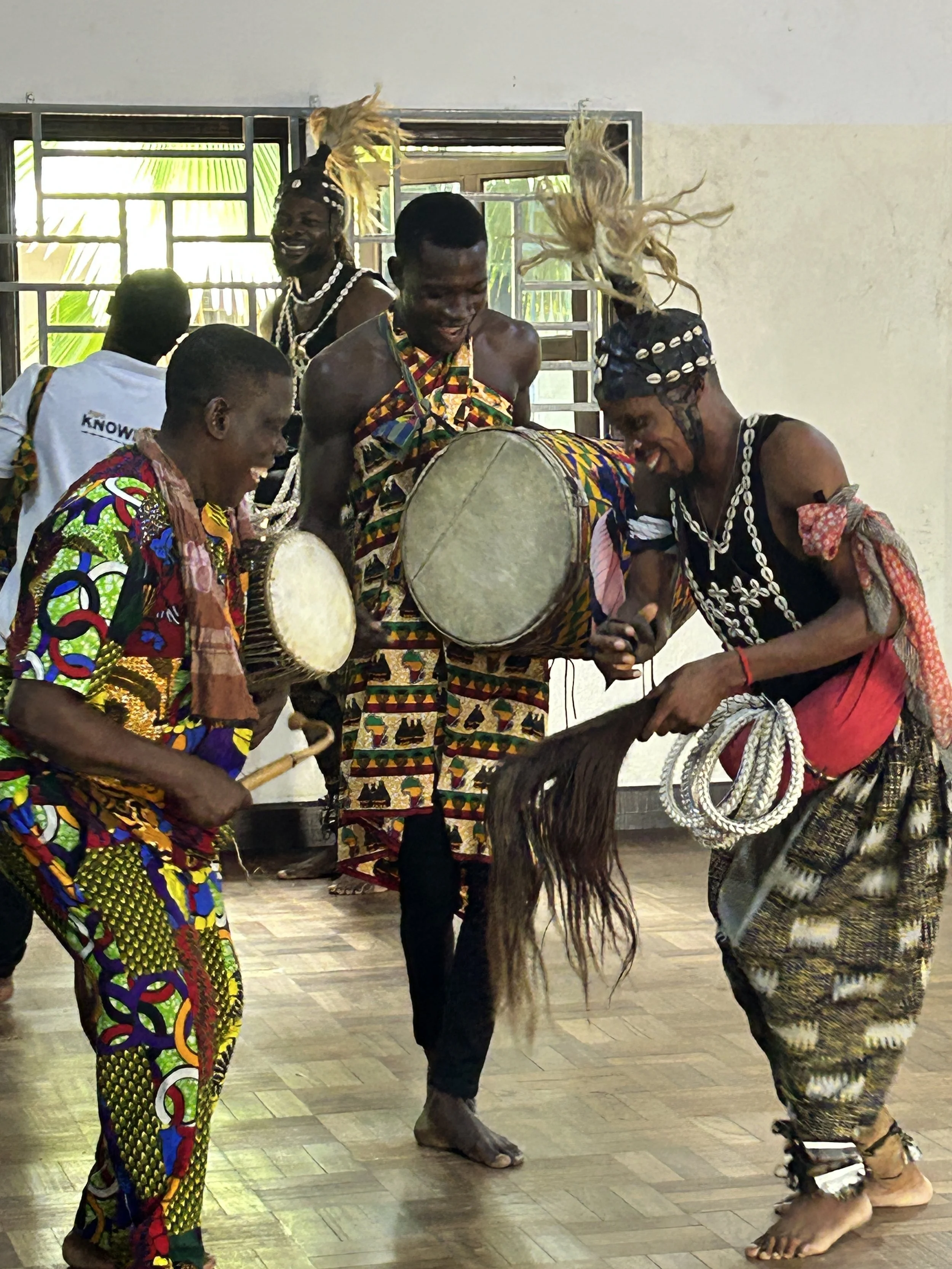
Every drumbeat carries meaning. The master drummer, without words or gestures, can guide other musicians and dancers in a shared rhythm of understanding. Woven cloth tells stories; patterns and colors are symbolic. Even the way clothing is worn sends a message. Eating from a shared bowl conveys unity and trust. And colors in national or cultural flags offer visual language for the proud identities of those who display them.

And then, there are moments when adequate words simply do not exist, no matter how many languages you speak. 

That was my experience at the site where enslaved Africans were forced to take their “last bath” before being sold at market. Many had walked as far as 400 miles with no food, water, or clothing. Once at the coast, they were intentionally separated from loved ones and imprisoned in dungeons—waiting in unbearable conditions for the arrival of ships that would kill many and take those remaining to even greater anguish. In those moments, I had no words. Only tears. Tears for the unimaginable suffering. Tears for the families torn apart from their ancestors. Tears for humanity’s capacity for cruelty. And tears of injustice for the privileges I was born into that I did not and could never earn.

Yet, in the midst of pain and reckoning, I also witnessed the language of humanity.

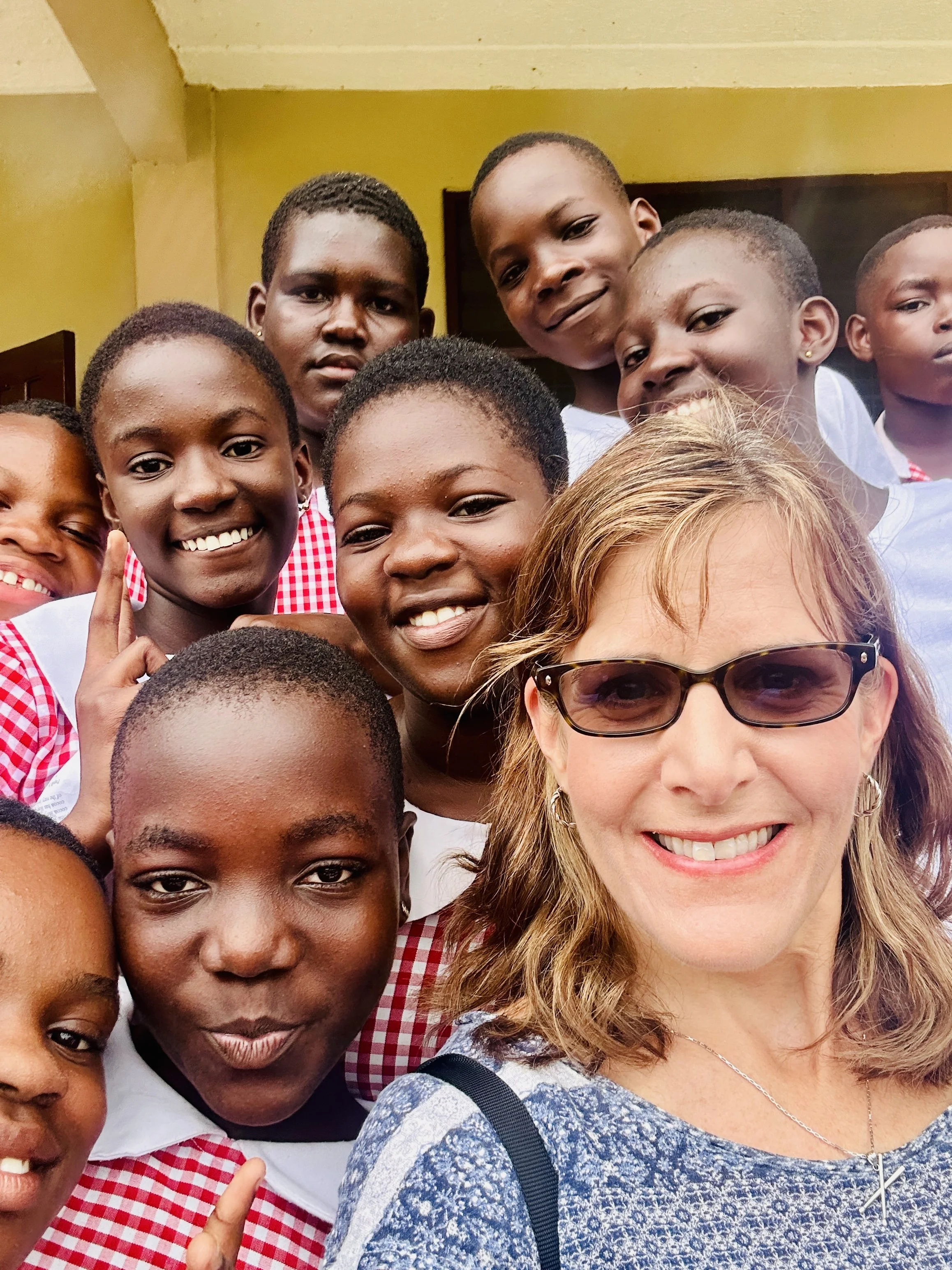
A proud father holding his daughter’s hand with quiet tenderness. Siblings walking to school, fingers interlaced. The bright smiles of schoolchildren and elders. Old friends clapping one another on the back. These small gestures remind me of the joy and love found everywhere when human beings are in connection with one another.

As an educator, I hold a deep responsibility to keep learning. As Maya Angelou said, “When you know better, do better.” Being in Ghana and bearing witness to its stories, symbols, music, and people has felt like a path I was called to take. I didn’t know exactly why I had to be here, only that I did, and that it would change the trajectory of my life.

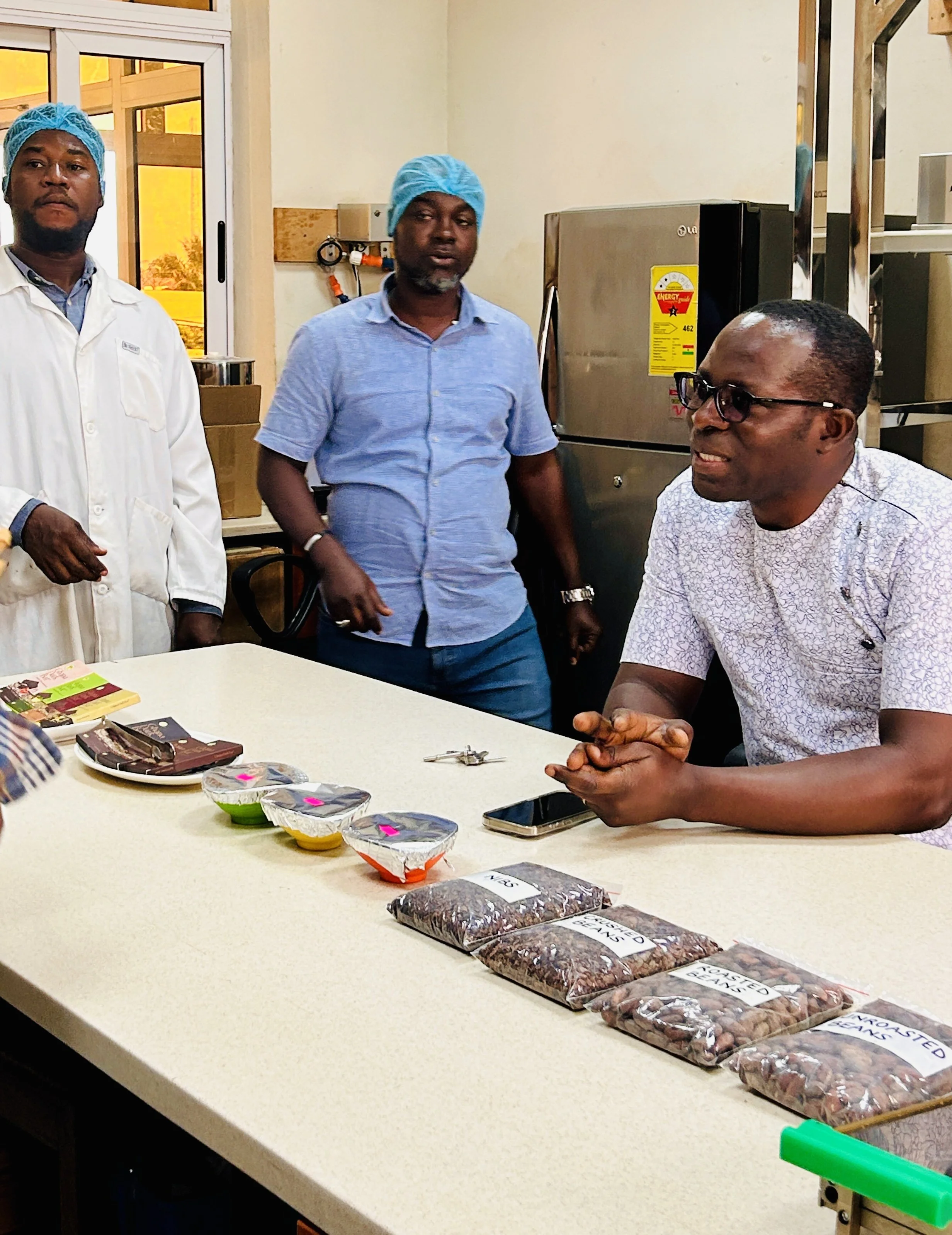
Most Americans, including myself, know very little about the African continent—much less about the beauty and complexity of its many cultures. What we do learn is often filtered through a narrative of pity or of being exotic rather than admiration. Now, through this transformative experience and the relationships I’ve formed with Ghanaian educators, I feel a renewed commitment to shift that narrative to communicate, among many other things, the exacting science of the cacao research center, the technology and engineering being used for centuries, and the dedication of the country to high school education for all citizens.

At a time when my country is closing its borders—out of fear, greed, or hatred—I wish every American had the opportunity to leave and look back at ourselves from afar. To challenge the assumptions we’ve inherited. To really hear the voices of others and the shared humanity they reveal.

Above all, I will return home filled with gratitude. Gratitude for the warmth of the people I met. For the wisdom of Ghanaian educators who welcomed me into their classrooms and communities. For the many forms of expression, spoken and unspoken, that deepened my understanding of history, culture, and connection. And for the enduring lesson that language is not just about words—it’s about presence, empathy, and the willingness to witness.

Barbara Beachley is Head of School at Charleston Day School, Charleston SC.

Returning by Ain Heath Drew

I’ve traveled for a long time to get to a place I’ve longed for. A place where, when my feet met the ground, I felt that I’ve come home. In the ocean’s waves dancing toward the coast, in the whispering of the river, in the rhythm of the drum, in the cricket’s song and the rooster’s crow, I hear “Akwaaba.”

It’s said that when someone from the diaspora visits the continent, the ancestors return with us. It is my prayer that my ancestors found their way back long before my visit. My prayer is that they were here to welcome me.

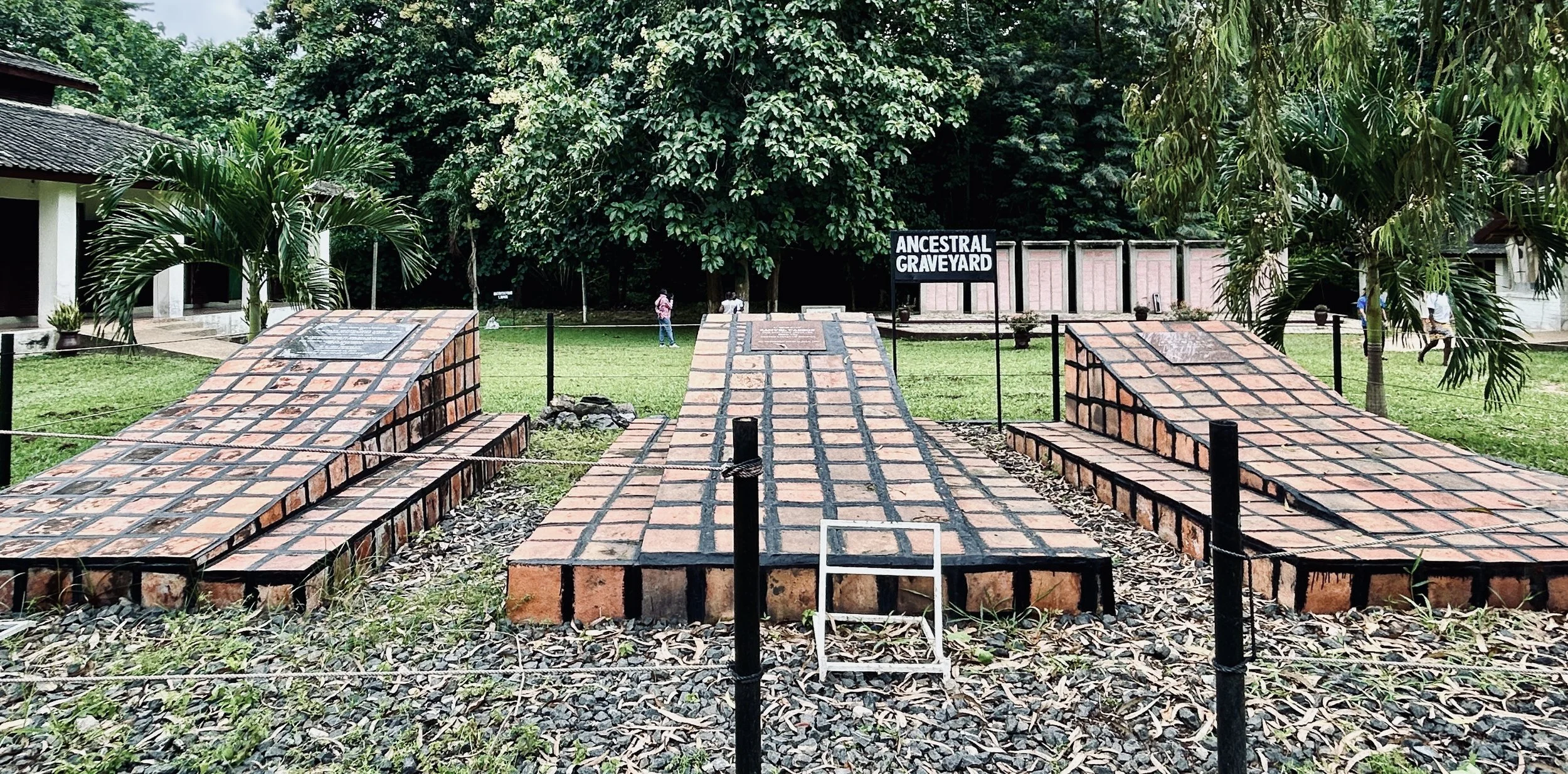
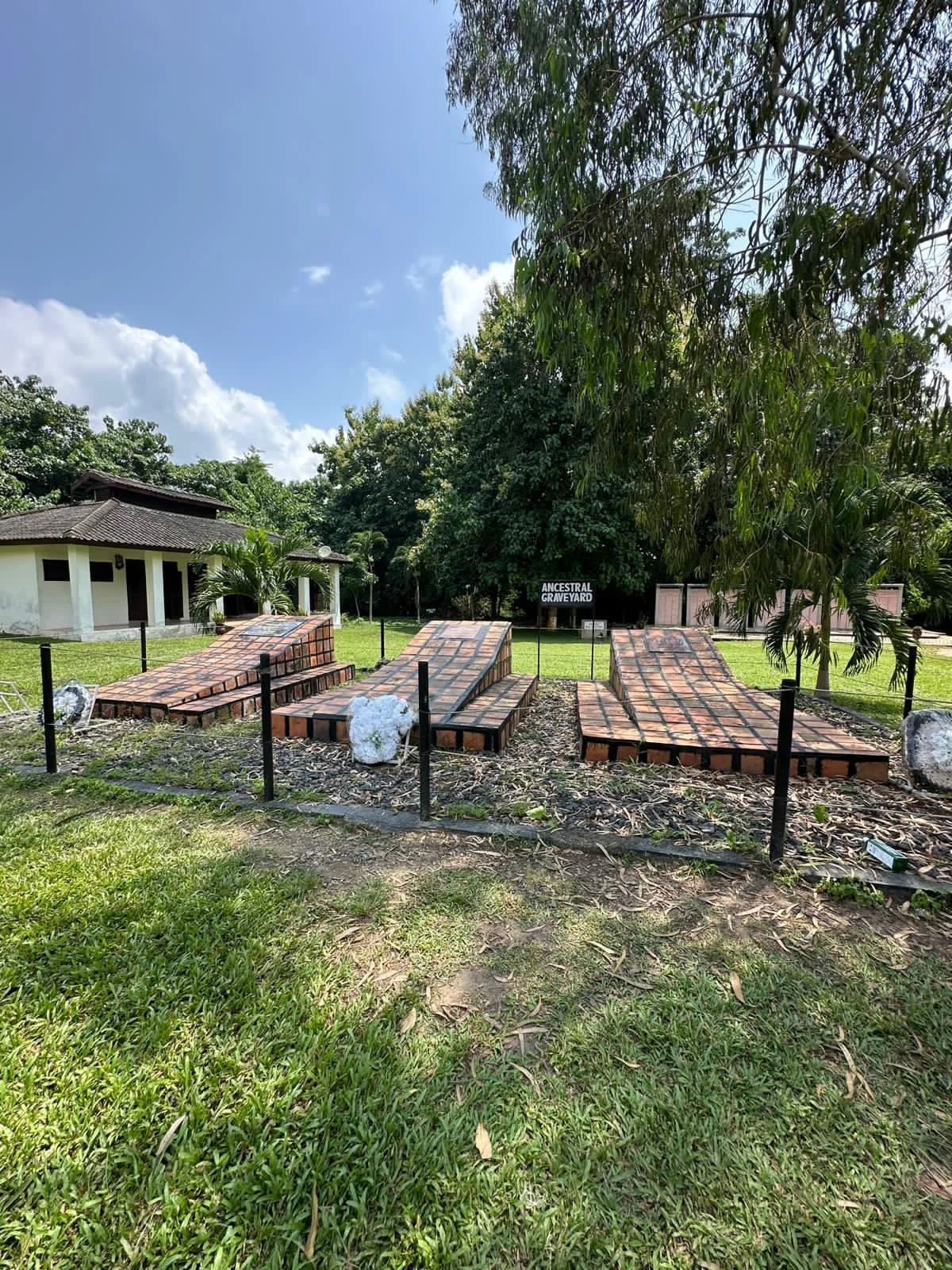
My family has been able to trace our ancestry back to a slave plantation in Georgia. My 4th great-grandmother Jane was a half-African half-Irish woman born in 1842. Her parents’ names are not confirmed, but records show that her father was slave owner Francis Parris, and her mother’s name was Millie. Grandma Jane transitioned after emancipation. I pray that Jane walked through the Door of Return in ancestry and that Millie was there to greet her. The idea of this spiritual freedom brings me joy.

But this joy is coexisting with profound grief.

In Ghana, I’ve discovered missing parts of myself. My soul name, Akosua, and the lessons I’ve learned here will return with me. However, I’m still processing our time at the Cape Coast Castle; how I’ll use what I’ve learned to impact others; how I, as an educator and writer, will share truths in a country so desperately trying to erase history; how I will empower scholars who are told that their history begins with slavery and continues with struggle. It’s my obligation and honor to find creative ways to help scholars connect with their stolen ancestry …

Through art, through music, through dance, through storytelling.

I truly look forward to returning to my first home and helping others find, appreciate, and show gratitude for their rich roots.

Ain Heath Drew is an educator and author based in Atlanta Georgia

Sankofa by Yvette Mohbashi

Sankofa is an adinkra symbol which means it’s okay to go back to the past and redeem yourself- ‘’Se wo were fi na wosan kofa a yenkyiri“ (It is not a taboo to go back for what you forgot or left behind). This drives my thoughts and writing today.

The Atlantic slave trade was something of the past, but visiting the slave castle and dungeons at Cape coast was a reminder of what had happened. Sitting with the thought of how captured humans were locked up and treated inhumanly in these dark, airless dungeons required  was deep reflection. I know it was a terrible experience for my ancestors. I keep asking myself why people did that to other humans No reason can justify this act of inhuman treatment. 

I know there is evil in this world but this and what I saw and experienced at the dungeon is hard to comprehend. As an African from Cameroon, how had I managed to move on with my life without knowing about the details and history of the slave trade?


The past always has something to say and has been there to serve as a tool for guidance, as was confirmed during a group visit to Uncle Tete’s mentor the legendary African musician Agya Koo Nimo. He is 94 years old, and he had some life lessons to share with us. He kept on repeating and telling the young men “…not to hit women.” 

He said he has lived this long because he treated women with respect. He also said time waits for no one and “You cannot bath in the same running water twice.” He had his concerns about the current state of learning and lack of dedication in musicians and people in general. For example, some traditional Akan drummers of the Fontomfrom have only memorized 4 beats out of the 77 perhaps out of convenience, a practice which is certain to result in the loss of the true art and its history. 

The past serves as a solid foundation for which the future can be built on. Our ancestors are not physically present with us, but we often offer libation prayers to them so that they can serve as guides for what is happening in the present.

I like the idea of Sankofa: going back and taking from the past to rectify the present. When we look at our African educational systems, borrowed from our colonial past, we realize our school curricula doesn’t address our unique problems because it wasn’t designed by us and for us. Sankofa means we can go back to some of the ways of our ancestors and see how their systems created civilizations and taught their children, and we can use that knowledge to address some of our educational problems now.

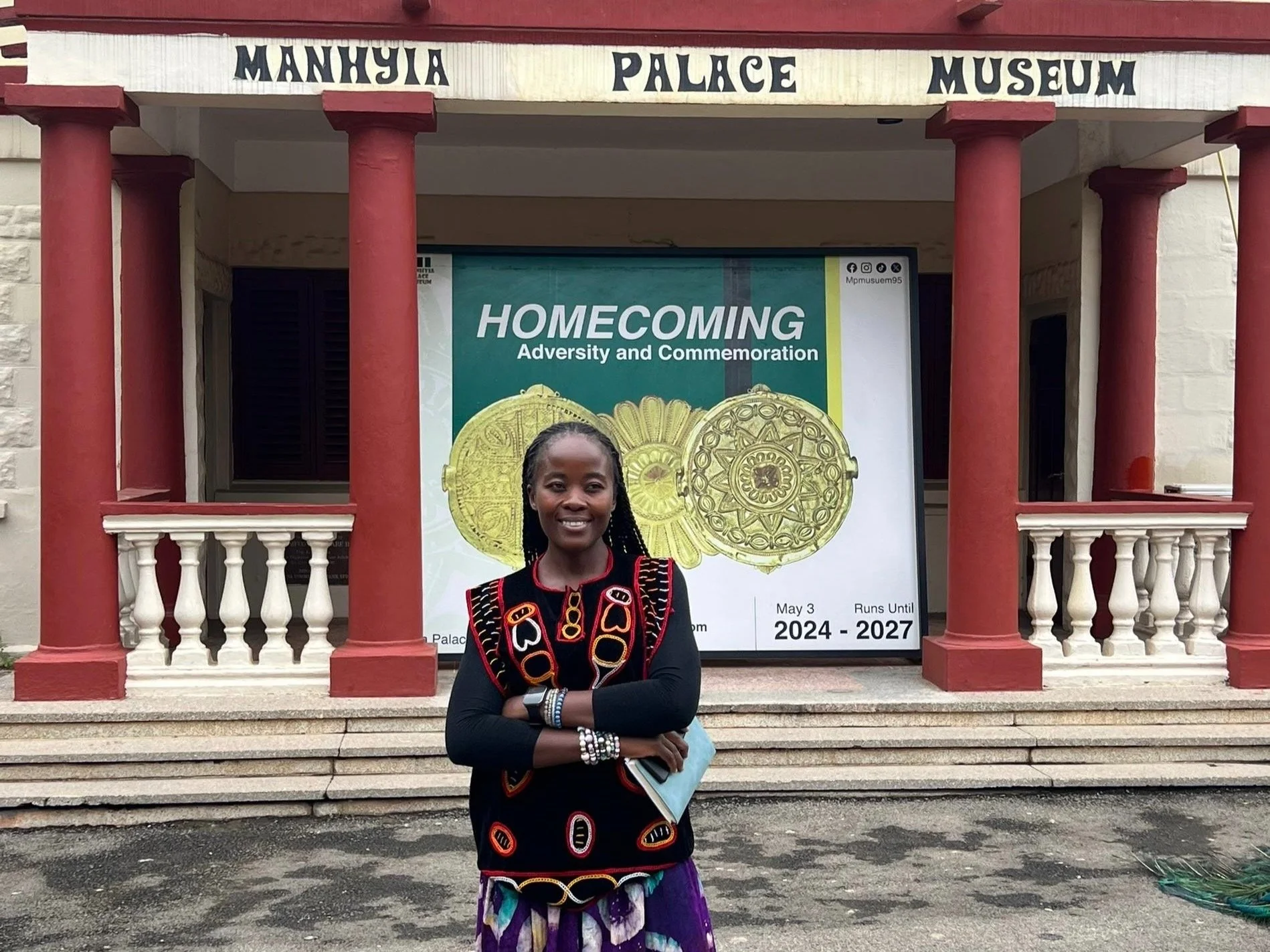
When  we visited the Manhyia palace museum in Kumasi, the tour guide explained to us that in the past we were dining as a family, this implied everyone shared from the same bowl of food and this symbolized unity and love in the family. This also meant there was some level of protection because one family member could not be targeted to be poisoned. But today, we have “isolated ourselves” with foreign cutlery sets, we eat individually and at different times, and  there is hardly time for conversations and dialogue as a family unit. If we can go back to the past and revisit this custom and tradition  of our culture, these ideas and values would be preserved and passed down from one generation to the other. 

Yvette is the Co-founder of Bright Minds Academy Nasarawa Toto, Nigeria

Letter to my Ancestors by Elsie Pontes

Beloved Ancestors,

I stood in those old dungeons of Ghana,

Where your tired backs pressed against cold stone.

I felt your fear in that dark, narrow space,

And I carry your pain in my beating heart.

By the river where you took your last bath,

I watched the water flow.

I thought of your hope as you stepped in that stream,

Not knowing what lay beyond its shining edge.

You were strong when the chains clinked around you,

You were brave when the world turned away.

Your voices rose in song by that riverbank,

Bringing light into the darkest day.

I honor you in every drop I pour on the earth,

In every word I speak of your courage and grace.

Your journey guides me down my own winding path,

And I hold your memory close in this sacred place.

Thank you for the strength you passed to me,

Thank you for the love that still flows like a river.

I carry you with me, always and forever,

My ancestors, my guardians, my endless light.

Going to the Cape Coast castle and the Slave river was such an unforgettable memory. The different emotions that were going through my body were unbearable. I am thankful I was able to experience this. I am passing the stories down to other people because everyone has the right to know what happened in the past. The past is why we are where we are today. WE ARE OUR ANCESTORS WILDEST DREAMS.

Thank you to WTIG for this amazing opportunity. I’m grateful for all the information I learned, all the people I met, and all the experiences I am able to share.

- Elsie Pontes, Grade 1 teacher, Boston Massachusetts

Cape Coast Castle by Gina Dettmer

I am nervous to listen to the voice recording I made while at Cape Coast Castle this afternoon. Okay, here it goes. Below is a transcription with edits, what I would add and change if I rerecorded it. You can listen to the unedited voice recording here: 

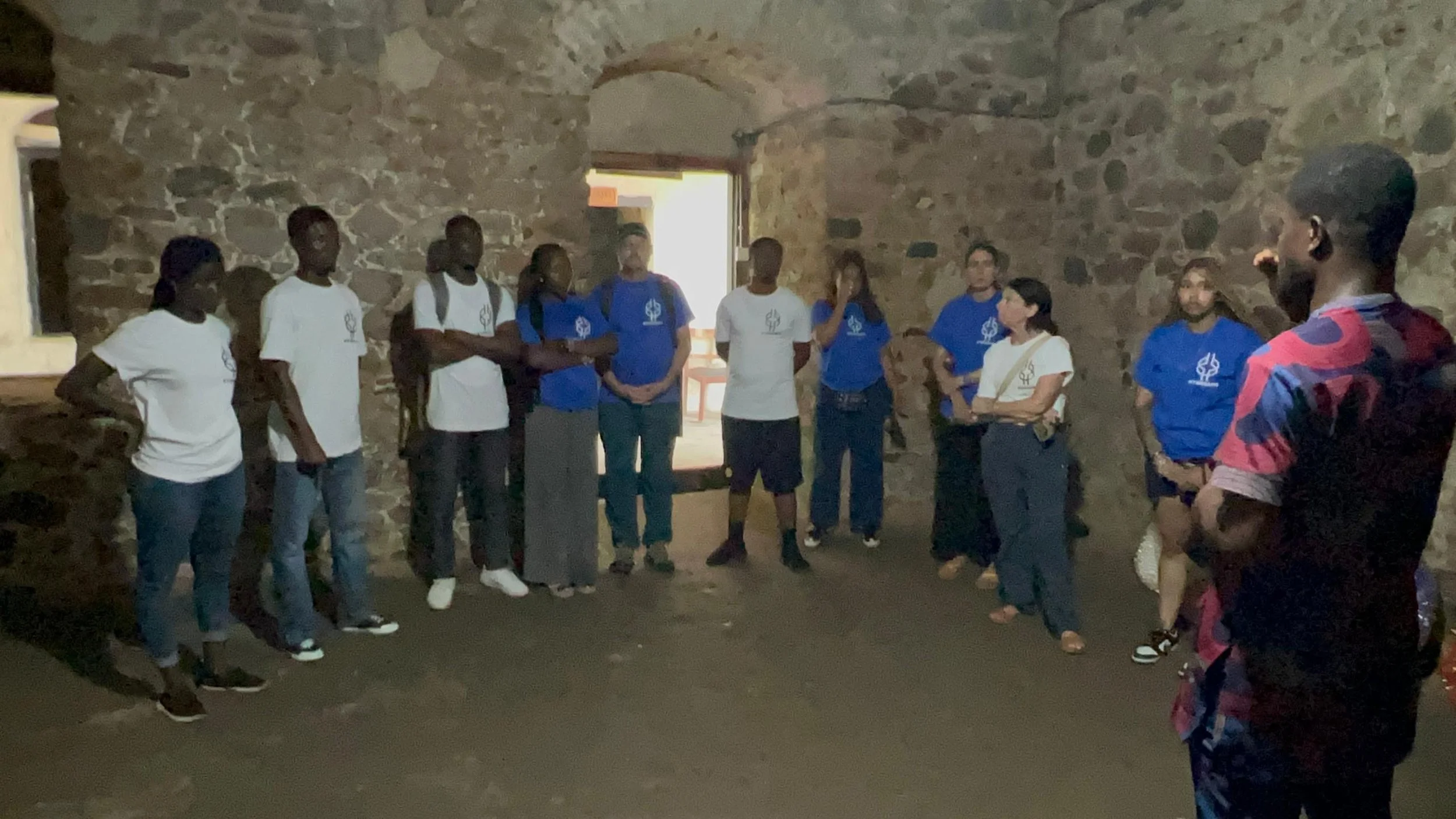
I'm here at Cape Coast. It's a fortress and a dungeon built in the 1600s. We went into the dungeons where the male captives were held, 150 to 200 in a room, before being loaded onto slave ships. The brick floor is coated with everything that the human body excretes: urine, feces, sweat, blood. Yvette fainted. I thought she had a heart attack. I was so scared.

Maybe you can hear the waves against the rocks.

I felt so bad for bringing her here. I didn't know if I should try to comfort her, being a white person. I feel like I've been given so much grace in being allowed to come here with the group, this multicultural, multiracial group. I remember one of my students at Mills, a white girl, went to Côte d'Ivoire and the group asked her not to go to the slave fort with them. I feel that I've been given a lot of grace. Akosua held my hand in the dungeon, and my arm, and just while I was sitting here by the canons looking over the sea, Vallis came and sat next to me to make sure I was okay. They're both Ghanaians. There are also African Americans in our group, and other white Americans.

Slavery feels real here in a way that it doesn't for me in the U.S. What really struck me is that it's only been 190 years since the end of the slave trade, and 35 of those years I've been alive. That doesn't seem very long, and when our guide said these floors are 190 years old, the wood shutters are 190 years old, it just didn't seem that long ago. And that's scary.


I think everyone, everyone, in the U.S. needs to come here. Or at least the white people. I can't believe we haven't addressed slavery. It's something we white people just want to pretend didn't exist, cover up in our classrooms and in our history.

I don't understand how people can be so evil. I don't understand why this could have happened. I can't wrap my head around it. I hate that I'm on the side of the evil people, being white, descendent of the perpetrators. Tete said there's no place for guilt. Of course it's not my fault, but then again everything in the U.S. is structured around this, and the advantages I've had in my life, who knows how many of them can be traced back to slavery and to racism. It's disgusting. And it's so hard to talk about in the U.S., it's so hard. It's such a blessing to be with this group where I don't feel blamed. In the U.S., my assumption is just that African Americans hate me; I don't know how to interact with them, it's uncomfortable. I mean, it's probably the wrong assumption, I don't know.

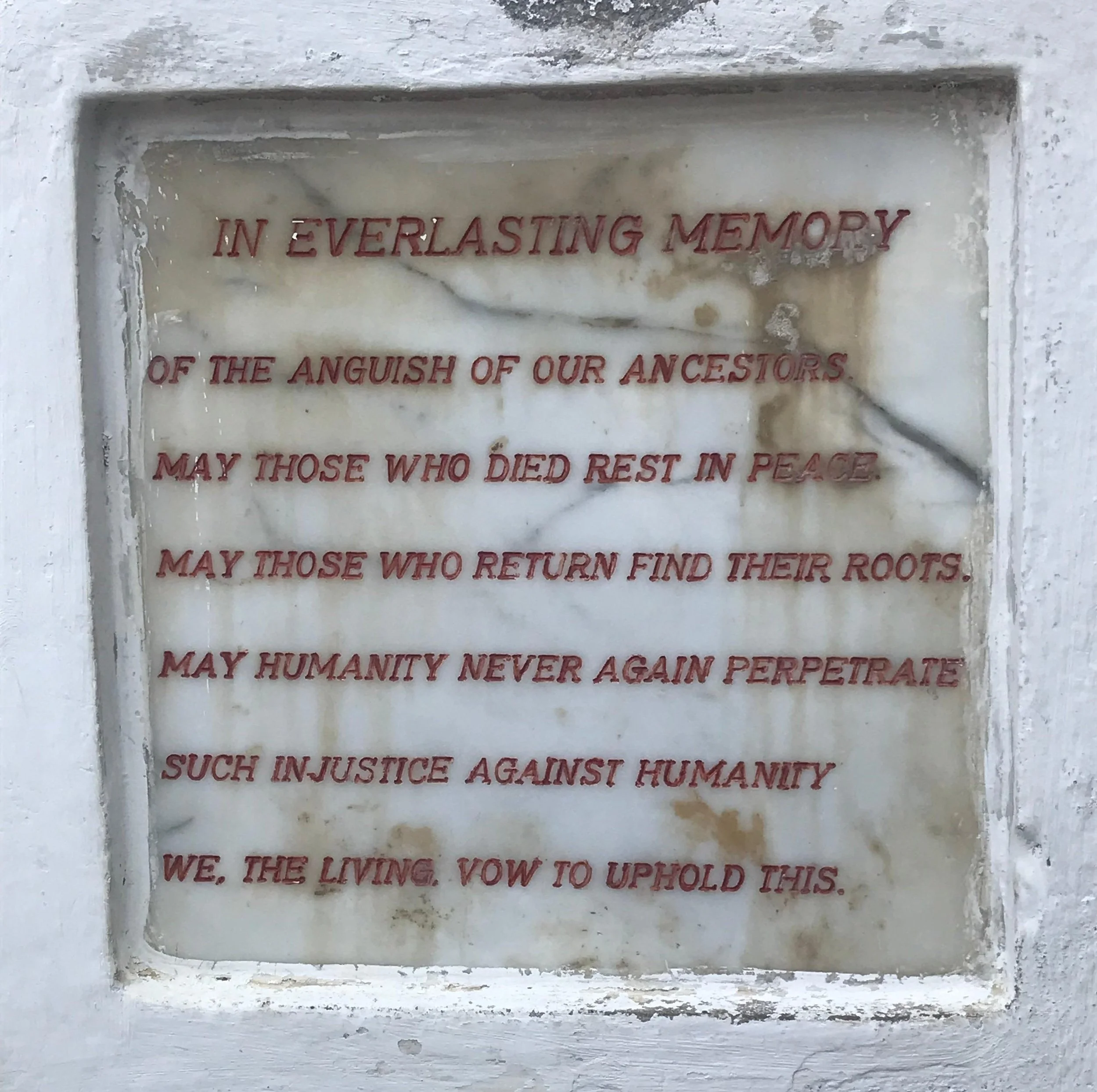
Ghana was the first African country to officially apologize for the role that some Africans played in the slave trade. There is a plaque commissioned by the Ghanaian government at the entrance to the dungeon. 

There is nothing from the U.S., or any European country. There is a plaque on the other side of the dungeon entrance commemorating a visit from President Obama, but no apology. And yet our guide ends the tour by taking us out through the Door of No Return, by which the captives left their homeland forever, and then bringing us back again through what is now called the Door of Return. Another act of grace, yet this one feels so big I don't know what to do with it. Our guide tells us we are not here to incite violence, we are not here to traumatize ourselves, but to remember, and to make sure we never participate in any forms of slavery that are going on today. He ushers us back, stands by the word "akwaaba" inscribed in marble on the wall, the Twi word for "welcome." How can I, a white person, be welcomed here? Yet somehow I am, I feel it. 

I don't know how we go about healing, there on the other side of the Atlantic in the U.S., if it's even possible. But I think it's the right thing to be here. But not for Yvette. Oh my gosh. It's too much. This is the reaction we should all have, we should faint. Because the mind, the heart, cannot hold this. What happened here is too terrible for any human to comprehend. 


Gina Dettmer coaches cross country and track at Oceana High School in Pacifica, California and is the cofounder of Bright Minds Africa