The Beat We Danced to Before the World Tried to Silence Us
Before slave ships, chains, and borders, Africa was not a story told about us—it was a song we were living.
From the Sahara to the Cape, from the Atlantic to the Indian Ocean, our ancestors moved to rhythms that healed, worshipped, built communities, and connected generations. The transatlantic slave trade did not simply take people. It interrupted an entire way of life. During our Witness Tree Institute Sankofa journey, I caught glimpses of that interrupted rhythm—and I realized that, despite centuries of oppression, it is still playing today, even when racism tries to drown it out.
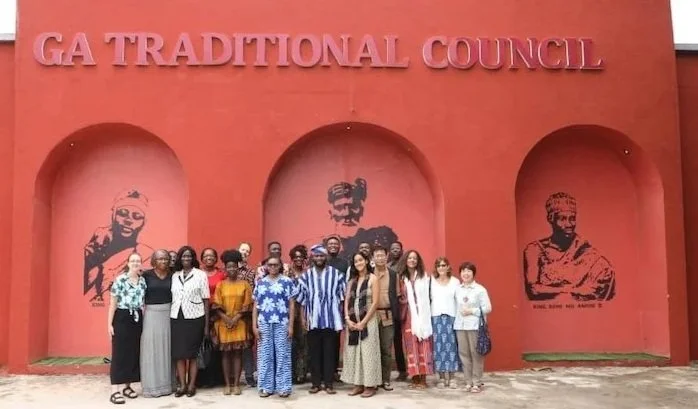
North: The Rhythm of Healing
In the North, our grandmothers and grandfathers were the first physicians. Long before pharmacies, there were baobab trees, neem leaves, black seed, moringa, and countless medicinal herbs. Healing was rooted in an intimate relationship with the land.
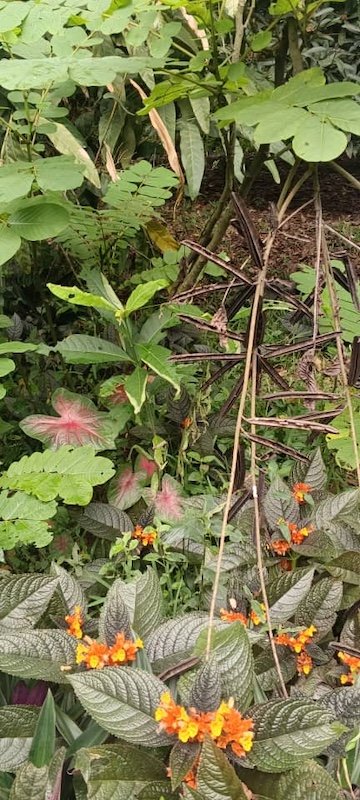
During our visit to Ananse Kwae, Professor Pashington Obeng introduced us to the remarkable medicinal plants that have sustained African communities for generations. As he explained the healing properties of each tree and leaf, I realized that our ancestors understood something modern society often forgets; that nature is not merely a resource—it is a living partner.
To cure fever there were healing plants. For wounds- honey and myrrh. For the spirit, there were prayer, sacred smoke, and herbs gathered at sunrise with intention. Healing was never simply about treating illness; it was about restoring harmony between the body, the earth, and the Creator.
The slave trade severed that relationship. Ships carried human bodies across the ocean, but the sacred gardens remained behind. Forced labor and displacement separated generations from the knowledge of the plants that once sustained them.
Yet the rhythm of healing survives. Across Africa and throughout the diaspora, indigenous herbal medicine continues to remind us that healing begins with remembering our relationship to the earth.
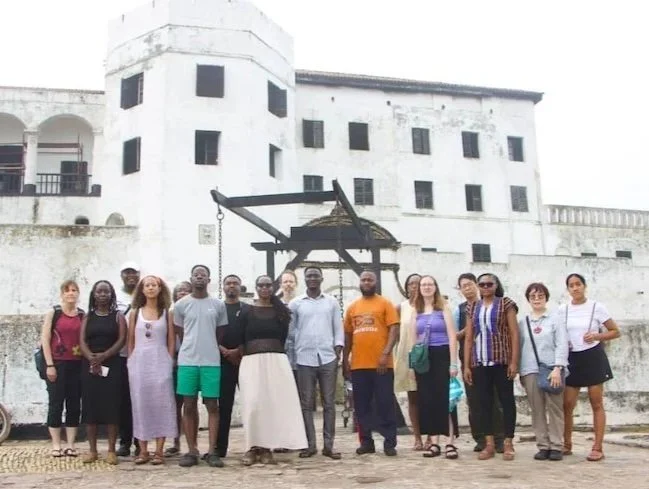
West: The Rhythm of Worship
In West Africa, we did not need walls to meet God.
The Creator was present in rivers, forests, drums, proverbs, dance, and beneath the shade of the great trees where elders gathered. Worship was woven into everyday life. We honored our ancestors not as objects of worship but as those whose lives continued to guide the living.
Colonization sought to erase this spiritual worldview. Missionaries often dismissed African beliefs as inferior while imposing foreign religious systems alongside colonial and economic powers. Much of what had sustained communities for centuries was labeled "primitive."
During one of our conversations, WTIG Sankofa cohort member Amina remarked, "Organized religion is often used to control people." Her words challenged me to think deeply about the difference between faith and control.
I was also reminded of Professor Opoku Asare's powerful conviction: "The greatest gift we can give ourselves is not to blindly imitate others."
Those words spoke directly to my spirit. They reminded me that reclaiming African spirituality calls us to honor our own heritage with confidence and dignity.
The rhythm of worship never disappeared. It still lives in our festivals, in drumming circles, in jazz, gospel, hip-hop, highlife, and in the call-and-response songs we shared throughout our Witness Tree journey and program. The melody changed, but the heartbeat remained.
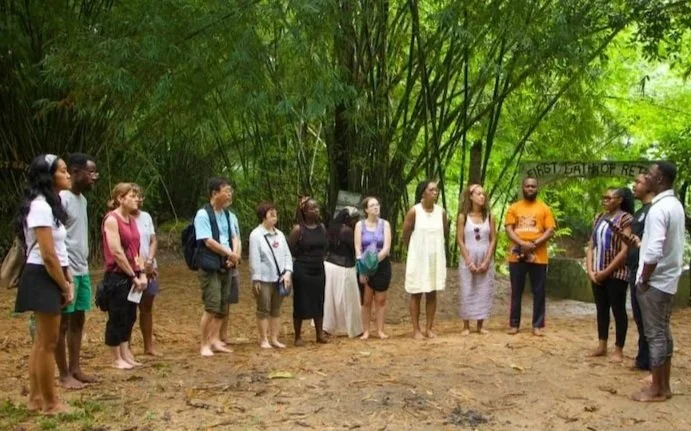
East: The Rhythm of Home
In the East, home was not just four walls. It was a bond.
Home was relationship. Homes were built with mud, thatch, and community hands. Families were big, and they were close. Children were raised by the village. Elders told stories by firelight. Respect was currency. Love was labor.
Families extended beyond parents and children. Villages raised every child. Elders passed on wisdom around evening fires. Respect was wealth, and love was measured by service to one another.
Standing at Donkor Nsuo—the place where countless captives took their final bath before their forced march to the coast—I tried to imagine mothers separated from children, husbands torn from wives, and families forever divided by violence.
The slave trade shattered more than households. It fractured communities.
The familiar rhythm of "we belong to one another" was replaced by the brutal reality of auction blocks and forced separation.
Yet throughout our Sankofa journey, I also witnessed signs that this faded rhythm is returning—in our conversations, our shared meals, our visits to Cape Coast Castle, CRIG, Donkor Nsuo, and in the friendships formed among people from Ghana, Japan, and the United States.
Every act of community is an act of restoration.
South: The Rhythm of Culture
In the South, culture was everything. It was in the beadwork, the initiation rites, the songs for rain, the dances for harvest, the languages with clicks that sounded like the earth speaking.
Tradition was not old-fashioned. It was identity. It told you who you were, where you came from, and how to walk with dignity. Who said Africans do not have a culture? Look at that beautiful cultural display by our own people at the Chiefs Palace.
Then colonizers came and called it “primitive.” They banned languages. They forced new names. They imposed a God and rules that had no roots in our soil.
But guess what I believe in? Culture is stubborn. You cannot kill a rhythm that lives in the bones. That’s why you still see it in braids, in steps, in the pride of wearing kente or Ankara in streets that were not built for us. That’s South Africa, and all Southern Africa, saying: We are still here!
The Beat Goes On
Even Through the Pain.
The slave trade was not just history. It was an interruption. It cut the song in the middle.
It took our healers from the North.
It silenced our worship from the West.
It broke our homes from the East.
It shamed our culture from the South.
And the echo of that interruption is still here. In racism in Europe and America that tells African people we are “less.” In systems that treat Black skin like a problem to be solved. It was a muddy and rough journey for our ancestors but gradually getting soft for us and we will get there.
Because rhythm doesn’t die that easily.
We are the children of people who turned pain into song. Who turned chains into drums. Who remembered the plants, the prayers, the homes, and the dances even when the world tried to make us forget.
This is our invitation:
Relearn the herbs.
Return to natural worship.
Rebuild the village.
Reclaim the culture.
Because Africa’s rhythm was never broken. It was just waiting for us to dance again.
What rhythm from your ancestors are you bringing back next year?
Tettey Aryeh is a teacher of Ga and English and co-proprietor of Model Power Academy in Kofi Kwei, Ga-South, Greater Accra, Ghana.