Denise Carter Mataboge

Lovely Day

It started with a guitar.

Or perhaps more accurately, the search for one.

Nick Reynolds, a guidance counselor from Massachusetts, plays guitar, and understanding the power of music, and the power it has to bring people together, getting that guitar into Nick's hands suddenly became important.

The search wasn't easy. There were no cables. No amp. And despite our best efforts, no guitar.

So, like so many moments on this journey, we adapted.

Kwasi, co-leader and the Cultural Coordinator of the WTIG, placed a bass in Nick's hands instead.
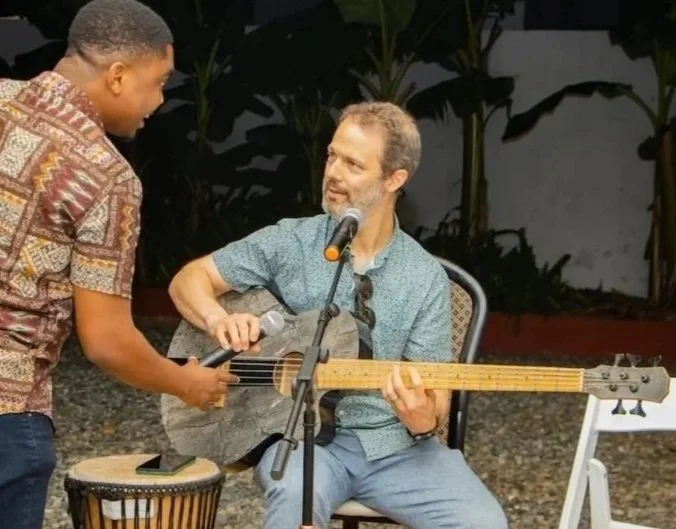
The sound was tiny. A microphone helped carry it just enough. We leaned in a little closer.

And somehow...it was exactly what it needed to be.

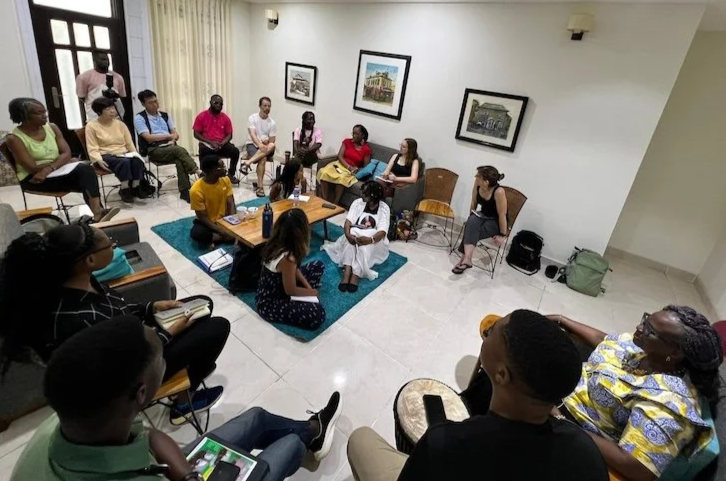
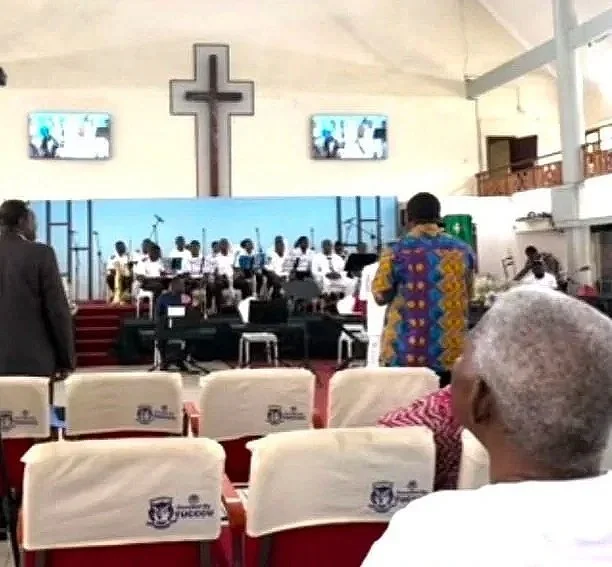
Later that evening, during an event called Teaching and Life, where past and present Witness Tree alumni, future participants, lecturers, and friends gathered in community, Nick took the stage.

"Should I introduce you?" I asked, serving as the evening's emcee.

Nick shrugged.

"Sure. I'm going to play Lovely Day by Bill Withers."

I looked at him, delighted.

How was he to know?

How was he to know that Lovely Day is my personal anthem? That it is the song I wake up to every single morning. The song I hum when my train is delayed. The song that somehow finds me, whether the sun is shining brightly or hidden behind dark clouds.

How was he to know?

Lovely day... lovely day... lovely day... love-LY day.

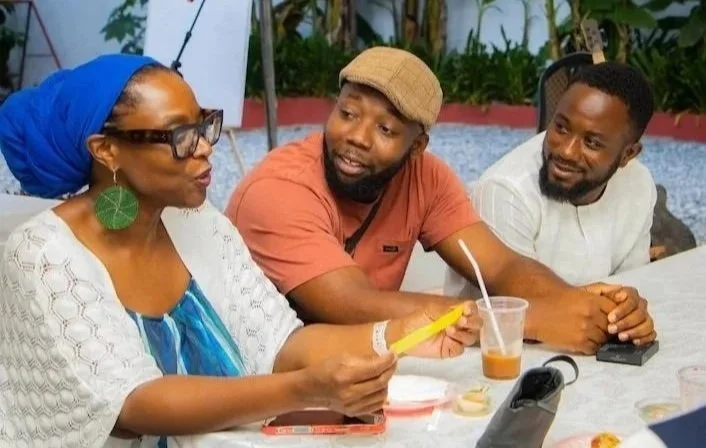
And how was I to know that as conversations about Nick's song drifted around the room, Amina would quietly tell me that her morning begins exactly as mine does? Different cities. Different lives. The same first song.

How was I to know?

Lovely day... lovely day... lovely day... love-LY day.
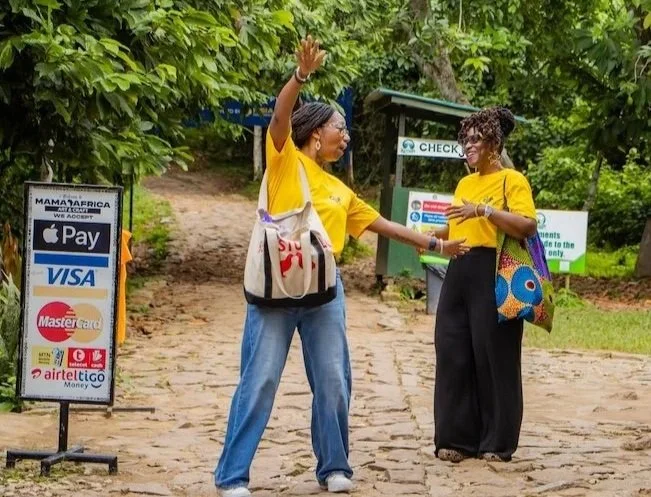
Three years ago, I arrived in Ghana as a participant, full of questions and anticipation. I was asked to write the very first blog before Ghana had revealed herself to me. Before I had walked her streets, heard her stories, or met the people who would forever become part of mine.

Today, three years later, I find myself writing the final blog.

This time, I return not as a participant, but as a co-leader. The role may be different, but in many ways, I am still that same wide-eyed woman from 2023, continually surprised by the quiet ways we discover one another.
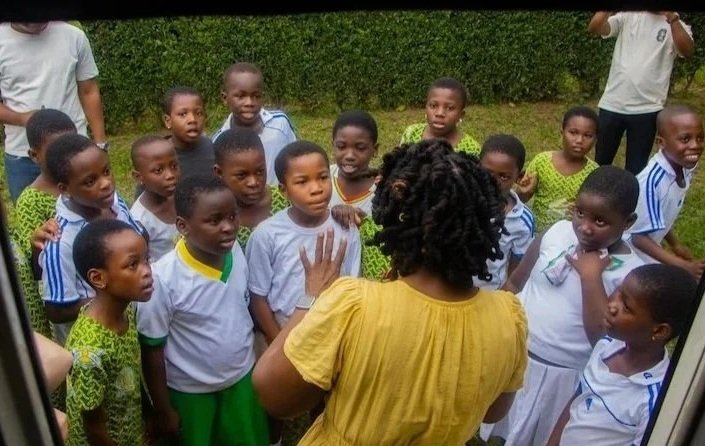
Because that is what Witness Tree has always done so beautifully.

It reminds us that connection rarely announces itself. It slips into conversations over meals. It appears in shared laughter. It reveals itself in stories told across generations. Sometimes, it arrives in the familiar melody of a song that has been waking two people, living in different cities, every morning without either of them ever knowing.

How was I to know?

Lovely day... lovely day... lovely day... love-LY day.
We learned many songs on the road.

One of them reminded us that the road would be muddy and rough... but we'd get there.

And it was.

It was muddy.

It was rough.

We bounced.

We laughed.

We sang louder.

The road never got smoother, but somewhere between the potholes and the laughter, our spirits grew lighter.

How were we to know?

Lovely day... lovely day... lovely day... love-LY day.
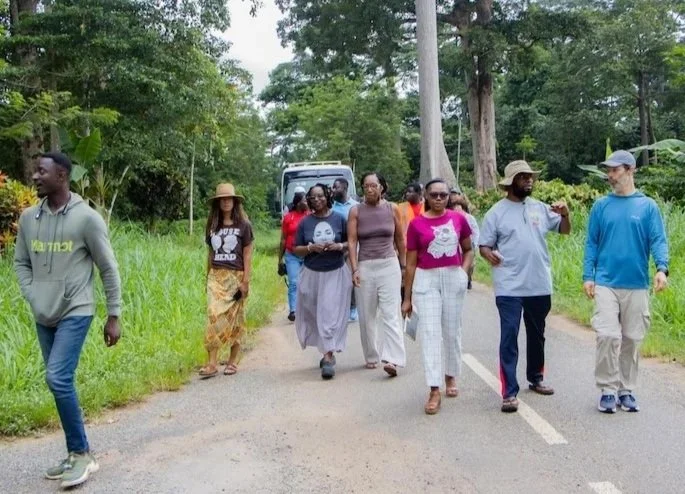
As Bill Withers sings Lovely Day, he holds that final word—day—for 18 remarkable seconds.

As children, my siblings and I took that as a challenge.

We would fill our lungs, close our eyes, and try to hold that note right along with him. We never made it. Our eyes would begin to water. Our voices would grow weaker and weaker until we dissolved into peals of laughter, gasping for the breath we thought we could hold.

This time, as the song plays in my mind, I find myself wanting to hold on again.

Not to the note.

To this.

To the conversations that became friendships.

To the strangers who became family.

To the stories that quietly stitched us together.

To the moments I never could have imagined when I first arrived in Ghana three years ago.

And then I realize...

Maybe that was the answer all along.

How was I to know?

I wasn't supposed to.

That's the gift of Witness Tree.

It has a way of introducing you to people you didn't know you needed, revealing connections you never could have planned, and reminding you that the most meaningful moments in life are often the ones you never saw coming.

So this time, I'll take one more deep breath.

And hold on...

A lovely dayyyyyyyyyyyyyyyyyyyyyyyyyyyyyyyyyyyyyyyyyyyyyyyyyyyyyyyyyyyyyyyyy…
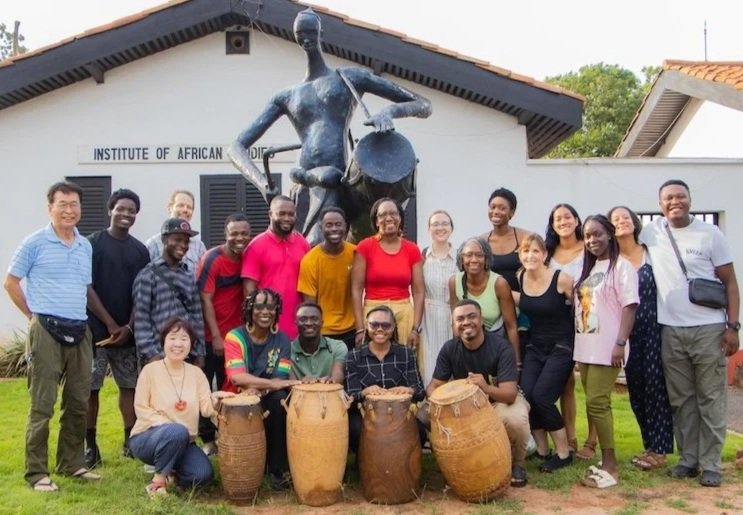
Denise Carter Mataboge is a co-leader of the Witness Tree Institute’s 2026 Sankofa Cohort , and an alum of the 2023 WTIG program. She teaches at Neighborhood Charter School: Harlem, New York City
Patrick tettey Aryeh

The Beat We Danced to Before the World Tried to Silence Us

Before slave ships, chains, and borders, Africa was not a story told about us—it was a song we were living.

From the Sahara to the Cape, from the Atlantic to the Indian Ocean, our ancestors moved to rhythms that healed, worshipped, built communities, and connected generations. The transatlantic slave trade did not simply take people. It interrupted an entire way of life. During our Witness Tree Institute Sankofa journey, I caught glimpses of that interrupted rhythm—and I realized that, despite centuries of oppression, it is still playing today, even when racism tries to drown it out.

North: The Rhythm of Healing

In the North, our grandmothers and grandfathers were the first physicians. Long before pharmacies, there were baobab trees, neem leaves, black seed, moringa, and countless medicinal herbs. Healing was rooted in an intimate relationship with the land.

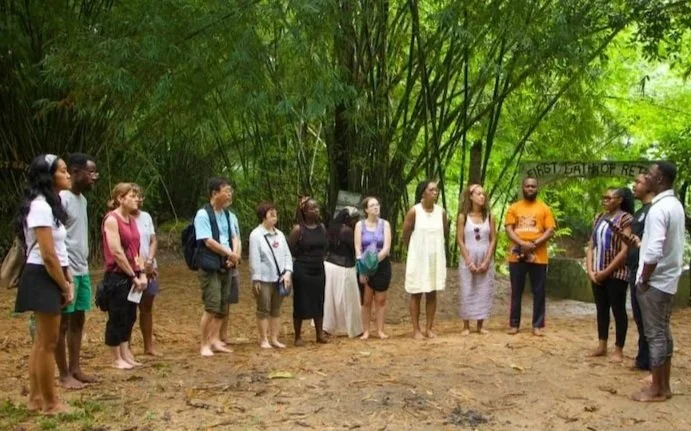
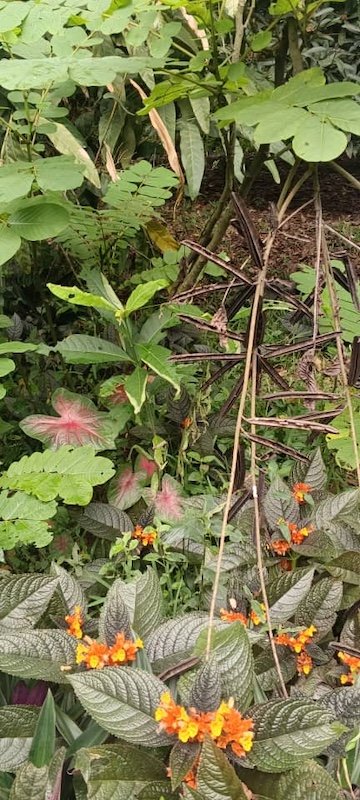
During our visit to Ananse Kwae, Professor Pashington Obeng introduced us to the remarkable medicinal plants that have sustained African communities for generations. As he explained the healing properties of each tree and leaf, I realized that our ancestors understood something modern society often forgets; that nature is not merely a resource—it is a living partner.

To cure fever there were healing plants. For wounds- honey and myrrh. For the spirit, there were prayer, sacred smoke, and herbs gathered at sunrise with intention. Healing was never simply about treating illness; it was about restoring harmony between the body, the earth, and the Creator.

The slave trade severed that relationship. Ships carried human bodies across the ocean, but the sacred gardens remained behind. Forced labor and displacement separated generations from the knowledge of the plants that once sustained them.

Yet the rhythm of healing survives. Across Africa and throughout the diaspora, indigenous herbal medicine continues to remind us that healing begins with remembering our relationship to the earth.

West: The Rhythm of Worship

In West Africa, we did not need walls to meet God.

The Creator was present in rivers, forests, drums, proverbs, dance, and beneath the shade of the great trees where elders gathered. Worship was woven into everyday life. We honored our ancestors not as objects of worship but as those whose lives continued to guide the living.

Colonization sought to erase this spiritual worldview. Missionaries often dismissed African beliefs as inferior while imposing foreign religious systems alongside colonial and economic powers. Much of what had sustained communities for centuries was labeled "primitive."

During one of our conversations, WTIG Sankofa cohort member Amina remarked, "Organized religion is often used to control people." Her words challenged me to think deeply about the difference between faith and control.

I was also reminded of Professor Opoku Asare's powerful conviction: "The greatest gift we can give ourselves is not to blindly imitate others."

Those words spoke directly to my spirit. They reminded me that reclaiming African spirituality calls us to honor our own heritage with confidence and dignity.

The rhythm of worship never disappeared. It still lives in our festivals, in drumming circles, in jazz, gospel, hip-hop, highlife, and in the call-and-response songs we shared throughout our Witness Tree journey and program. The melody changed, but the heartbeat remained.

East: The Rhythm of Home

In the East, home was not just four walls. It was a bond.

Home was relationship. Homes were built with mud, thatch, and community hands. Families were big, and they were close. Children were raised by the village. Elders told stories by firelight. Respect was currency. Love was labor.  

Families extended beyond parents and children. Villages raised every child. Elders passed on wisdom around evening fires. Respect was wealth, and love was measured by service to one another.

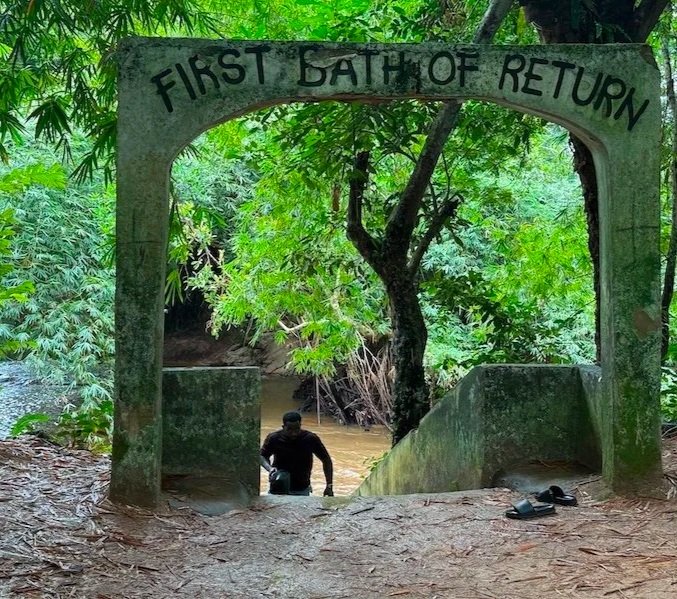
Standing at Donkor Nsuo—the place where countless captives took their final bath before their forced march to the coast—I tried to imagine mothers separated from children, husbands torn from wives, and families forever divided by violence.

The slave trade shattered more than households. It fractured communities.

The familiar rhythm of "we belong to one another" was replaced by the brutal reality of auction blocks and forced separation.

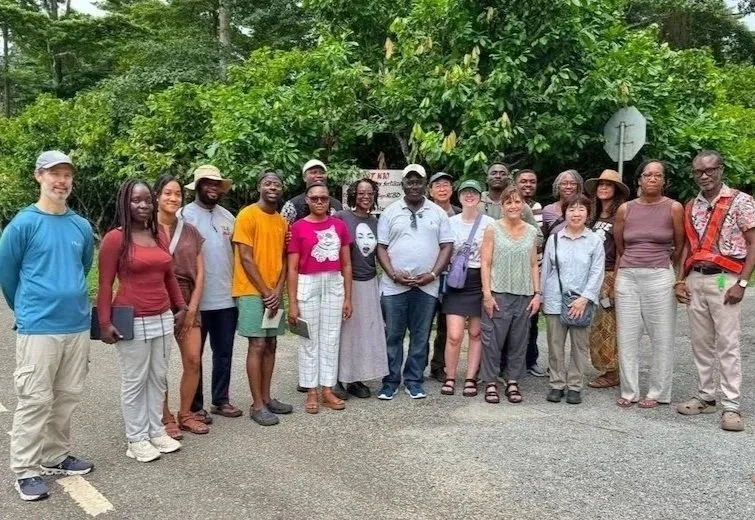
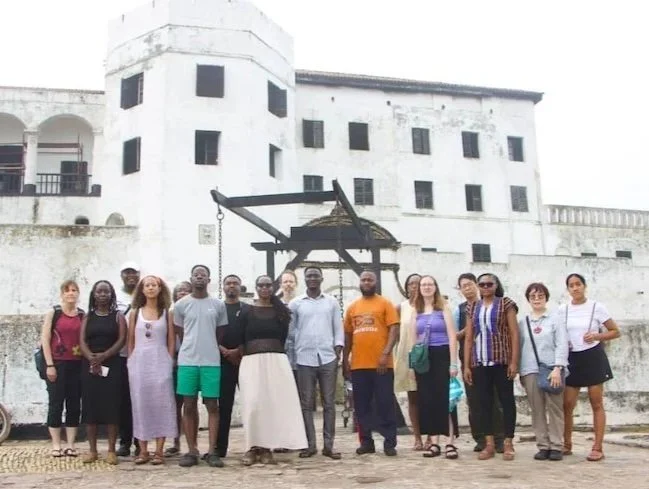
Yet throughout our Sankofa journey, I also witnessed signs that this faded rhythm is returning—in our conversations, our shared meals, our visits to Cape Coast Castle, CRIG, Donkor Nsuo, and in the friendships formed among people from Ghana, Japan, and the United States.

Every act of community is an act of restoration. 

South: The Rhythm of Culture

In the South, culture was everything. It was in the beadwork, the initiation rites, the songs for rain, the dances for harvest, the languages with clicks that sounded like the earth speaking.

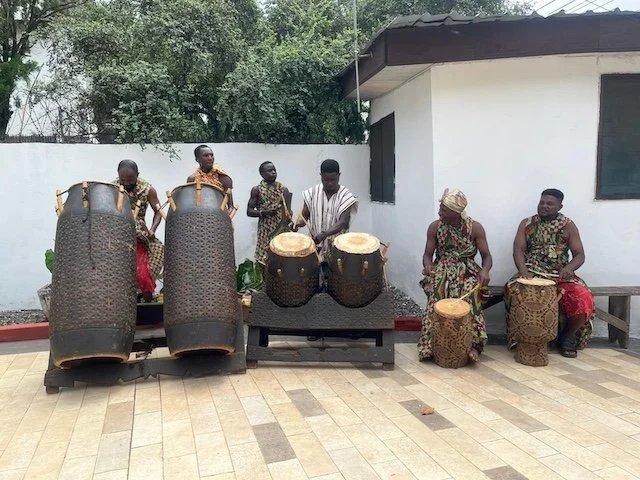
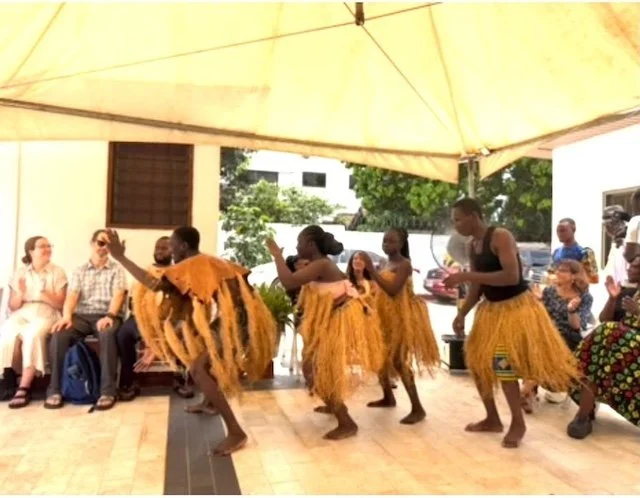
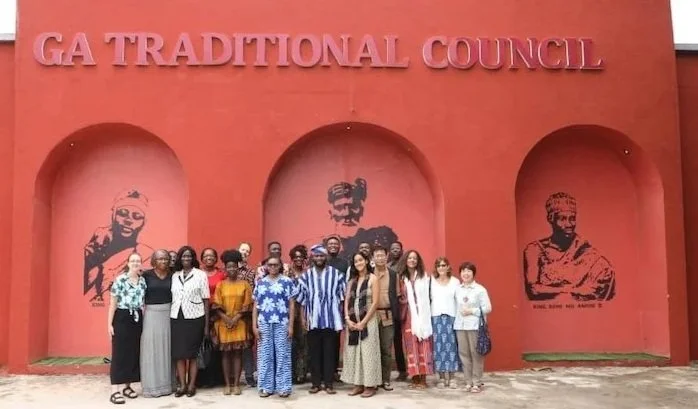
Tradition was not old-fashioned. It was identity. It told you who you were, where you came from, and how to walk with dignity.  Who said Africans do not have a culture? Look at that beautiful cultural display by our own people at the Chiefs Palace.

Then colonizers came and called it “primitive.” They banned languages. They forced new names. They imposed a God and rules that had no roots in our soil. 

But guess what I believe in? Culture is stubborn. You cannot kill a rhythm that lives in the bones. That’s why you still see it in braids, in steps, in the pride of wearing kente or Ankara in streets that were not built for us. That’s South Africa, and all Southern Africa, saying: We are still here!

The Beat Goes On

Even Through the Pain.

The slave trade was not just history. It was an interruption. It cut the song in the middle.  

It took our healers from the North.  

It silenced our worship from the West.  

It broke our homes from the East.  

It shamed our culture from the South.

And the echo of that interruption is still here. In racism in Europe and America that tells African people we are “less.” In systems that treat Black skin like a problem to be solved. It was a muddy and rough journey for our ancestors but gradually getting soft for us and we will get there.

Because rhythm doesn’t die that easily.

We are the children of people who turned pain into song. Who turned chains into drums. Who remembered the plants, the prayers, the homes, and the dances even when the world tried to make us forget.

This is our invitation:

Relearn the herbs.  

Return to natural worship.  

Rebuild the village.  

Reclaim the culture.

Because Africa’s rhythm was never broken. It was just waiting for us to dance again.

What rhythm from your ancestors are you bringing back next year?

Tettey Aryeh is a teacher of Ga and English and co-proprietor of Model Power Academy in Kofi Kwei, Ga-South, Greater Accra, Ghana.

Nick Reynolds

Finding Connections in Ghana

“Do we have everything? Are we prepared? Have we thought this through?”

These questions I overheard gave me pause as we waited on the bus, preparing to depart from Tete Cobblah’s home for Cape Coast. However, I considered the lyrics we sang together no more than an hour before…

We are going

Heaven knows where we are going, 

We know we’re there

Remembering these words gave me strength, as I interpreted them to mean: Wherever we are, we are meant to be there. 

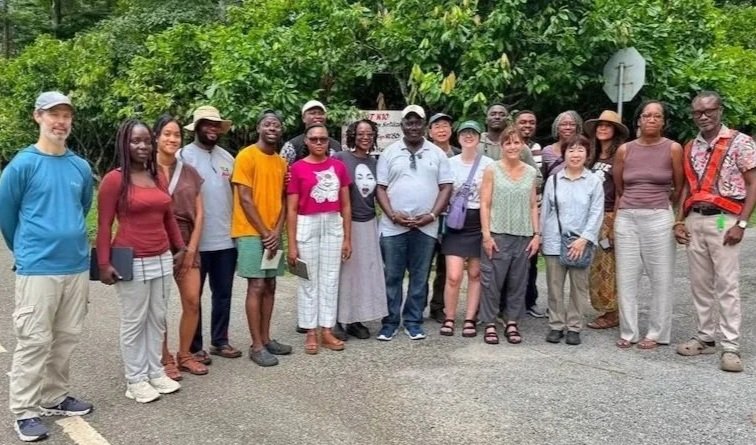
Each member of our group arrived in Ghana with their own stories, histories, and emotions, and we would make meaning together, while supporting each other, on our journey.  

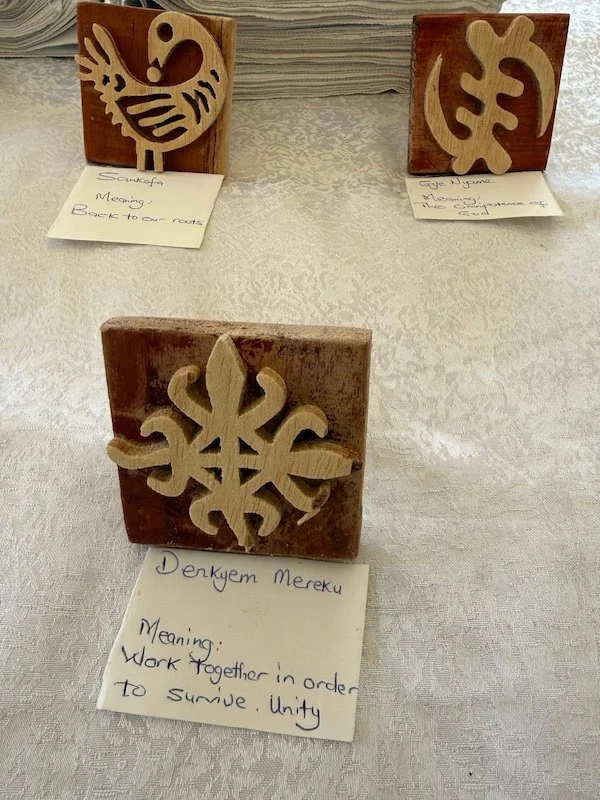
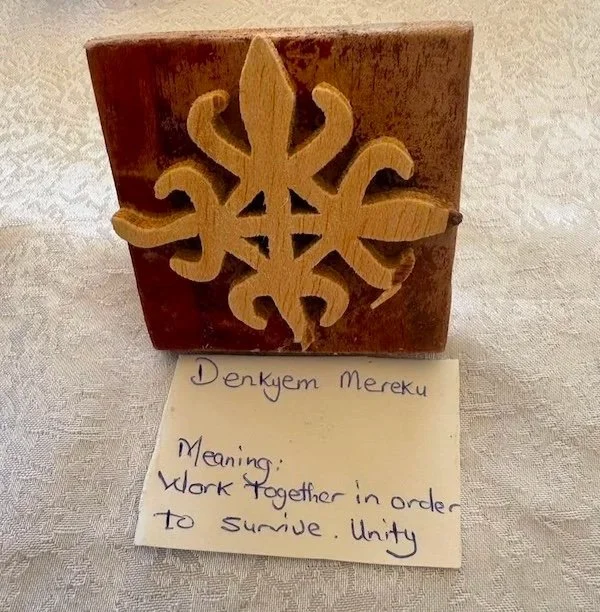
Before we set off from Tete’s home, the Adinkra workshop gave us an opportunity to choose symbols to represent parts of our identity, parts of our story. 

Eso ne tekrema: teamwork and collaboration

Akoko nan tia ba na enkum ba: Parenting, discipline, and love

Denkyem Mereku: work together to survive in unity

How we take meaning from these symbols differed for each of us. For me, building connections through moments of collaboration, as well as vulnerability, afforded us opportunities to grow closer to each other in the first few days of the trip. Parenting my daughter has opened my capacity for love immeasurably over the past 11 years. These Adinkra symbols grounded me in emotions I hold closest: joy through connection and parental love.

Creating meaning on our trip to Ghana has been both easy and challenging. The emotions we attach to the places-Accra, Koforidua, Kakum, Cape Coast, Anomabo- are what will stay with us long after we return to our home countries. 

Each location represented much more than the experience: joyfully singing and dancing on our first day together, anxiously preparing to teach a mindfulness lesson to 5th graders at the Cocoa Research Institute of Ghana, excitedly viewing the rainforest from above in Kakum National Forest, grieving those who suffered unspeakable acts of cruelty at Cape Coast, Elmina, and Donkor Nsuo.

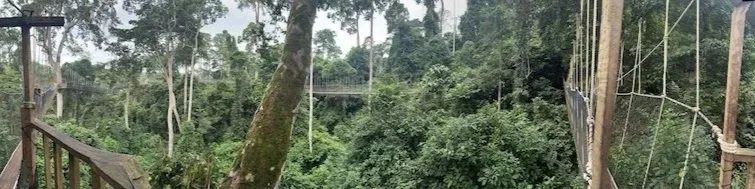
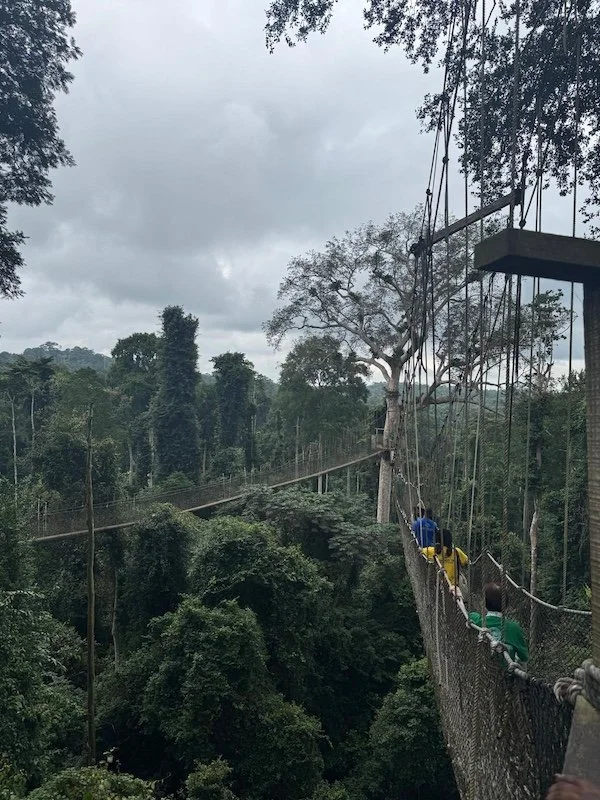
We connected to the exuberance we felt above the trees at Kakum National Forest. The initial fear, the first step onto the narrow wooden bridges, the persevering across the void in the trees as sections helped grow our confidence and told us we could do this. Together we walked through the canopy and were no longer alone. 

Unity in our group showed up while we demonstrated genuine caring for the well-being of each group member making it across; and even if there was some gentle teasing, it was done in the most loving way. We may never have been in any real danger, but we offered strength and encouragement to each member until we all celebrated our success together at the end of our canopy circuit. 

That afternoon and the following day, I was speechless entering the dungeons at Cape Coast and Elmina, witnessing evidence of their horrific past. Entering the river at Donkor Nsuo connected us to the untold masses who had their “last baths” there. Our guide described the river bluff as the most painful place on the trans-Atlantic slave route, as families were torn apart and auctioned off. I couldn’t help but immediately think of my daughter, and the unimaginable and debilitating grief and anger any parent would feel if their child were taken right in front of my eyes, an action that was performed countless times on the riverbanks on which we stood. 

I will be processing the emotions from this trip, and from these two days in particular, for weeks, and likely years, to come. As a school counselor, I support young teens in identifying and coping with their emotions, while providing the space for them to move through their feelings during their busy days. 

I put pressure on myself as I feel that I must always have the answers for the parents, the teachers, and the administrators. Our Sankofa cohort has given me the grace to not always know the right way to respond, nor the right words to speak. I am eternally grateful for our group and the understanding, acts of kindness, and empathy they have generously given me each day.

Nicholas Reynolds is a School Counselor at Carroll School in Lincoln, Massachusetts, USA.

Charlotte King

Discovering My Memory 

“I used to think to think it was my rememory. You know. Some things you forget. Other things you never do. But it's not. Places, places are still there. If a house burns down, it's gone, but the place--the picture of it--stays, and not just in my rememory, but out there, in the world. What I remember is a picture floating around out there outside my head. I mean, even if I don't think it, even if I die, the picture of what I did, or knew, or saw is still out there. Right in the place where it happened.” ― Toni Morrison, Beloved

My name is Adwoa.  Girl child born on a Monday. It is only fitting I land on the continent my ancestors called home, on a Monday. This is not lost to me.

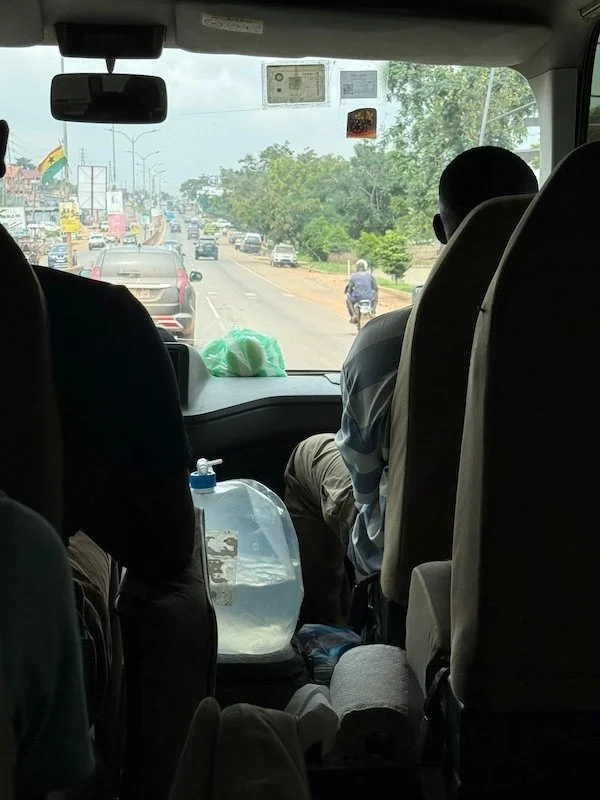
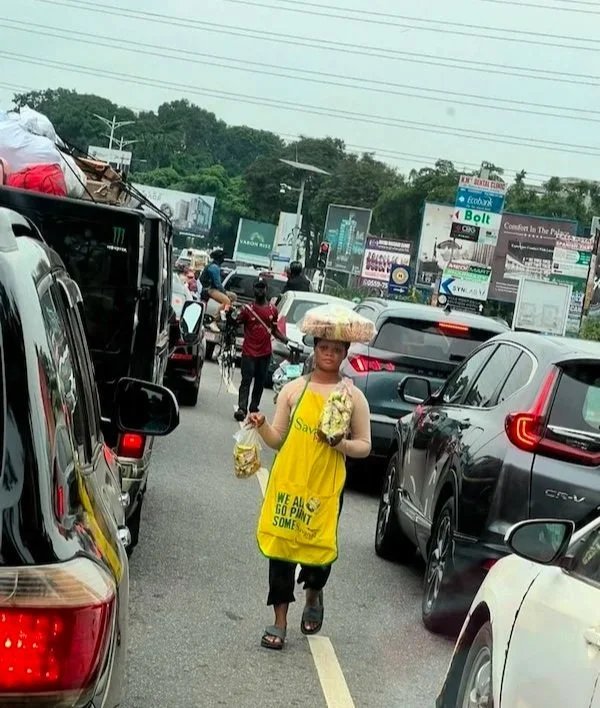
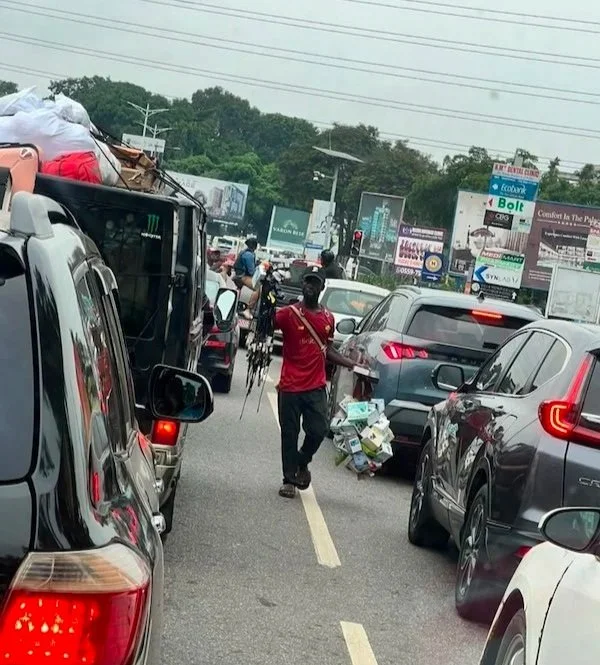
Thump, thump, thump. A rhythm in my head, fresh from the airport. I watch in awe from the front seat of Dela’s car. Ghanaians starting their day. Going to work, bustling about. Zipping by on motorbikes, riding in vans to destinations I know nothing of. Quickly moving, quickly rushing. Women carrying goods on their heads, graceful and dignified. The energy of the road pulses through them. Nothing falls. Nothing will. 

Dela explains the vans and how people hop on and off headed to work, to markets, and school. And yes, there is a hurry to their pace. There is also a slowness. A gait that invites conversation with whomever they come across. I hear the love that is shared, the conflict that arises, the tensions, creativity,  ingenuity, and brilliance all cascading into a crescendo of sound on this street. 

A chorus of movement.  And I feel I’ve arrived. Where, I don’t know.  A place I’m curious about, and yet somehow remember. I arrive with what Professor Obeng calls “the visitor with bright shiny eyes who observes and sees nothing”. Deep in my spirit, I feel a return. To where, I’m not sure. A hard return because healing is painful. Yet necessary.

Many in my family have wanted to travel here for so long. And yet I’ve been gifted with actually arriving, grateful to physically touch this earth.

Of course, conflict will arise. Dreams consist of challenges and joys. It is within the tensions I feel, the conflict that arises, that true connection is made. True grace given and accepted. Because while my ancestors were stolen from this place, the Ghanaians who I watch with silent awe lost their ancestors as well because they lost us. 

To find our way back to each other is a messy road. But as the song says, “we will get there.” 

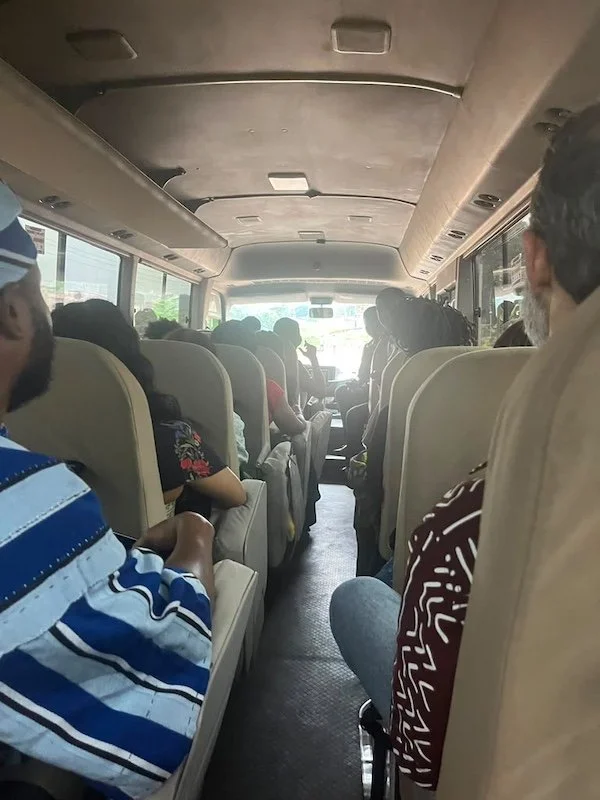
I am still on this particular journey and just beginning to understand what that work is. But I will begin it. I begin the work as I watch the roads pass by. Our journey in the lumbering and beloved van. Watching from my seat as this full Sankofa cohort, who are starting to feel more like a chosen family, joke and jest with each other. Deeply grateful as people share snacks and laughter. Curious about the many new ideas we encounter. Discussing the complicated things we are learning, the visits are both joyful and painful. The sites of remembrance. 

We hum along these unpaved roads, singing and sleeping, chatting and being jostled by this little van that could. And Nana Yaw, our skillful driver, always gets us safely to our destination. We trust you Nana Yaw! 

Along this road, I get the honor of meeting custodians of sacred places, such as Kofi who tells us of “The Last Bath” now deemed “The Returned Bath”. Donkor Nsuo, a river found in Assin Mano. Here, captured Africans took their last bath in a rushing river before setting off to places unknown, to face harsh and brutal conditions. These places of pain and trauma so deep it stretches past ocean and continent.  And I begin to remember.  I remember things I’ve never seen with my own eyes, and yet feel as if I’m seeing again. And my spine gets a little stronger.

Charlotte King is a Librarian and Class Dean at The Branson School in California.

Darnell Epps

Grounding

I try to find the words to convey what it means to be on these lands

I strain to translate into language what the body feels and what the soul experiences to characters on a page

Then, I remember the poems, not in words, but in the senses

Come along with me…

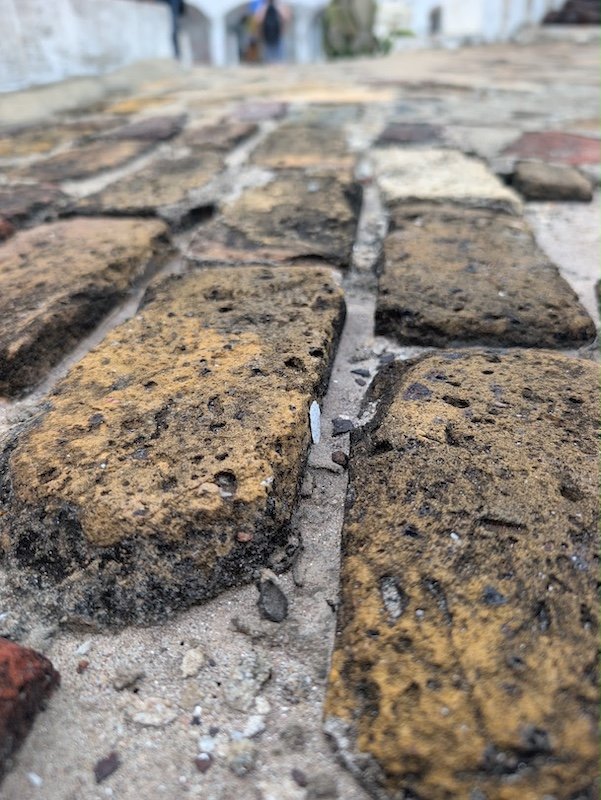
I pensively drag my fingertips along the jagged, whitewashed bricks of the foreboding structures

Peeling paint unearthing stories made hidden and reemerging 

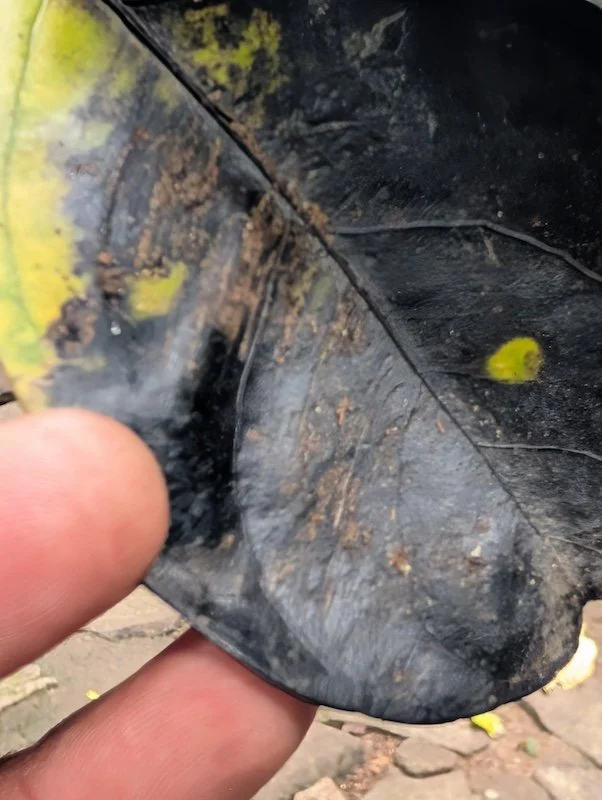
I trace the veins of the smooth black leaf in Kakum and marvel at its black beauty

I kneel down to connect with the hallowed ground on which my grandmothers and grandfathers wept, hoped, and prayed

I lower my head and touch the worn bricks in prayer and supplication

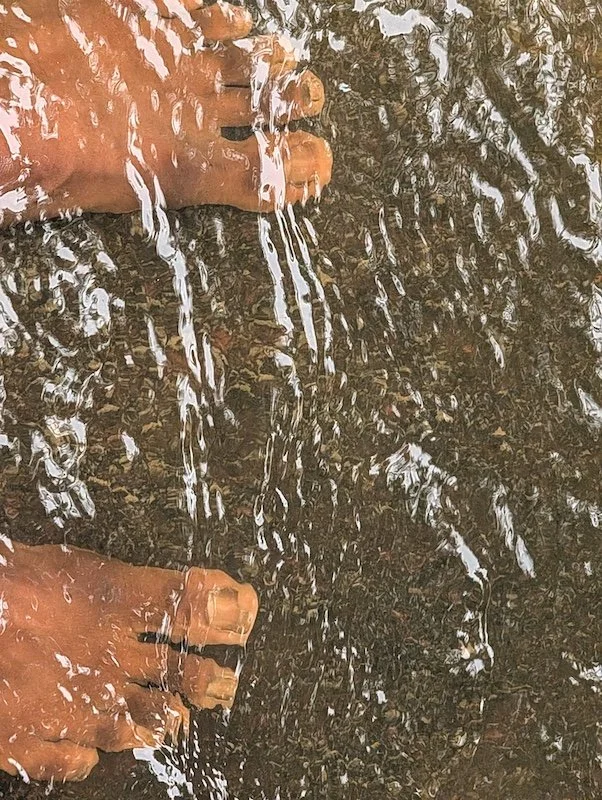
I tread the path of my ancestors to the cool waters, trying to take in every step - in communion with their energy that remains

I still my feet in the river and feel the waters anew, the same elements that touched those who have gone before me

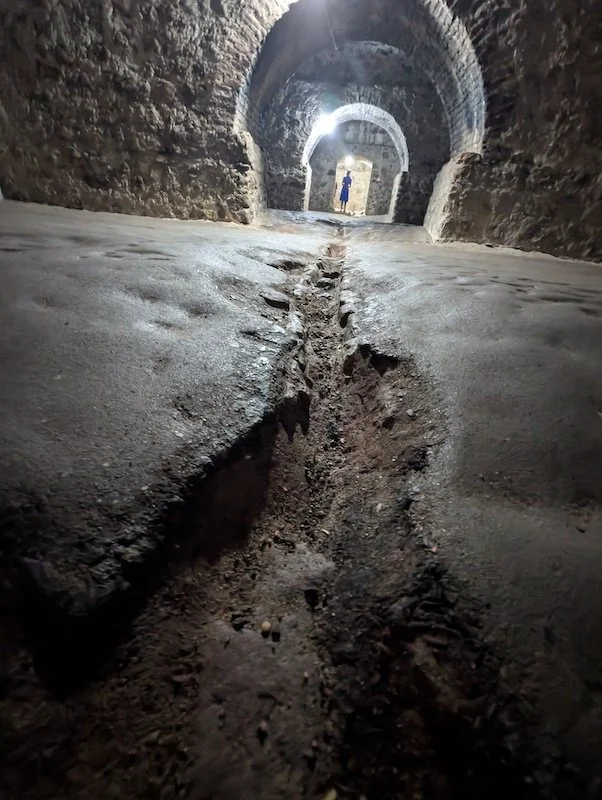
I inhale the humid thickness of dank cells, wombs - cages transforming as death yields transcendent life in body and spirit

I taste the strange fruits as their sweetness dances on my tongue. The gifts given to us in abundance for nourishment and healing 

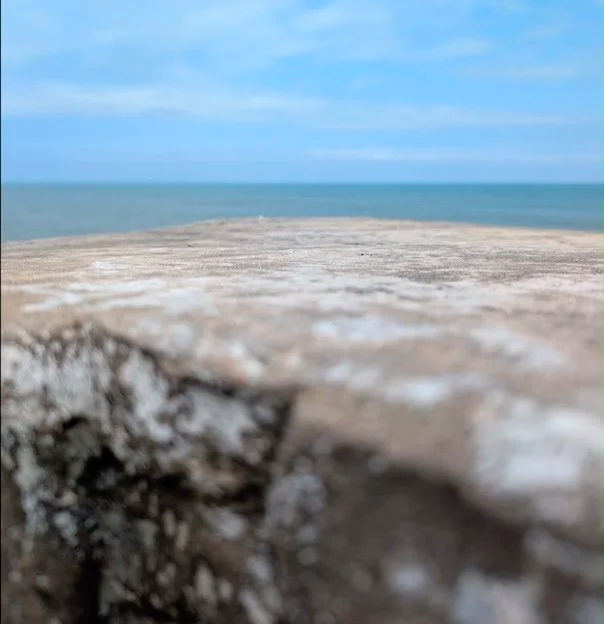
I sink my feet into the sands along the shores of the gulf and pray to ancestors for direction to find the path to fulfill my purpose in earth

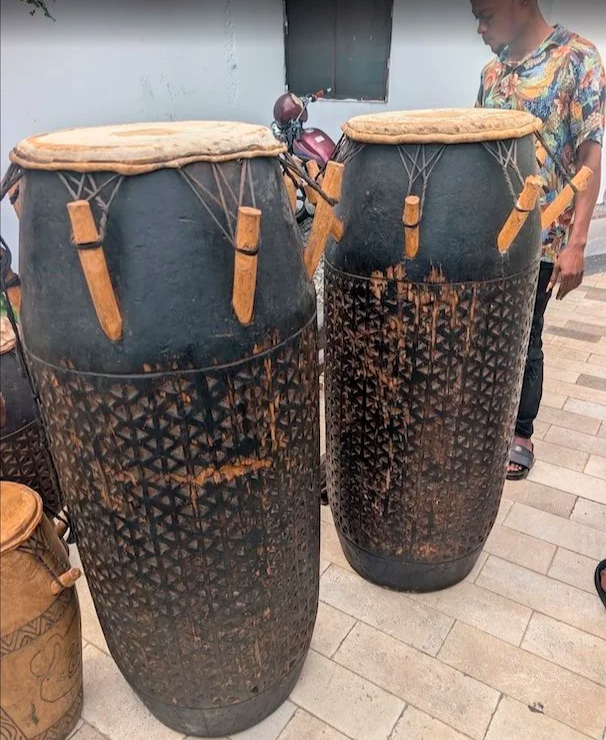
I vibrate with the cadence of the drums and move freely with the earth, with spirit, abounding in joy, and exuberance 

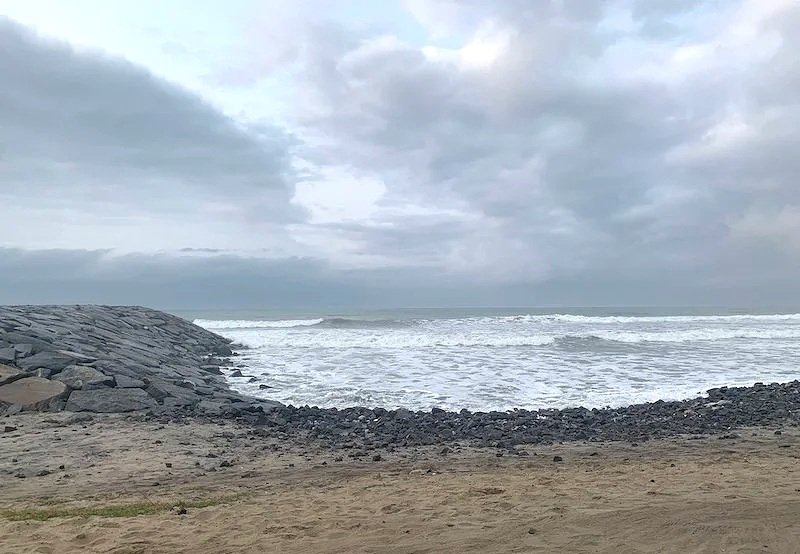
I rejoice in the chorus of waves whose roaring refrain beckons me nearer to harmonize and

resonate together 


Motherland, I feel you

I lean in to hold you

I yield to your warmth and wisdom

I feel your breath against my black skin 

I smile as you tickle my legs from earth beneath

I drink in the songs whose mysteries will unfold in time

Until then, I release my whole body - my whole being to rest here NOW

Darnell Epps is Director of Fair Play at Hawken School in Cleveland, Ohio, USA.

Kristen Waltz

The Song Inside

I consider myself to be an earnest yet cynical person when it comes to the transformational nature of travel. I seek out new experiences and strive to absorb as much as I can. Still, how much can time spent away from home really change you? Perhaps it’s not the places but the people you spend time with who have the most impact.

When I applied to Witness Tree, I didn’t know anyone who had participated in the program. Although we met on Zoom, it was hard to tell how the group would coalesce. I felt shy at first, but quickly felt ease and trust with the cohort. When you are greeted with a band of drums, you have to dance a little.

Something special happens when teachers connect outside of their normal routines. For two weeks – and two weeks only – we are all on Ghana time. Outside of school schedules and pressures of everyday life, we are free to find a new rhythm.

Dr. Kofi Antonio described the 3 C’s of dance: “Concentration, coordination, confidence.”

I couldn’t help but think how this motto could translate to other areas of learning and life. I can recall many times when students would say “I don’t do art” in class, thinking of the product over the process. I have tried many ways to ease the pull of perfectionism for my students, letting them know the point is expression itself. Building that confidence to be “okay” and work towards something takes time.

In our dance lesson, we learned a few short steps, then played a game trying to distract others and get them off beat. Failure was baked into the process and we had a blast. We could all use some low-stakes silliness in our lives.

Singing and dancing is not part of my day to day, unless singing alone in the car counts. I haven’t expressed my musical side with other people in a long time. With each new song or dance, I feel lighter. Like I am returning to a former version of myself. It made me thankful for my music education growing up.

When it’s time for my first solo on the bus, the song I once sang in harmony (well, close to harmony, let’s be real) escapes my mind completely. Nerves take over. Within a beat, the group steps up and gently guides me back to the song. All is well again.

Reflecting on Adinkra symbols, I suddenly found myself leading the group in a sing-a-long of “Lean on Me” by Bill Withers:

Sometimes in our lives we all have pain

We all have sorrow

But if we are wise

We know that there's always tomorrow

Lean on me, when you're not strong

And I'll be your friend

I'll help you carry on

For it won't be long

'Til I'm gonna need

Somebody to lean on

This was a little out of character for me, but it felt like a full circle moment. The last time I performed the song was in first grade. Each child sang one line at an assembly. Twenty-plus years later, I am singing it again with great company in Ghana. Although our friendships are new, the sentiment rings true. I have seen countless acts of kindness and generosity from this cohort.

In a relatively short span of time, we have experienced highs and lows as a group. We took on the canopy layer of Kakum National Park, swinging as we walked across seven suspension bridges. One minute, we are confidently singing “Bring Your Kalabashi,” the next we are being chased by a horde of army ants out of the forest.

Together, we confronted the past at Cape Coast, Elmina, and Donkor Nsuo. The gravity of these places will continue to weigh heavily on my mind moving forward. I can only hope that we learn from this experience and take these lessons to heart at home. Like the dance goes, “plant the seeds today, harvest them tomorrow.” 

Music seems to provide some comfort and a sense of normalcy in the aftermath, though a song is only a start. “The road will be muddy and rough.” “We shall overcome.” And the group favorite, “Bring Your Kalabashi,” has been stuck in my head all week.

Kristen Waltz teaches 6th and 7th Grade World Civilizations in the University Scholars Program at PA Leadership Charter School in West Chester, Pennsylvania, USA

Alison Graham

My Three BE’s from Witness Tree

I landed in Ghana on Sunday, July 5th, greeted with big smiles, hugs, and a warm “AKWAABA” from my new friends, Kwasi and Denise. Denise then looked at me and said, “Alison, are you okay? You look tired!”

Inside I thought, Tired? I just had a long flight. Yes, I am tired, but I tried to smile, grateful for this opportunity to begin. Two days into my Witness Tree journey, I realized I am not tired, I am exhausted!! I had been carrying the death of my dad, Mr. Banks, PE teacher for 43 years, my mentor, my dad, and my friend. I had just finished, three weeks prior, my teaching career of 33 years, retiring and leaving with bittersweet emotions still to be unpacked, and now embarking on a journey for two weeks, far from home with strangers.

My time with my Sankofa Family in Ghana has revived my heart. As I reflect on this journey, three simple “BE’s” come to mind.

BE Grateful - At the end of each day, I have been practicing journaling gratitudes for occurrences in the day. Warm hugs or a bright smile. Open conversations, sharing personal stories of hopes, dreams, and fears. And daily experiencing the welcoming, gracious, and humble Ghanaian spirit. The list goes on.

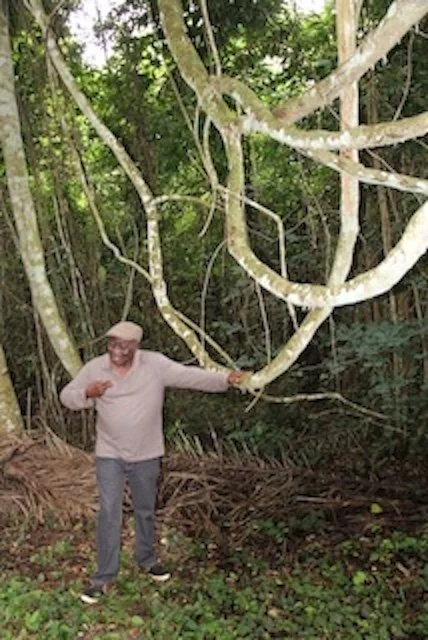
BE Still - One of my favorite verses in the Bible is Psalm 46:10: Be still, and know that I am God. Witness Tree has given me spaces to be still, whether sitting in the courtyard at the Highbridge Guest House in Accra and feeling the refreshing breeze of the surrounding palm trees while I listen to the children laugh and play just outside the gate; walking in the forest of Kakum National Park in Cape Coast, hearing the birds, cicadas, and tree frogs along the path; or the Medicinal tour in Ananse Kwae, informing and centering us to the healing power of plants, trees, fruits, and berries, freely provided to us by our Creator.

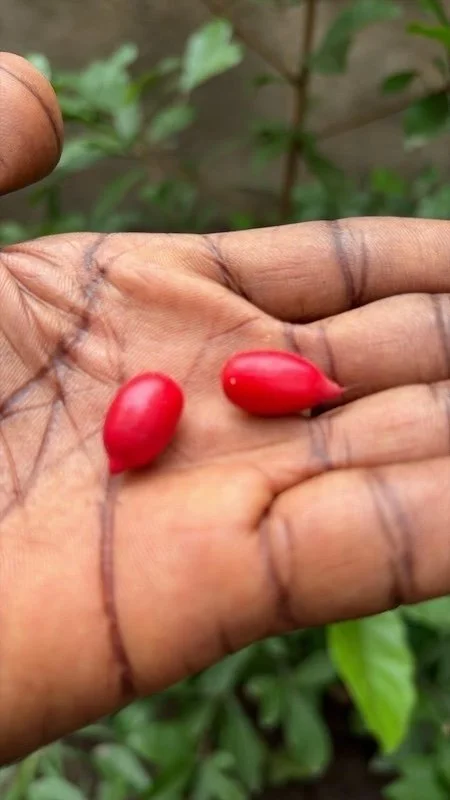
Miracle berry

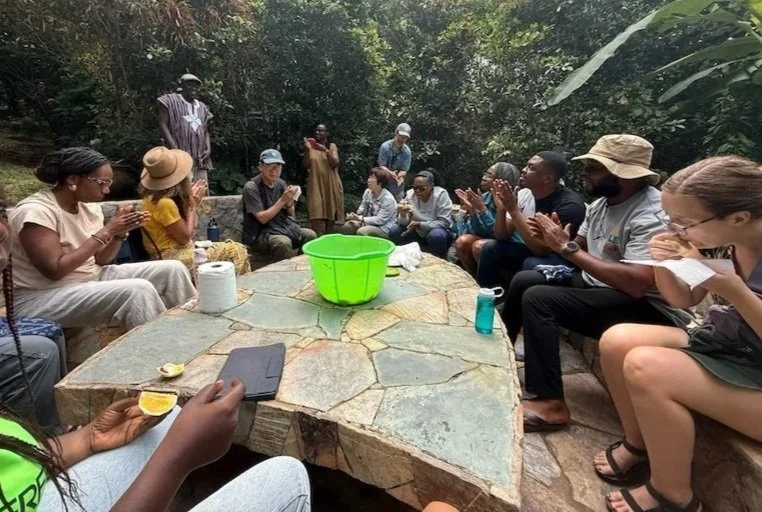
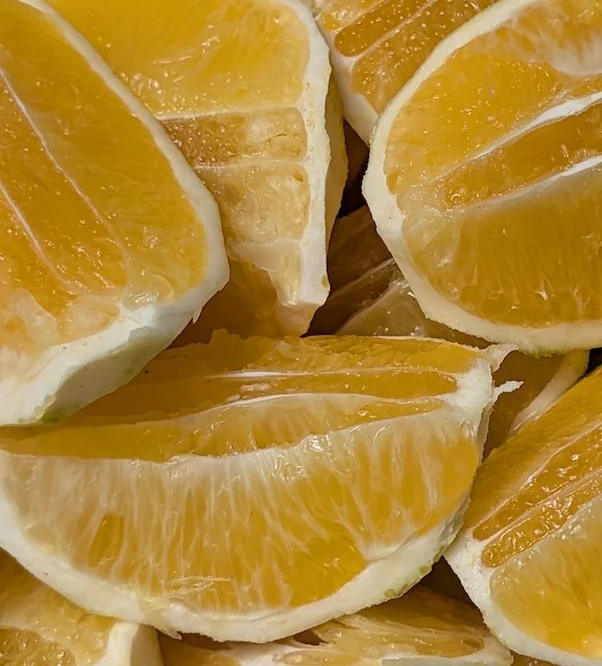
BEcause Of - Professor and Reverend Pashington Obeng reminded us ever so gently that we are because of others, our interdependence on one another, and the call to, in turn, be stewards of what we have been given to support and inspire the next generation. The Honorable Professor gave us an experiential opportunity to taste the sweetness of this concept, Because Of, as we tasted a fresh orange slice and then sucked on the fruit of the “miracle berry,” and then tasted the orange once again. In an instant, the flavor of the orange sweetened as the two fruits interacted together in our mouths.

So has my Witness Tree experience sweetened and revived my weary soul.

Alison Graham is a recently retired Physical Education Teacher from the Meadowbrook School in Weston, MA, a blessed wife and mother of two wonderful young Black men.

Kenichi Kubota

Reflections on My Time in Ghana

I used to keep a diary when I was younger. As work became busier, I gradually stopped writing. Looking back, I realize that writing is one of the best ways to understand my own experiences. So rather than trying to organize these thoughts perfectly, I want to record what Ghana has been teaching me.

This is my third visit to Ghana, but it has felt different from the previous two. Traveling with educators from Ghana, the United States, and Japan has given me opportunities to see familiar things in new ways. More importantly, it has reminded me that who we become is shaped by the relationships we build.

Learning Through Dance

One of our first activities was a dance workshop at the University of Ghana. Japanese people rarely dance in everyday life. As a child, I participated in Bon Odori during summer festivals, where everyone moved together in simple, repeated patterns. Ghanaian dance, by contrast, is energetic, expressive, and physically demanding.

I tried to follow every movement despite the heat and humidity. Before long, I felt dizzy. My body simply would not move the way I wanted it to. At first I blamed my age. But I soon realized something deeper. My body had never learned these movements. I was trying to use muscles that had rarely been asked to work in this way.

Learning something new is often uncomfortable. Yet it is precisely this discomfort that helps us notice what we have overlooked—or perhaps what we have never been taught to notice. That realization will stay with me throughout the program.

Seeing Religion Through Another Culture

Religion is another example. In Japan, people rarely speak openly about religion. Events such as the assassination of former Prime Minister Shinzo Abe reinforced public concerns about the dangers of religious extremism and the harm that organizations can sometimes cause families.

Yet religion has never disappeared from Japanese life. Families still visit Shinto shrines after the birth of a child, celebrate weddings in Christian-style chapels, and hold Buddhist funerals. Rather than belonging to one exclusive faith, many Japanese people participate naturally in several traditions throughout their lives.

Perhaps it is more accurate to describe this as a form of cultural spirituality. In Ghana, religion feels different. Faith is woven into everyday conversation and community life. It appears to strengthen relationships and provide people with a shared sense of purpose.

Neither experience is necessarily better than the other. They simply reveal different ways of understanding spirituality and belonging.

Art as a Language of Culture

The same is true of art. The colorful textiles, expressive dances, paintings, carvings, and symbols of Ghana speak a language quite different from the artistic traditions of Japan.

The more I encountered these differences, the more I appreciated that diversity enriches the world. When people value their own cultural traditions, they create art that reflects unique ways of seeing life. Through experiencing these different forms of beauty, perhaps we also become more willing to accept differences among people themselves.

Teaching Across Cultures

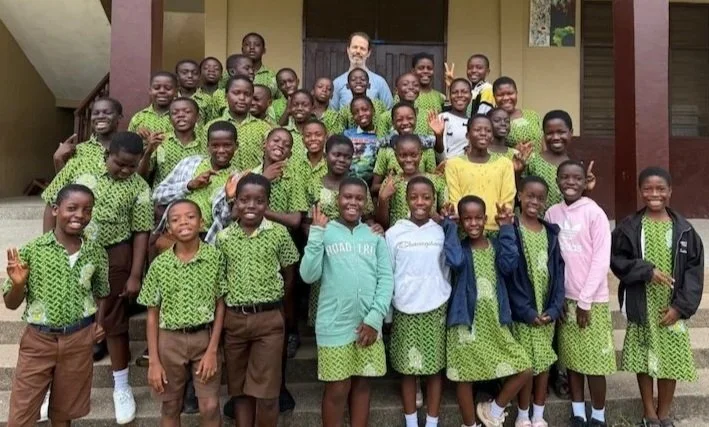
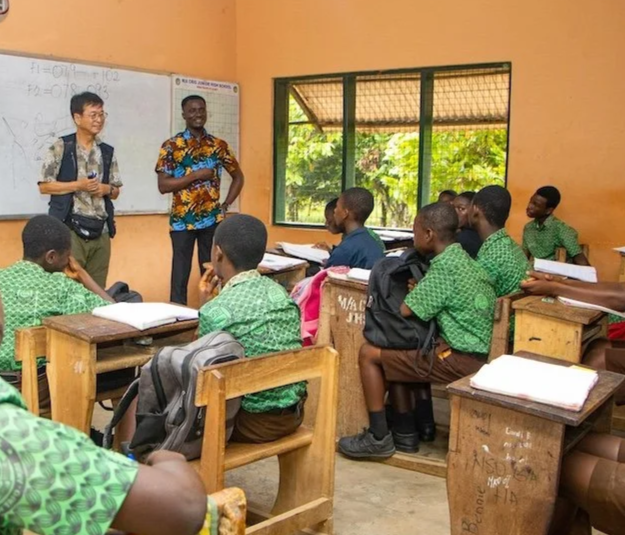
During one school visit, I introduced Japan to a class of eighth-grade students. Many had never met a Japanese person before. They listened with remarkable curiosity as I taught them Japanese greetings, demonstrated how to use chopsticks, and described Japan's four seasons.

Although the classroom was crowded and some students shared chairs, their enthusiasm never faded. Their eagerness reminded me that learning begins not with resources but with curiosity.

Chocolate, Cocoa, and Fairness

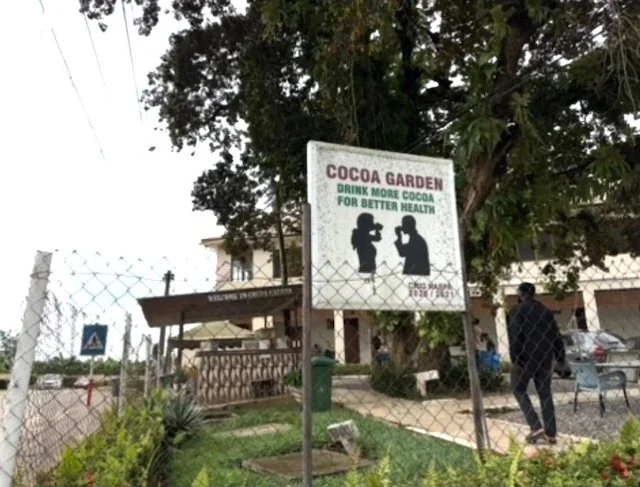
Another memorable visit took us to a cocoa research institute.

Seeing the long journey from cocoa bean to chocolate made me think differently about one of Japan's most familiar products. Many Japanese people recognize Ghana because of Ghana Chocolate, yet few understand the lives of the farmers who grow the cocoa itself.

High-quality agriculture alone cannot guarantee a good life. Global markets determine prices, and those fluctuations deeply affect farming communities.

Learning about cocoa reminded me that every product carries with it human relationships—between producers, consumers, businesses, and nations.

Healing Through Relationships

Walking through a forest, we also learned about medicinal plants used in traditional healing. Japan has its own tradition of herbal medicine known as kampo. Rather than targeting a single illness, kampo seeks to restore balance throughout the body.

I sensed a similar philosophy in some traditional African approaches to healing. Both seem to view health as a matter of relationships within the whole body rather than simply treating isolated symptoms.

Rediscovering Relationships

These experiences continually brought me back to my own academic work in social constructionism.

Social constructionism suggests that we do not become ourselves in isolation. We understand who we are through our relationships—with other people, with nature, with objects, and with the institutions that surround us. Modern society often encourages us to think first about individual success and personal achievement. Yet this perspective alone does little to resolve conflict or strengthen communities.

My time in Ghana has encouraged me to think differently. Here I found myself reflecting more deeply on ancestors, spirituality, community, and humanity's relationship with the natural world. Perhaps changing our perspective requires more than reading books. Sometimes it requires living, even briefly, within another culture.

The Relationships That Shape Us

I had no direct connection with Ghana before meeting Mayumi. Through that relationship, I have now visited this remarkable country three times.

This visit has been especially meaningful because of the conversations, friendships, and shared experiences that have filled each day. I arrived expecting to learn about Ghana. Instead, I have learned something about myself.

The most important lesson I will carry home is that none of us exists alone. We are continually shaped by the relationships we create, and in turn, we help shape the lives of others.

Perhaps that is the greatest gift Ghana has given me.

Kenichi is a Professor Emeritus at Kansai University in Osaka, Japan, and Director of the Forum for I-Learning Creation (FiLC).