Amina Loftin

Where Memory Lives


How do you find connection to a place when your ancestral knowledge has been stripped from you on purpose? This is the question I began to ask on the plane to Ghana.

For me, on this trip, the answer has been through food and ritual.

Before I arrived in Ghana, I thought about history, language, and the weight of returning to a place my ancestors may have once known. I never imagined that my first sense of belonging would come through a meal.

When I was pregnant with my son, his paternal grandmother made me a dish of saltfish, spinach, and pumpkin every week. As a Trinidadian woman, this was how she chose to care for me during my pregnancy. It was nourishment, but it was also love. It was her way of welcoming me into her family and showing me that I belonged. Nearly 30 years later, she still makes that meal every time I come home. Every plate says the same thing: You are welcome. You are family.
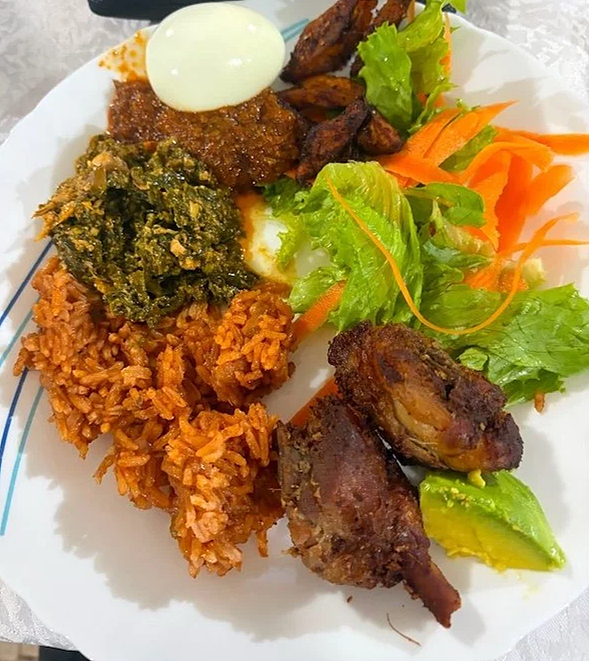
So, when I arrived in Ghana and my first home-cooked meal, prepared by our Ghanaian partners and hosts, included fish and spinach, I was overwhelmed by the familiarity of it. It felt like an unexpected gift.

That meal led me to a different question. How can those of us whose ancestral connections have been disrupted by enslavement and colonialism still find our way home? How does food carry memory when names, languages, and lineages have been taken? How many meals have I cooked, shared, or been fed that have quietly connected me to ancestors whose names I will never know?

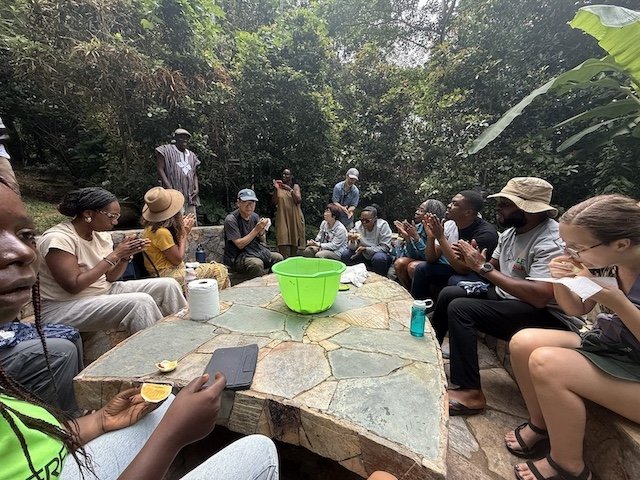
I showed this picture of the meal to my son, who knows the story of saltfish, spinach, and pumpkin by heart. His response was simple: "What a first day story!"

He was right.
I had imagined many things about this journey and program in Ghana, but I never imagined that food would be what made Ghana feel real. A meal I have eaten regularly for nearly 30 years because it reminds me of family, of being welcomed, and of my son suddenly became a bridge across oceans and generations. It reminded me that traditions travel, recipes survive, and love can be carried through something as ordinary, and as sacred, as a shared meal.

The truth is this didn't begin in Ghana.

It began around tables.

Growing up, Sunday dinner was a cornerstone of my life. Food was where stories were told, relationships were nurtured, and love was expressed without needing many words. Today, I continue that tradition by hosting monthly Sunday Dinners, meals for my chosen family. Cooking has become one of the primary ways I care for the people I love.

Maybe that is an inheritance too.

Maybe even when so much ancestral knowledge has been intentionally erased, our bodies remember. Maybe our rituals remember. Maybe the instinct to gather people around a table, to nourish them, to welcome them with food, is itself a form of ancestral memory.

So perhaps my first lesson in Ghana wasn't about discovering something entirely new. Perhaps it was recognizing something that had been with me all along.

Amina Loftin is Director of Community and Belonging at Bertschi School in Seattle, Washington, USA.
Precilla McCarthy

Lessons from Ghana 

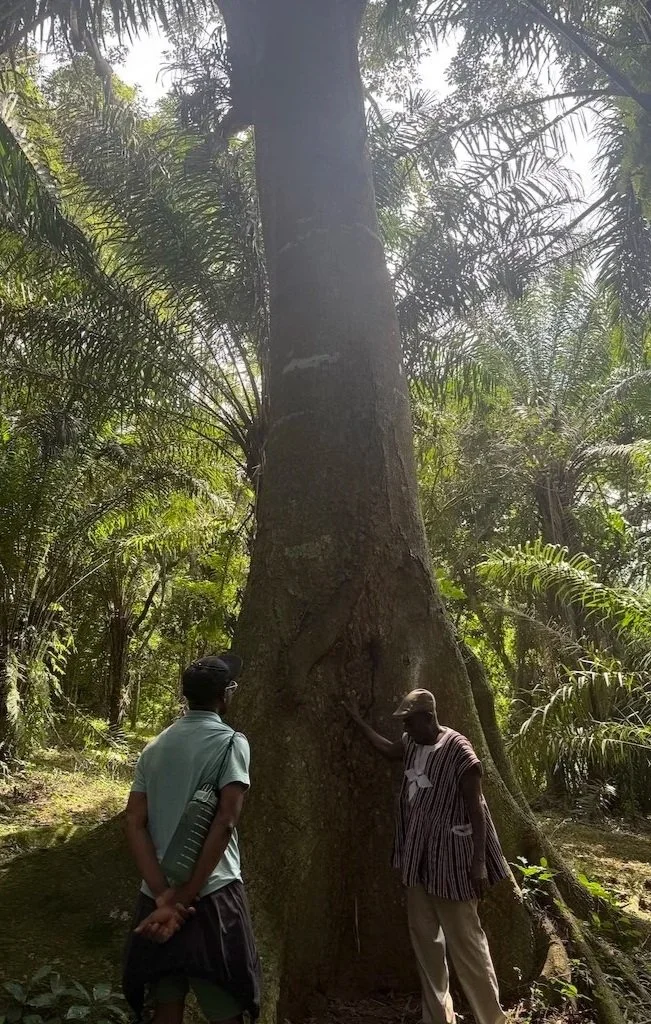
Professor Obeng talks about the Dantu tree at Ananse kwae , Mampong, Akwapim

 We stood by the Dantu tree, with our ear against its majestic trunk. 

“Listen to the tree. Hear what it has to say,” Professor Pash instructed us. 

Since arriving in Accra, we have listened. 

We have listened to the stories and lectures that showed us what it looks like to create narratives collaboratively across oceans, allowed us to reflect on our own spirituality and identities, and led us to question a conventional “blackboard” education.

We were reminded that a true, wholesome education is a lot more than just the books we’ve read; a true education extends beyond the walls of the schoolhouse. Ghanaian children learn by playing games like Tumantu with friends, working alongside a parent at the market or farm, or creating traditional crafts that demonstrate their values and honor their rich culture. 

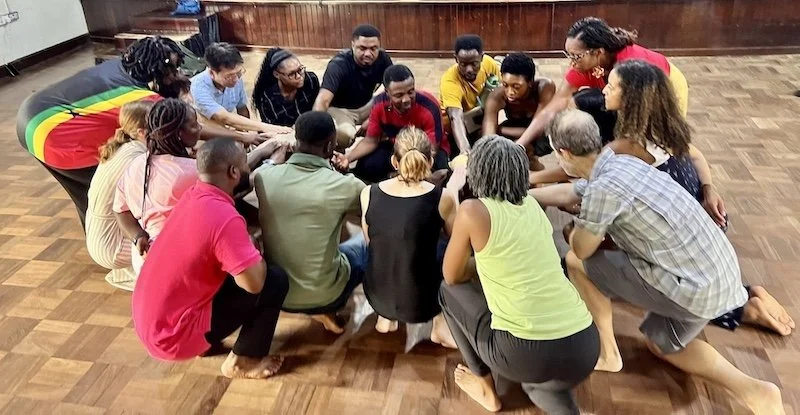
We have danced and used our bodies to tell the story of African people going into the woods, brushing away harmful principles, and planting the seeds for future generations to grow. 

We have listened to the lyrics of classic Ghanaian songs and sung the words that reassure us: “It can be hard, we know, and the roads can be muddy and rough, but we’ll get there.”

We heard seventh grade students excitedly chatter amongst our presence in their classrooms. During time for questions, one student stood up in his green school uniform and asked, “Is there a lot of crime in the U.S?” His question gave me perspective, and I could not help but mentally compare the two countries. 

 The United States which claim to be the land of the free yet keeps people in the chains of which their ancestors wore upon their arrival. 

The United States, which continues to abuse power to beat and oppress African Americans and people of color. 

The United States which has threatened to change its history to support a false narrative and fail to take accountability for its past transgressions. 

The “United” States which divides people and breaks apart families, whether through physical force or differences in political ideologies and beliefs. 

The United States which does not welcome the stranger, as Ghana does, and casts them out as if they are not mothers, fathers, daughters, and sons.

The United States, within its young 250 years as a nation, has much more to learn, and should enroll in some lessons from Ghana. 

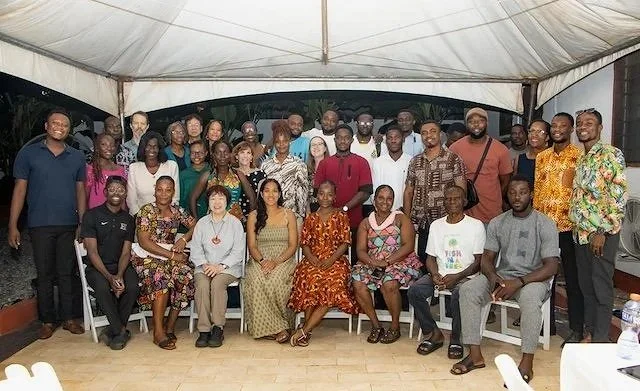
Sankofa Cohort at Anansekwae, Mampong, Akwapim

Ghana has taught us that our lives are intertwined with nature. We ask the trees: 

May we use your roots for spices?

May we use your bark for dyes?

May we use your leaves to cure our bodies and your fruits for nourishment?

The trees always answer yes, and for this we must always be grateful. 

Ghana reminds us of what humanity looks like. Here, no one is better than anyone else. The good of the community is valued over the good of the individual. People come together and are proud of who they are. “We are one Africa,” Yhaa told me when she shared that she was rooting for Morocco in the World Cup. In Ghana, there is no space for a large ego when people are more concerned about feeding the soul.

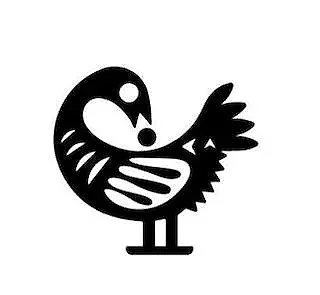
Sankofa- Adinkra symbol

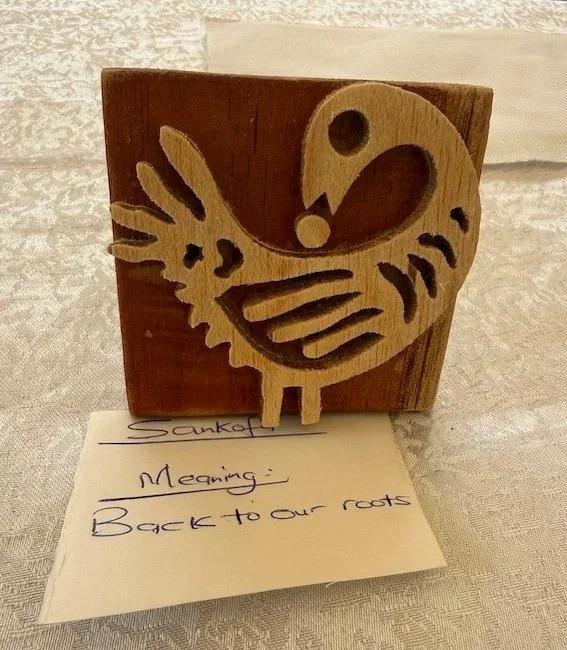
Before we arrived in Ghana, the cohort voted on the Sankofa to represent our identities and values for our journey. This Adinkra motif symbolizes going back to the past and taking wisdom as we step into our futures. Candidly, I did not want to think about my past, but Ghana taught me that to heal and grow, I must come face to face with those memories. 

According to Gloria Anzaldua the American philosopher and scholar, “”Knowing’ is painful because after ‘it’ happens I can't stay in the same place and be comfortable. I am no longer the same person I was before.”

As we reach the halfway point of our journey in Ghana, we have been humbled.  We acknowledge all that we have acquired and experienced thus far. We accept that we are no longer the same people who first stepped into the Accra airport. 

We will take what we have learned from Ghana, carry its seeds across seas, and spread these lessons to those who come after us. 

Now is the time to write our own stories.

As Gertrude Fefoame shared, “It may not be easy, but it could be beautiful.”

Thank you, Ghana, for being our greatest teacher. 

Medaase.

Precilla McCarthy teaches Grade 7 History and Language at Carroll School in Lincoln, Massachusetts, USA.

Abigail Yaa Adoliba

WHEN THE BIRD TURNS BACK

Sankofa cohort 2026 meet with WTIG alumni and friends

There was a time
when every bird knew only one direction—

away.

Away from the forest.
Away from the drum.
Away from the names that first called us home.

Morning still rose over the villages.

Women pounded yam in wooden mortars.
Children chased goats through red earth.
Elders gathered beneath the great baobab,
Where stories ripened with the afternoon shade.

The birds sang from the branches, and everyone

understood their language.

One call promised rain.
Another warned of strangers.
Another welcomed the evening meal.

Then another call came.

The trees heard it first.

The rivers carried it.

The wind carried it farther still.

For centuries the Witness Trees stood in silence,
their roots remembering what the world tried to forget.

They watched babies receive their names.
They listened as elders stitched memory into story.
They stretched their branches over ceremonies of joy,
then over departures no one had chosen.

The birds kept flying.

Always away.

But birds remember.

Akan Sankofa bird

One day the oldest among them rested upon an ancient tree
whose bark had absorbed four hundred years of prayers,
tears, and whispered names.

It turned its head. Then it turned its body , and for the first time in generations,
It faced home.

Today we hear its call.

We search brittle records
and strands of DNA for names history scattered.

We learn songs our grandparents were never allowed to teach.
We dance until forgotten rhythms awaken in our bones.
We prepare the food our ancestors seasoned with memory.

We plant gardens in Detroit,
Atlanta,
Oakland—

not simply to grow food, but to remember that roots still know the way home.

We walk beneath trees
because the earth feels less like property
and more like family.

The bird flies before us.

To Ghana.

To Senegal.

To the rivers.

To the sea.

We stand where chains once silenced countless voices.

We offer libation.

We speak names. We weep.

Not because we are broken,

but because remembrance is our form of healing.

The bird knows what every generation must learn:

You cannot fully know where you are going
until you understand where you have come from.

The slave trade tried to cut the root.

Jim Crow tried to poison the soil.

Distance scattered the seeds.

Still, the roots remembered the rain.

Still, they reached toward light.

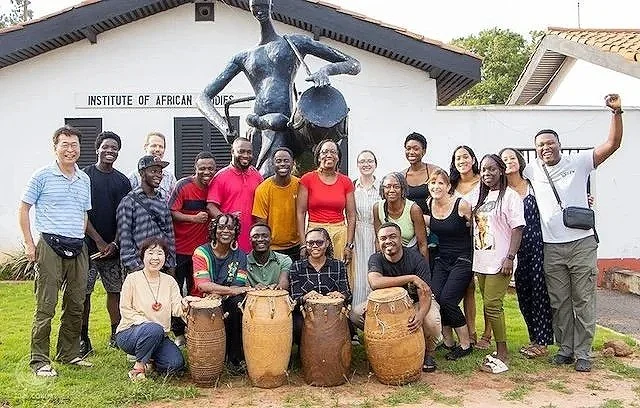
Witness Tree’s Sankofa Cohort 2026 with Dance Professor Kofi Antonio and team

Perhaps the greatest gift one human being can offer

Is the chance to recover a name, to reclaim a story,

To discover that history may scatter a people,

Yet it cannot erase the path home.

The bird called.

This time,

We turned.

And beneath the ancient Witness Trees,

Our names remembered who we are.

Abigail Yaa Adoliba is a graduate of Accra College of Education and a Preschool Teacher at Queen’s International School in East Legon, Ghana.

Mayumi Kubota

Turning Scattered Memories into One

It takes time to make fufu. Boiled plantain and cassava must be pounded together for a long time before they become one smooth, unified texture. In the finished fufu, you can no longer tell which part was plantain and which part was cassava. The green and the brown disappear, leaving only white.

This journey has been like making fufu.

My scattering memories of teaching mathematics at Okuapeman Secondary School in Akropong, Akwapim have slowly been brought together, blending and maturing into the philosophy of life that shapes who I am today.

I have reunited with old friends and met new ones. We have talked about familiar subjects and explored unfamiliar ones. We have learned together, shared experiences, and discovered emotions that words alone cannot fully express.

Whether in English, Japanese, Twi, Ga, or Hausa- words are inadequate to describe what I have experienced, what I have felt, and even who I have become.

Instead, it is dancing together, singing together, embracing one another, and meeting each other's eyes that awaken something deeper within me. At first, I thought these memories had been hidden somewhere inside my body. But perhaps they were never mine alone. Perhaps they were buried among the people with whom I experienced them.

To recover them, I need other human beings. I need real people—not even generative AI.

This journey has reminded me of the extraordinary value of human connection. We are not always efficient, and we are certainly not perfect. Yet we possess an energy and a power that no machine can replace. Each speaker I have listened to has spoken with confidence—not because every word was supported by formal evidence, but because their words were rooted in lived experience and personal truth.

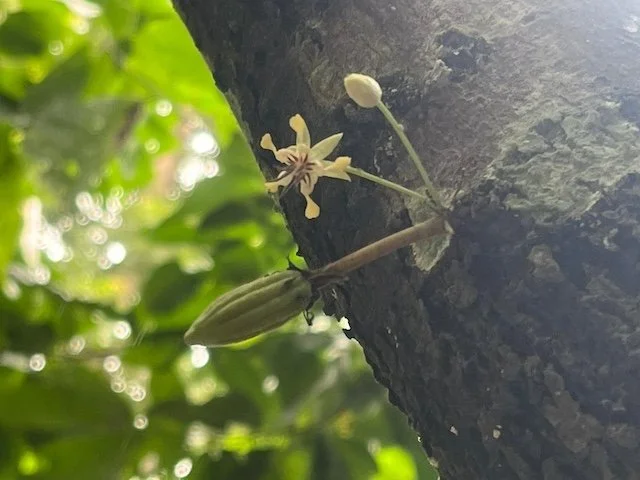
Cauliflory on a cocoa tree, Tafo, Eastern Region, Ghana

About forty-five years ago, I visited a cocoa farm in Ghana. I was astonished to see cocoa pods growing directly from the trunk of the tree, and I never forgot that sight.

Today, we visited the Cocoa Research Institute of Ghana (CRIG). The cocoa pods still grow from the trunk, just as they did all those years ago. This time, however, what surprised me was something different. I learned that cocoa beans are still dried under the sun, just as they were decades ago.

When I first came to Ghana in 1980 as a Japanese volunteer with the Japan International Cooperation Volunteers—the Japanese equivalent of the American Peace Corps—I was fascinated by the many differences I encountered: the food, transportation, concepts of time, the education system, the economy, Ghanaian English, customs, and daily life.

This journey, however, has taught me to notice what has remained unchanged.

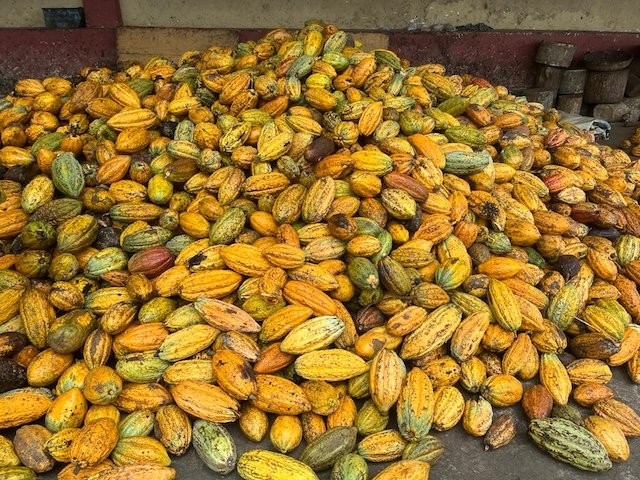
Harvested Cocoa pods

Cocoa beans are still dried under the sun. Vendors still balance pans of bottled water on their heads and skillfully sell bottles to drivers waiting at traffic lights. Along the roadside, people still sell furniture, tires, concrete blocks, potted plants, and school bags.

Most importantly, the bright, eager eyes of Ghanaian students have not changed.

Their hands still shoot into the air with questions. They remain curious, enthusiastic, and eager to understand. That spirit is exactly as I remember it from forty-five years ago.

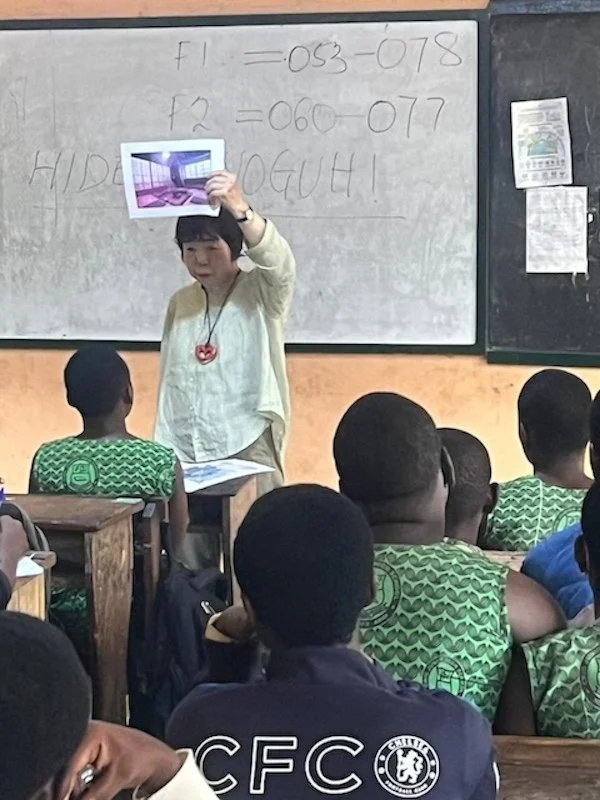
At the CRIG Public School, I had the opportunity to share the story of Hideyo Noguchi with the Grade 8 students.

Teaching about Japanese bacteriologist Dr. Hideyo Noguchi

Hideyo Noguchi was one of Japan's most celebrated bacteriologists and medical researchers. Born into a poor farming family in 1876, he suffered severe burns to his left hand after falling into a hearth fire when he was only eighteen months old. At the age of fifteen, surgery restored much of the use of his hand, inspiring him to pursue medicine.

His mother encouraged him to study diligently, believing that because of his injured hand he could not depend on farming for his future. Through perseverance, he passed Japan's national medical licensing examination in 1900.

Noguchi's work eventually took him across the world. After gaining international experience in Tianjin, China, he continued his research in Philadelphia before joining the Rockefeller Institute in New York. In 1912, he married an American woman.

His research later led him to Ecuador, Peru, Brazil, and finally Ghana, where he came to study yellow fever. Tragically, in 1928, he contracted the very disease he was investigating and died in Accra at the age of fifty-one.

At that time, viruses could not yet be seen with the optical microscopes available to scientists. Today, his microscope is preserved at the Dr. Hideyo Noguchi Museum and Memorial Garden at Korle-Bu Teaching Hospital. His life reminds us of the courage required to cross borders in pursuit of knowledge and in service to humanity.

I chose to tell his story for two reasons. First, he represents a remarkable connection among Japan, the United States, and Ghana. Second, in many ways, his life reflects my own journey. But that is a much longer story, and I will save it for another time.

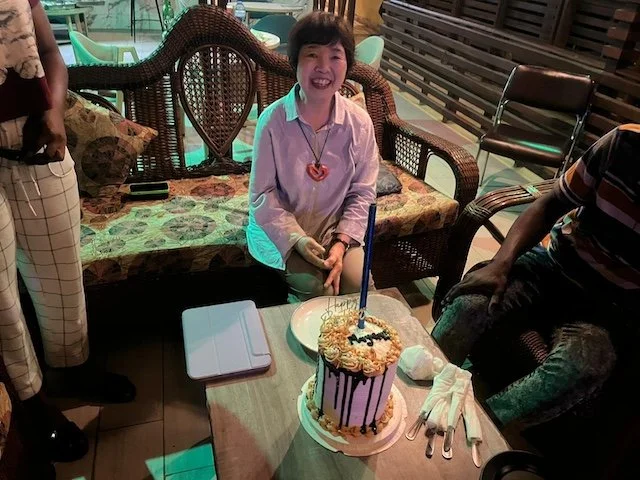
On July 9, I celebrated my seventy-first birthday.

Sankofa Cohort 2026 surprise me with a cake on my birthday.

Despite our demanding schedule, my fellow cohort members surprised me with a beautiful birthday cake and a heartfelt celebration. It was a deeply touching moment that I will cherish for the rest of my life.

Thank you all for your kindness and thoughtfulness.

The hospitality of the Ghanaian cohort remains one of the greatest expressions of Ghanaian culture. It has not changed over the years. Without their generosity, I could never have experienced this journey so fully or so meaningfully.

Like fufu, my scattered memories are slowly being pounded together into one gracious whole.

Medaase.

Mayumi Kubota is Professor Emerita of Intercultural Communication at Kansai University in Osaka, Japan. She was also a Japanese Overseas Volunteer to Ghana.

Seth Obeng Akomeah

Fontomfrom: The Witness Tree Speaks

A Story of Memory, Loss, and Hope


GONG, GONG, BU-BUDU , BU-BUDU

LISTEN TO THE FONTOMFROM DRUMS!

Stand with me here, beneath the Witness Tree.

Be still for a moment.

Listen carefully.

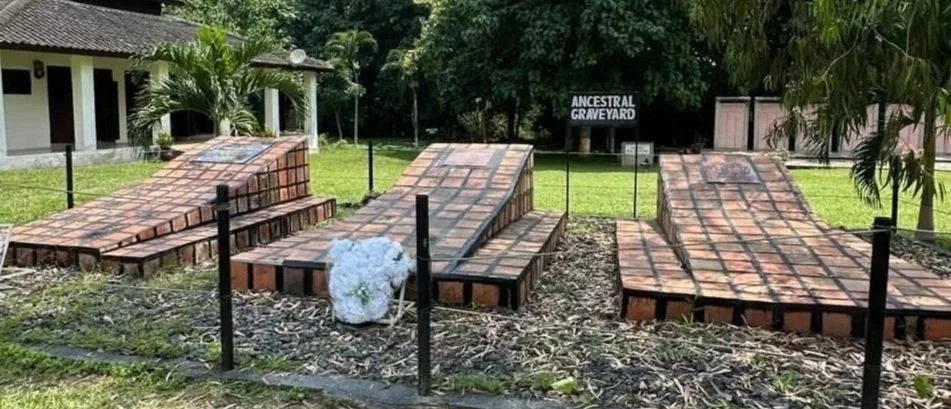
Do you hear it? No. Not the rustling of leaves or the songs of birds, but something deeper—the faint echo of chains scraping against the earth. The drums recall, the earth recalls. Though centuries have passed, this place still whispers the stories of those whose voices were silenced but never forgotten.

They did not begin their lives as “slaves.”

They were fathers and mothers, daughters and sons. A blacksmith whose skilled hands shaped iron into tools of life. A mother who sang lullabies beneath the stars. A young trader setting out for the market with dreams for the future. They came from Asante, Fante, Dagbon, Yoruba, Igbo, Wolof, Mande, and countless other African kingdoms and communities. They had names. Families. Languages. Cultures. Hopes. Laughter.

Then, in a single moment, everything changed.

Some were captured during wars. Others were betrayed and sold for guns, mirrors, cloth, or bottles of liquor. Some were seized while traveling or working in their fields. Families were torn apart. Children lost their parents. Husbands and wives were separated forever.

Their freedom disappeared, and with it the lives they had known.

Their long and painful journey began.

Bound together with heavy iron chains around their necks and ankles, they walked barefoot for days—and sometimes weeks—beneath the blazing African sun. Hunger, thirst, exhaustion, and cruelty became their constant companions. Those too weak to continue were beaten until they rose again—or were left behind.

Eventually, they reached a quiet river known today as Donkor Nsuo—the Slave River.

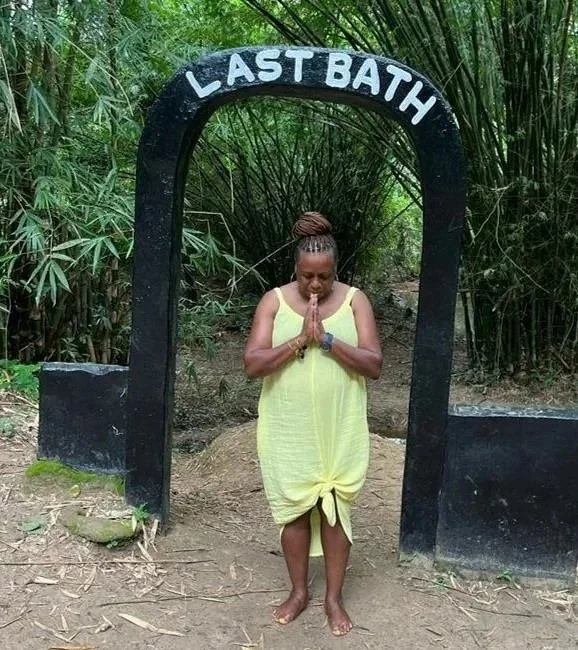
Now we remember it as the place of The Last Bath.

Here, the captives were forced into the water. To the traders, it was merely a way to wash their human cargo. But for the captives, it became something far more profound.

It was the last time the waters of their homeland touched their skin.

Many silently cupped the water in their hands, whispered prayers to God and to their ancestors, and gazed upon their homeland one final time.

From Assin Manso, they were marched to the imposing forts and dungeons of Cape Coast and Elmina. From a distance, their white walls appeared majestic. Inside, they concealed unimaginable suffering.

The dungeons were dark, crowded, and filled with unbearable stench. Hundreds of men and women were confined in spaces built for only a fraction of their number. Disease spread rapidly. Fresh air scarcely entered. Sunlight rarely reached them.

Women endured unspeakable abuse. Parents watched helplessly as their families suffered. Children cried without understanding why their world had suddenly become a prison.

For weeks—and sometimes months—they waited in darkness, uncertain whether they would live to see another sunrise.

Some scratched marks into the stone walls.

Not works of art.

Not decorations.

Simply evidence that they had lived.

"Remember me."

Then came the final morning.

One by one, they were brought from the dungeons, branded with hot irons, and driven toward a small doorway overlooking the Atlantic Ocean.

For many, these were their last sights of Africa—the blue sea, the swaying palm trees, the endless sky, and the land that had given them life.

Beyond that doorway waited the slave ships.

Beneath their decks lay darkness, suffocating heat, disease, hunger, and despair. Chained shoulder to shoulder, many could neither stand nor turn. Countless lives ended before the ships ever reached the Americas. The Atlantic Ocean became the resting place of thousands whose names history never recorded. Yet the greatest theft was not only of their bodies.

Their languages were taken.

Their names were changed.

Their families were scattered.

Their music was silenced.

Their traditions were forbidden.

Their dignity was denied.

For centuries, men, women, and children—created in the image of God—were treated as property. Yet their humanity could never be erased.

Today, their descendants live across the Americas, the Caribbean, Europe, and throughout the world. Many know they are of African ancestry but cannot identify the village, the family, or even the river from which their ancestors came.

Here in Ghana, we remember those who never returned. They are connected to us. Their story is our story.

That is why the Witness Tree still stands.

It bears silent testimony to one of humanity's darkest chapters while reminding us that remembrance is the beginning of healing.

The Akan proverb teaches us:

"Tete Wo Bi Ka, Tete Wo Bi Kyerɛ." The past has something to say. The past has something to teach.

When this story is told, hopefully it teaches a lesson. The lesson is not to dwell forever in sorrow, but to protect human dignity, reject injustice, and build bridges where history once built walls.

So, come.

Walk this sacred path.

Stand beneath the Witness Tree.

Visit Donkor Nsuo.

Touch the cold walls of the dungeons.

Pause before the Door of No Return.

Remember those whose footsteps once echoed here.

But do more than remember.

Allow this place to change you.

For when all races, especially Africans, and people of African descent throughout the world remember this history together, memory becomes healing, healing becomes reconciliation, and reconciliation begets hope.

The Witness Tree speaks.

May we never stop listening.

May we never forget what happened here.

And may we leave this sacred place with a renewed commitment to put our common humanity before prejudice, justice before indifference, and compassion before hatred.

Because a Witness Tree does not merely preserve the past.

It calls each generation to bear witness.

Today, we are the Witness Tree.

Seth Obeng Akomeah is a WTIG alum, a musician and choirmaster. He teaches music at the Battor Senior High School, Volta Region-Ghana

Ama Boatemaa Acheampong

Every Person Is a Story Waiting to Be Heard: Why Storytelling Makes Us More  Human

"The greatest stories are not always found in books. They are found in people."

Every person we meet carries a story. Some stories are shared openly, while others remain hidden behind smiles, silence, and ordinary conversations. We often judge people by what we see on the surface, forgetting that every face has journeyed through valleys and storms, celebrated victories, endured disappointments, and displayed extraordinary courage.

One of the greatest lessons life has taught me is this: until we come close enough to people, we may never know the battles they have fought or the victories they have earned.

This is why storytelling matters. Stories are more than entertainment. They preserve memory, teach values, build empathy, and remind us that hope often takes root where despair once lived. Many stories begin with pain and uncertainty, leaving us wondering whether they will ever have a joyful ending. Yet, as they unfold, we often discover that healing comes through another human being who chooses to care.

One remarkable example is Mrs. Gertrude Oforiwaa Fefoame, a Ghanaian woman whose life changed dramatically at the age of eleven. She gradually lost her sight because of an eye condition. Although she received support from family, she also encountered people who believed her blindness had ended her future. As a young student studying science, she had dreamed of a career in the scientific community, but those dreams suddenly seemed beyond reach.

But one person refused to accept that narrative. A friend named Grace believed in her when many others did not. Grace became more than a companion; she became a source of hope. “Sometimes all it takes is one person to say, "You can," when the world is saying, "You cannot." “ she said. That simple encouragement became a turning point in her life.

Today, Mrs. Gertrude Oforiwaa Fefoame is internationally recognized for championing the rights of persons with disabilities. Her life reminds us that disability does not define destiny. More importantly, it demonstrates how one person's encouragement can redirect another person's future. Her story beautifully illustrates what many call Gracious Space—creating environments where people are welcomed, respected, heard, and empowered to become their best selves.

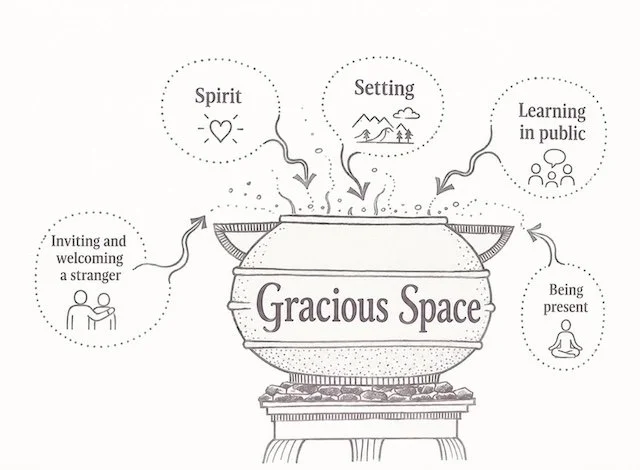
Drawing by Emily Williamson

I recognize that the five elements of Gracious Space come alive in the telling of Mrs. Fefoame’s story-

Spirit reminds us that every human being possesses inherent worth. Grace saw ability where others saw limitation. She chose compassion instead of pity and hope instead of despair.

Setting teaches us that environments shape human growth. When communities create spaces where everyone belongs—regardless of disability, background, or status—people flourish rather than merely survive.

Learning in Public calls us to humility. Listening to another person's story challenges our assumptions. We become students instead of judges, discovering that wisdom is found not only in classrooms but also in lived experience.

Inviting and Welcoming the Stranger asks us to embrace those whose lives differ from our own. Often, a stranger is simply someone whose experiences we have never taken the time to understand. Inclusion begins when we intentionally make room for others.

Being Present may be the greatest gift of all. Presence means listening without rushing, encouraging without controlling, and walking beside someone through difficult seasons. Grace did not simply offer advice; she offered companionship. Often, people need someone who will stay with them before they need someone to solve their problems.

These principles are not merely theories. They are practical expressions of our shared humanity.

This is why storytelling remains one of humanity's greatest gifts. Stories transform statistics into people, history into memory, and strangers into neighbors. They remind us that behind every achievement lies sacrifice, behind every smile may be hidden tears, and behind every ordinary person may be an extraordinary testimony waiting to be heard.

The work of Witness Tree Institute Ghana reflects this same philosophy. By preserving and sharing the stories of Ghana’s glorious past and history-resilience, reconciliation, and human dignity and also the dark version of the trans-Atlantic slave trade, the Institute creates space where people from diverse backgrounds gather not simply to learn history but to encounter our shared humanity. We are invited to listen deeply, reflect honestly, and leave transformed by voices that might otherwise have been forgotten.

Our stories have the power to heal, educate, and inspire future generations. Every program, ceremony, and conversation encourages participants to look beyond differences, honor our present , acknowledge painful histories, and embrace our common humanity.

Perhaps the greatest lesson is this: every person deserves to have their story heard before they are judged.

Every conversation is an opportunity. Every stranger is a potential teacher. Every act of kindness can become the turning point in someone's story. And perhaps, somewhere, someone is waiting for us to become the "Grace" in their own journey. Each time we choose compassion over judgment, welcome over exclusion, or presence over indifference, we write a new chapter in the human story.

I think in the end, storytelling is not simply about remembering the past or entertaining people. If we are intentional about how and where we share our stories, how well we listen to them, we would in the end, be creating a more compassionate future—one story, one listener, one gracious space, and one life lesson at a time.

Ama Acheampong teaches English Language and Religious & Moral Education at the Nyigbenya D/A Basic School, Ada, Greater Accra,

Kwasi Ntim Agyei

Step Forward, Step Back

"Agoo!" the leader called with warmth and confidence.

"Ameee!" came the joyful response, rising in one harmonious voice that filled the room with excitement and unity.

In that simple yet powerful exchange lay the heartbeat of our Ghanaian heritage—a call for attention, a sign of respect, and an invitation to journey together.

From that moment, strangers became companions, and companions became family. Our cohort blossomed into a community bound by purpose, kindness, and a shared commitment to learning and growing together.

Not long ago, I sat with a traditional elder who quietly shared a story that has remained etched in my heart.

He said, "A good mother prepares her daughter in secret and allows her to prove herself in public."

As I reflected on those words, I realized they were not only about motherhood—they were about leadership.

For us at the Witness Tree Institute of Ghana, that "good mother" has been Tete Cobblah and Elizabeth Updike Cobblah. They have invested in people long before asking them to lead.

At first, I thought the elder was simply speaking about raising children. Later, I understood that he was describing one of the greatest responsibilities of a leader: preparation.

This year, Uncle T, as we affectionately call Mr. Tete Cobblah, could not join the 2026 cohort because of health challenges. Yet instead of holding tightly to leadership or believing that no one else could carry the responsibility, he and his wife Aunty Liz and the WTIG board chose a different path. Uncle T, as the director, entrusted others with leadership and empowered them to guide the affairs of the Institute.

That is the mark of true leadership.

An Akan proverb says, "The elder who teaches the child to climb a tree does not fear when the child reaches the top." Confidence in others is born from the investment we make in them.

Uncle T never looked down on those he selected to lead this year. He gave them hope, direction, encouragement, and the practical preparation they needed to succeed. He understood that leadership is not about creating followers who depend on you forever rather it's about raising leaders who can stand even when you are absent. Naturally, one or two of the new leaders ( Babara, Denise and Dela) were nervous. Some feared making mistakes. Others questioned whether they were capable enough. But fear is often the first companion of responsibility.

Uncle T, the founder and director of the Witness Tree Institute, reminded them of something profound; that making mistakes does not mean you are incompetent. Mistakes are the chisels that shape character, wisdom, and excellence. Every accomplished leader was once a beginner who dared to learn.

There is another story that perfectly illustrates this truth.  Imagine an engineering lecturer who refuses to board an aircraft because it was designed and built by his own students. Such a teacher has already confessed that he failed to teach his students well. Maybe he lacked truth in his own knowledge or words. If a teacher cannot trust the people he has trained, then his confidence in his own work is questionable.

This is exactly what I have experienced at the Witness Tree Institute- Learning here goes beyond books and classrooms. We are trusted with responsibilities, encouraged to lead, corrected with love, and allowed to grow through experience.

That is not the Witness Tree way.

Here, learning extends far beyond books and classrooms. We are trusted with responsibility, encouraged to lead, corrected with love, and given the freedom to grow through experience.

The WTIG Sankofa Cohort of 2026 is already becoming a family.  It's so beautiful to see  every member embracing leadership in their own unique ways, looking out for one another, leading discussions with confidence, keeping our learning environment clean, and generously sharing snacks. We are living the Akan proverb, "Nsa baako nkura adesoa (One hand cannot lift a heavy load).” We are making strong connections and when hearts unite, every burden becomes lighter and every success becomes sweeter.

The success of true leadership is measured by the confidence the leader instils in his people to make them  effectively continue his or her  journey or dream. As a leader of this year’s Witness Tree Institute cohort, and the beneficiary of such grace, this journey has shaped me into the person I am becoming.

And perhaps, that is the truest definition of leadership.

Medaase.

Kwasi Ntim Agyei is a 2026 co-leader and the Cultual Coordinator of the WTIG. He is a musician, and teaches creative arts at the Kpohe Basic school, Kpohe, Ghana

Dela Awutey

Fatherhood: The Most Personal Gracious Space I Have Ever Entered

“…to trust that transformation happens where grace is present. These are not simply leadership lessons. They are fatherhood lessons.”

Before becoming a father, I believed Gracious Space was something I practiced on other people.

I experienced it throughout my years of association with the Witness Tree Institute of Ghana- during conversations with cohort members, while listening to counter perspectives, and in moments that challenged me to welcome “the stranger.” I thought I understood what Gracious Space truly meant.

Then I became a father a few months before the program began, and I began to wonder if Gracious Space is more than the simple interpretation I had come to embrace. Is it also, and perhaps more importantly space one must first create within ourselves?

Nothing truly prepares you for holding your child for the first time. In that moment, joy and fear walk hand in hand. You suddenly realize that someone will depend on you in ways no one ever has before. Every decision feels significant, every cry matters, and every day becomes a lesson you never thought you needed.

As a first-time father, I quickly learned that I would not get everything right. There were moments when I felt confident in my decisions and others when uncertainty overwhelmed  me. There were sleepless nights, unanswered questions, and challenges I never anticipated.

It was there that Gracious Space quietly found me. Fatherhood, I have discovered, is not about mastery but about continual practice. My daughter has become one of my greatest teachers. She has taught me patience when I wanted quick solutions, presence when my mind wandered, and humility when I realized that love is measured not by perfection but by consistency.

I am also learning to suspend judgment—especially toward myself.

On Father's Day, I thought, we celebrate fathers who appear to have everything figured out. Yet within each father is a student; still learning, adjusting, doubting self, making mistakes, and trying again. I have learned to replace self-criticism with self-compassion, recognizing that growth is not a sign of failure but an essential part of my growth.

Perhaps the greatest surprise has been discovering what it truly means to welcome the stranger. Every stage of my daughter’s life introduces me to someone new. Just when I think I know her, she changes. She reveals another part of herself. Fatherhood is a continual invitation to welcome each new version of the child you love—and, in the process, to welcome a new version of yourself.

Looking back, I recognize that Witness Tree Institute prepared me for fatherhood in ways I never imagined. It taught me to listen before speaking. To value people more than being right. To create spaces where others feel safe to grow. To trust that transformation happens where grace is present. These are not simply leadership lessons. They are fatherhood lessons.

If fatherhood has taught me one enduring truth, it is this: children do not need perfect parents. They need present ones. Parents who apologize when they are wrong. Parents who continue learning. Parents who create homes where mistakes become opportunities for growth rather than reasons for shame. That is Gracious Space.

As I continue this journey, I hope my daughter grows up knowing that our home is a place where questions are welcomed, differences are respected, mistakes are met with grace, and love is never earned through perfection.

The more I reflect on this, the more I realize that the work of building a more compassionate and just world begins long before we enter a classroom, lead a workshop, or facilitate dialogue. It begins in our homes—in the everyday moments when we choose patience over frustration, curiosity over judgment, and grace over perfection. Perhaps that is the deeper lesson the Witness Tree Institute  has been teaching me all along. The Gracious Space we strive to create among educators, across cultures, and within communities must first be nurtured in the relationships closest to us. When our children grow up knowing they are seen, heard, valued, and loved, they are more likely to extend that same grace to others. In this way, the home becomes the first classroom of empathy, belonging, and reconciliation.

I think in the end, the idea of Gracious Space is not only something we build in classrooms or around Witness Tree Institute’s opportunities. It is something we cultivate within ourselves, in our families and friendships, carry into our communities, and offer to the world.

For me, fatherhood has become the most personal Gracious Space I have ever entered—and perhaps the most important place from which to practice everything this beloved educational organization has taught me.

Dela Awutey is a co-leader of the 2026 WTIG cohort, a WTIG alum, and a teacher at the Doryumu Methodist Basic School, Doryumu, Ghana