Fontomfrom: The Witness Tree Speaks
A Story of Memory, Loss, and Hope
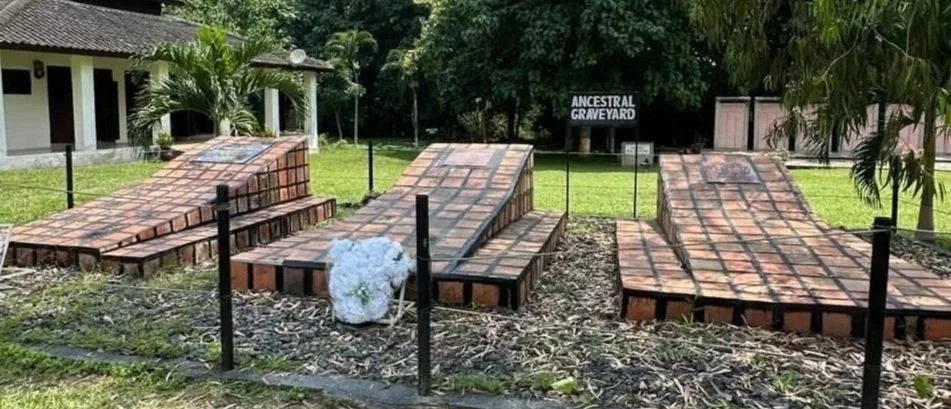
GONG, GONG, BU-BUDU , BU-BUDU
LISTEN TO THE FONTOMFROM DRUMS!
Stand with me here, beneath the Witness Tree.
Be still for a moment.
Listen carefully.
Do you hear it? No. Not the rustling of leaves or the songs of birds, but something deeper—the faint echo of chains scraping against the earth. The drums recall, the earth recalls. Though centuries have passed, this place still whispers the stories of those whose voices were silenced but never forgotten.
They did not begin their lives as “slaves.”
They were fathers and mothers, daughters and sons. A blacksmith whose skilled hands shaped iron into tools of life. A mother who sang lullabies beneath the stars. A young trader setting out for the market with dreams for the future. They came from Asante, Fante, Dagbon, Yoruba, Igbo, Wolof, Mande, and countless other African kingdoms and communities. They had names. Families. Languages. Cultures. Hopes. Laughter.
Then, in a single moment, everything changed.
Some were captured during wars. Others were betrayed and sold for guns, mirrors, cloth, or bottles of liquor. Some were seized while traveling or working in their fields. Families were torn apart. Children lost their parents. Husbands and wives were separated forever.
Their freedom disappeared, and with it the lives they had known.
Their long and painful journey began.
Bound together with heavy iron chains around their necks and ankles, they walked barefoot for days—and sometimes weeks—beneath the blazing African sun. Hunger, thirst, exhaustion, and cruelty became their constant companions. Those too weak to continue were beaten until they rose again—or were left behind.
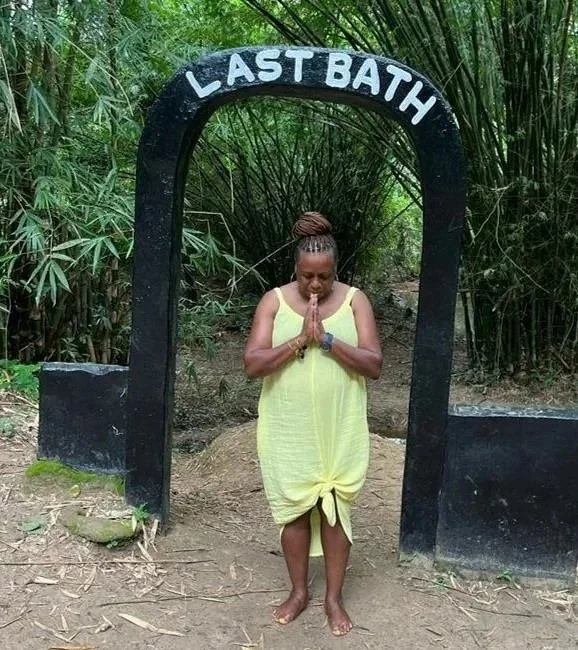
Eventually, they reached a quiet river known today as Donkor Nsuo—the Slave River.
Now we remember it as the place of The Last Bath.
Here, the captives were forced into the water. To the traders, it was merely a way to wash their human cargo. But for the captives, it became something far more profound.
It was the last time the waters of their homeland touched their skin.
Many silently cupped the water in their hands, whispered prayers to God and to their ancestors, and gazed upon their homeland one final time.
From Assin Manso, they were marched to the imposing forts and dungeons of Cape Coast and Elmina. From a distance, their white walls appeared majestic. Inside, they concealed unimaginable suffering.
The dungeons were dark, crowded, and filled with unbearable stench. Hundreds of men and women were confined in spaces built for only a fraction of their number. Disease spread rapidly. Fresh air scarcely entered. Sunlight rarely reached them.
Women endured unspeakable abuse. Parents watched helplessly as their families suffered. Children cried without understanding why their world had suddenly become a prison.
For weeks—and sometimes months—they waited in darkness, uncertain whether they would live to see another sunrise.
Some scratched marks into the stone walls.
Not works of art.
Not decorations.
Simply evidence that they had lived.
"Remember me."
Then came the final morning.
One by one, they were brought from the dungeons, branded with hot irons, and driven toward a small doorway overlooking the Atlantic Ocean.
For many, these were their last sights of Africa—the blue sea, the swaying palm trees, the endless sky, and the land that had given them life.
Beyond that doorway waited the slave ships.
Beneath their decks lay darkness, suffocating heat, disease, hunger, and despair. Chained shoulder to shoulder, many could neither stand nor turn. Countless lives ended before the ships ever reached the Americas. The Atlantic Ocean became the resting place of thousands whose names history never recorded. Yet the greatest theft was not only of their bodies.
Their languages were taken.
Their names were changed.
Their families were scattered.
Their music was silenced.
Their traditions were forbidden.
Their dignity was denied.
For centuries, men, women, and children—created in the image of God—were treated as property. Yet their humanity could never be erased.
Today, their descendants live across the Americas, the Caribbean, Europe, and throughout the world. Many know they are of African ancestry but cannot identify the village, the family, or even the river from which their ancestors came.
Here in Ghana, we remember those who never returned. They are connected to us. Their story is our story.
That is why the Witness Tree still stands.
It bears silent testimony to one of humanity's darkest chapters while reminding us that remembrance is the beginning of healing.
The Akan proverb teaches us:
"Tete Wo Bi Ka, Tete Wo Bi Kyerɛ." The past has something to say. The past has something to teach.
When this story is told, hopefully it teaches a lesson. The lesson is not to dwell forever in sorrow, but to protect human dignity, reject injustice, and build bridges where history once built walls.
So, come.
Walk this sacred path.
Stand beneath the Witness Tree.
Visit Donkor Nsuo.
Touch the cold walls of the dungeons.
Pause before the Door of No Return.
Remember those whose footsteps once echoed here.
But do more than remember.
Allow this place to change you.
For when all races, especially Africans, and people of African descent throughout the world remember this history together, memory becomes healing, healing becomes reconciliation, and reconciliation begets hope.
The Witness Tree speaks.
May we never stop listening.
May we never forget what happened here.
And may we leave this sacred place with a renewed commitment to put our common humanity before prejudice, justice before indifference, and compassion before hatred.
Because a Witness Tree does not merely preserve the past.
It calls each generation to bear witness.
Today, we are the Witness Tree.
Seth Obeng Akomeah is a WTIG alum, a musician and choirmaster. He teaches music at the Battor Senior High School, Volta Region-Ghana