Where Memory Lives
How do you find connection to a place when your ancestral knowledge has been stripped from you on purpose? This is the question I began to ask on the plane to Ghana.
For me, on this trip, the answer has been through food and ritual.
Before I arrived in Ghana, I thought about history, language, and the weight of returning to a place my ancestors may have once known. I never imagined that my first sense of belonging would come through a meal.
When I was pregnant with my son, his paternal grandmother made me a dish of saltfish, spinach, and pumpkin every week. As a Trinidadian woman, this was how she chose to care for me during my pregnancy. It was nourishment, but it was also love. It was her way of welcoming me into her family and showing me that I belonged. Nearly 30 years later, she still makes that meal every time I come home. Every plate says the same thing: You are welcome. You are family.
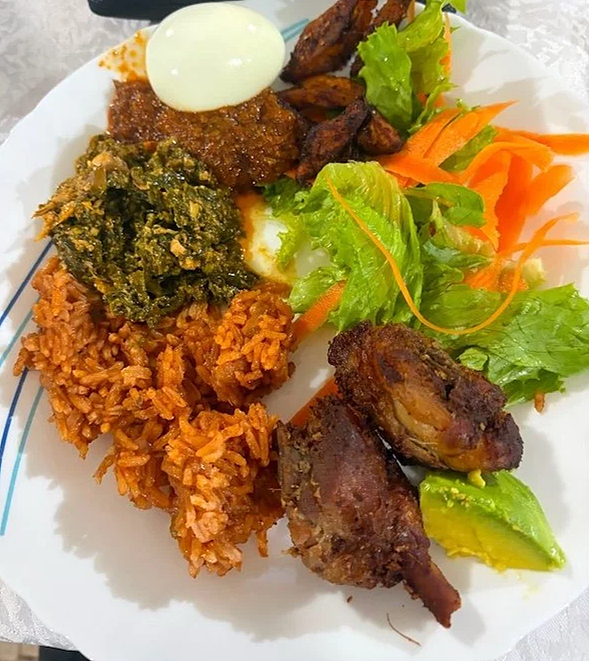
So, when I arrived in Ghana and my first home-cooked meal, prepared by our Ghanaian partners and hosts, included fish and spinach, I was overwhelmed by the familiarity of it. It felt like an unexpected gift.
That meal led me to a different question. How can those of us whose ancestral connections have been disrupted by enslavement and colonialism still find our way home? How does food carry memory when names, languages, and lineages have been taken? How many meals have I cooked, shared, or been fed that have quietly connected me to ancestors whose names I will never know?
I showed this picture of the meal to my son, who knows the story of saltfish, spinach, and pumpkin by heart. His response was simple: "What a first day story!"
He was right.
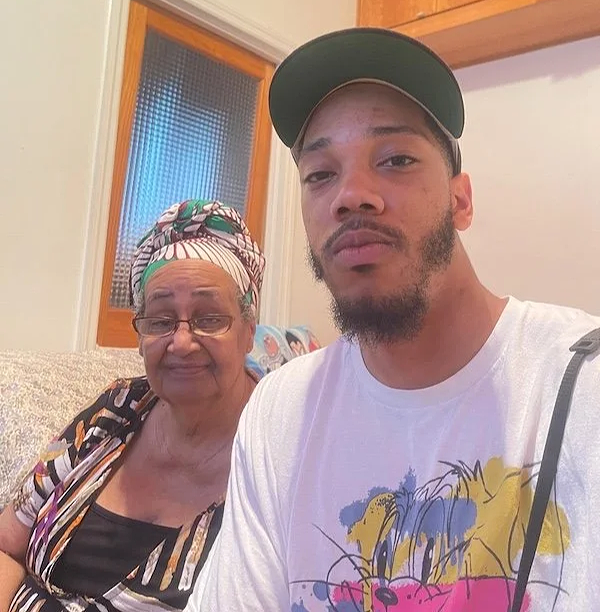
I had imagined many things about this journey and program in Ghana, but I never imagined that food would be what made Ghana feel real. A meal I have eaten regularly for nearly 30 years because it reminds me of family, of being welcomed, and of my son suddenly became a bridge across oceans and generations. It reminded me that traditions travel, recipes survive, and love can be carried through something as ordinary, and as sacred, as a shared meal.
The truth is this didn't begin in Ghana.
It began around tables.
Growing up, Sunday dinner was a cornerstone of my life. Food was where stories were told, relationships were nurtured, and love was expressed without needing many words. Today, I continue that tradition by hosting monthly Sunday Dinners, meals for my chosen family. Cooking has become one of the primary ways I care for the people I love.
Maybe that is an inheritance too.
Maybe even when so much ancestral knowledge has been intentionally erased, our bodies remember. Maybe our rituals remember. Maybe the instinct to gather people around a table, to nourish them, to welcome them with food, is itself a form of ancestral memory.
So perhaps my first lesson in Ghana wasn't about discovering something entirely new. Perhaps it was recognizing something that had been with me all along.
Amina Loftin is Director of Community and Belonging at Bertschi School in Seattle, Washington, USA.