Reflections on My Time in Ghana
I used to keep a diary when I was younger. As work became busier, I gradually stopped writing. Looking back, I realize that writing is one of the best ways to understand my own experiences. So rather than trying to organize these thoughts perfectly, I want to record what Ghana has been teaching me.
This is my third visit to Ghana, but it has felt different from the previous two. Traveling with educators from Ghana, the United States, and Japan has given me opportunities to see familiar things in new ways. More importantly, it has reminded me that who we become is shaped by the relationships we build.
Learning Through Dance
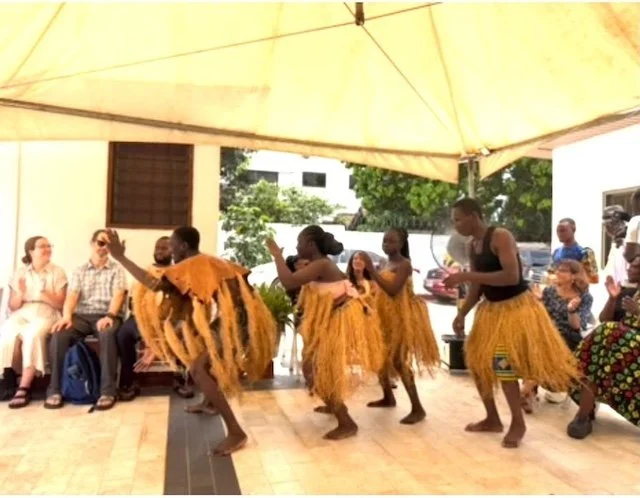
One of our first activities was a dance workshop at the University of Ghana. Japanese people rarely dance in everyday life. As a child, I participated in Bon Odori during summer festivals, where everyone moved together in simple, repeated patterns. Ghanaian dance, by contrast, is energetic, expressive, and physically demanding.
I tried to follow every movement despite the heat and humidity. Before long, I felt dizzy. My body simply would not move the way I wanted it to. At first I blamed my age. But I soon realized something deeper. My body had never learned these movements. I was trying to use muscles that had rarely been asked to work in this way.
Learning something new is often uncomfortable. Yet it is precisely this discomfort that helps us notice what we have overlooked—or perhaps what we have never been taught to notice. That realization will stay with me throughout the program.
Seeing Religion Through Another Culture
Religion is another example. In Japan, people rarely speak openly about religion. Events such as the assassination of former Prime Minister Shinzo Abe reinforced public concerns about the dangers of religious extremism and the harm that organizations can sometimes cause families.
Yet religion has never disappeared from Japanese life. Families still visit Shinto shrines after the birth of a child, celebrate weddings in Christian-style chapels, and hold Buddhist funerals. Rather than belonging to one exclusive faith, many Japanese people participate naturally in several traditions throughout their lives.
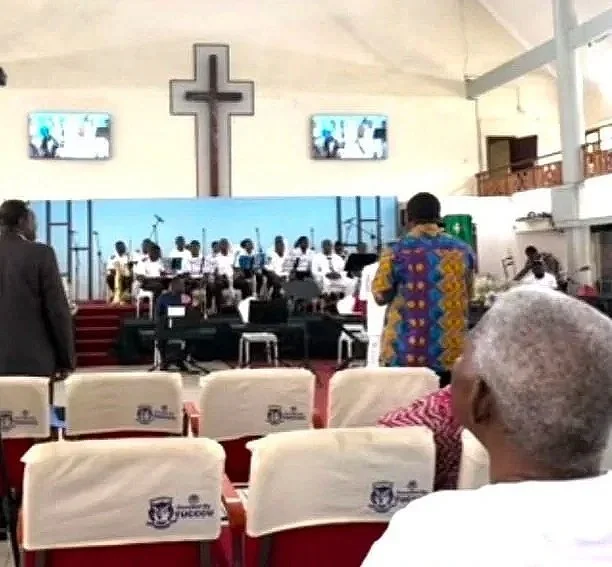
Perhaps it is more accurate to describe this as a form of cultural spirituality. In Ghana, religion feels different. Faith is woven into everyday conversation and community life. It appears to strengthen relationships and provide people with a shared sense of purpose.
Neither experience is necessarily better than the other. They simply reveal different ways of understanding spirituality and belonging.
Art as a Language of Culture
The same is true of art. The colorful textiles, expressive dances, paintings, carvings, and symbols of Ghana speak a language quite different from the artistic traditions of Japan.
The more I encountered these differences, the more I appreciated that diversity enriches the world. When people value their own cultural traditions, they create art that reflects unique ways of seeing life. Through experiencing these different forms of beauty, perhaps we also become more willing to accept differences among people themselves.
Teaching Across Cultures
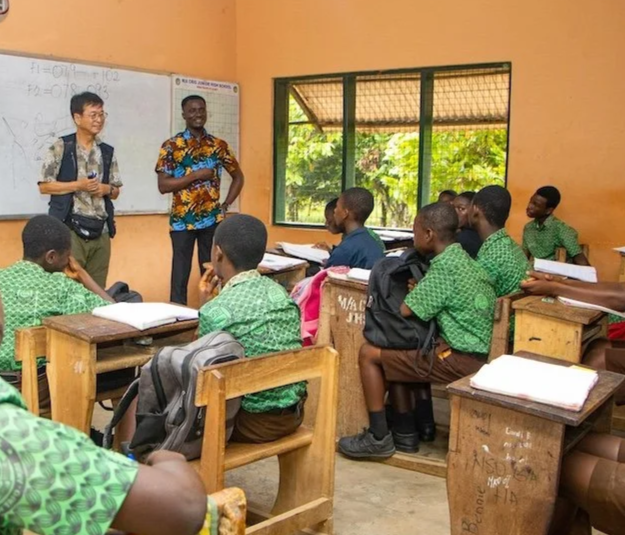
During one school visit, I introduced Japan to a class of eighth-grade students. Many had never met a Japanese person before. They listened with remarkable curiosity as I taught them Japanese greetings, demonstrated how to use chopsticks, and described Japan's four seasons.
Although the classroom was crowded and some students shared chairs, their enthusiasm never faded. Their eagerness reminded me that learning begins not with resources but with curiosity.
Chocolate, Cocoa, and Fairness
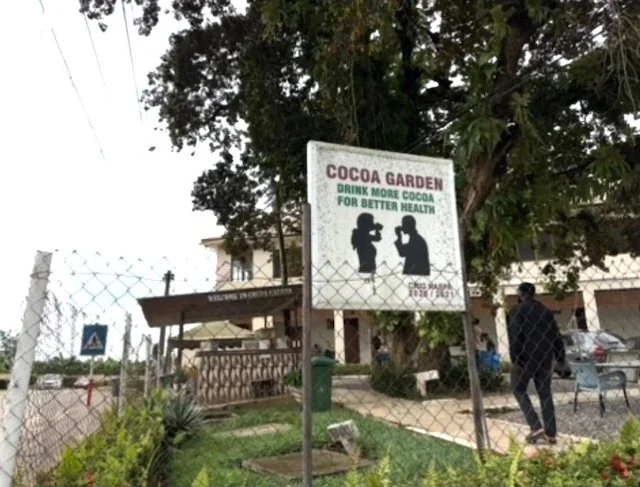
Another memorable visit took us to a cocoa research institute.
Seeing the long journey from cocoa bean to chocolate made me think differently about one of Japan's most familiar products. Many Japanese people recognize Ghana because of Ghana Chocolate, yet few understand the lives of the farmers who grow the cocoa itself.
High-quality agriculture alone cannot guarantee a good life. Global markets determine prices, and those fluctuations deeply affect farming communities.
Learning about cocoa reminded me that every product carries with it human relationships—between producers, consumers, businesses, and nations.
Healing Through Relationships
Walking through a forest, we also learned about medicinal plants used in traditional healing. Japan has its own tradition of herbal medicine known as kampo. Rather than targeting a single illness, kampo seeks to restore balance throughout the body.
I sensed a similar philosophy in some traditional African approaches to healing. Both seem to view health as a matter of relationships within the whole body rather than simply treating isolated symptoms.
Rediscovering Relationships
These experiences continually brought me back to my own academic work in social constructionism.
Social constructionism suggests that we do not become ourselves in isolation. We understand who we are through our relationships—with other people, with nature, with objects, and with the institutions that surround us. Modern society often encourages us to think first about individual success and personal achievement. Yet this perspective alone does little to resolve conflict or strengthen communities.
My time in Ghana has encouraged me to think differently. Here I found myself reflecting more deeply on ancestors, spirituality, community, and humanity's relationship with the natural world. Perhaps changing our perspective requires more than reading books. Sometimes it requires living, even briefly, within another culture.
The Relationships That Shape Us
I had no direct connection with Ghana before meeting Mayumi. Through that relationship, I have now visited this remarkable country three times.
This visit has been especially meaningful because of the conversations, friendships, and shared experiences that have filled each day. I arrived expecting to learn about Ghana. Instead, I have learned something about myself.
The most important lesson I will carry home is that none of us exists alone. We are continually shaped by the relationships we create, and in turn, we help shape the lives of others.
Perhaps that is the greatest gift Ghana has given me.
Kenichi is a Professor Emeritus at Kansai University in Osaka, Japan, and Director of the Forum for I-Learning Creation (FiLC).