Akwaaba: From Being a Stranger to Being at Home
Barbara Beachley
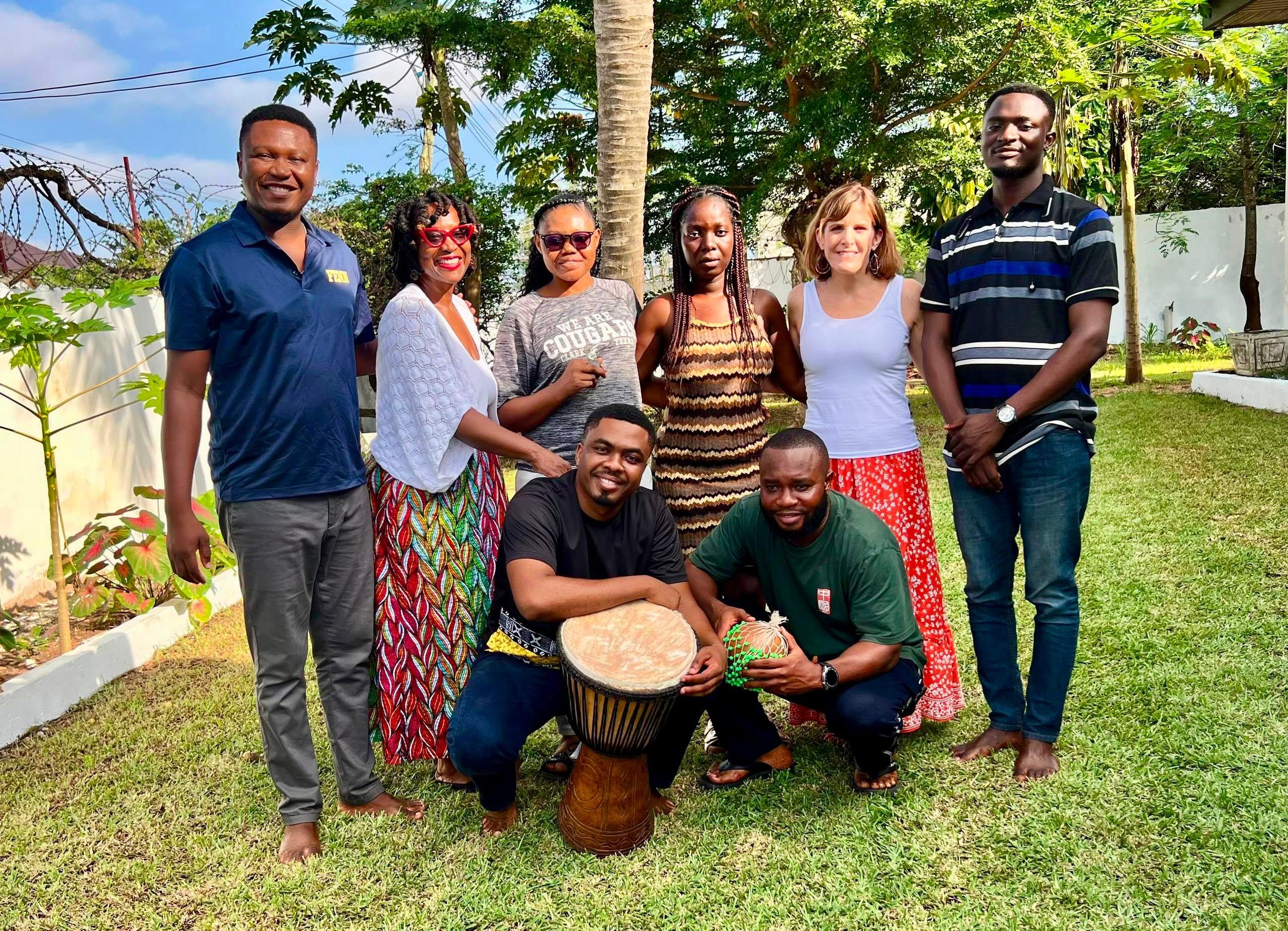

The term “akwaaba,” the first thing you see on a large sign at the Accra airport, technically means “welcome,” but experiencing akwaaba goes far deeper than the word itself. When I stepped out of the airport in Accra, I was overjoyed. Waiting outside were Dela and Kwasi, who had become dear friends during the two weeks we spent together last year. As soon as they saw my co-leader Denise and me, they jumped up, waving their arms, then hurried toward us with broad smiles and warm embraces. In that instant, I didn’t feel like a visitor returning to a foreign country. I felt like I was coming home.
There is something about Ghana, and about the Ghanaian people I have had the honor to meet, that creates that feeling. Ghanaians often say it is part of their culture to be good hosts, but it is so much more than hospitality. The welcome I have experienced here is authentic. There is no sense that people are simply being polite or fulfilling a social obligation. They genuinely want you to know that you belong, that you are home.
Tete Cobblah, the founder of the Witness Tree Institute, shared an expression that has stayed with me: the stranger is the most important person in the room. The person who is unfamiliar, uncertain, or outside the circle deserves our greatest attention. Instead of expecting the newcomer to find their place, the community makes a place for them.
That philosophy reveals itself not just in words but in rituals.
After arriving at the home where we are staying, Dela invited us to sit at the table. We were given a cold bottle of water and officially welcomed. Dela and Kwasi said how happy they were that we had arrived safely and how much joy it brought them to have us there. It gave me the opportunity to pause, receive their welcome in my heart, and then share my own genuine gratitude and joy in return.
It was such a simple moment, yet taking that pause to connect had a profound impact on me.
Today, during a keynote, the Reverend Professor Pashington Obeng, who was kind enough to remember me and greet me warmly, explained that this ritual has deep cultural significance. Before a visitor is ever asked their purpose for coming, they are first offered water. Only after the water has been accepted does the conversation continue. Professor Obeng explained that in Ghanaian culture, the host assumes responsibility for the visitor’s well-being: physically, socially, and emotionally. The way a person treats strangers is a reflection of their character.
I couldn’t help but think about the character of my own country and the ways we are currently treating those who arrive at our doors.
Professor Obeng also reminded us that hospitality carries a responsibility for the visitor as well. The visitor often has wide, bright eyes, he said, but does not truly see. As visitors, it is our responsibility to seek first to understand before being understood. Otherwise, we risk judging what we observe before we have the context to make sense of it.
That is one of the central purposes of the Witness Tree. We are called to become witnesses to our shared humanity, not by pretending our differences do not exist, but by seeing one another more fully because of them.
In that brief welcome ritual, nothing needed to be accomplished. There was no agenda and no rush to move on to the next thing. We simply acknowledged one another’s presence and expressed gratitude that we were together. It struck me how rarely I allow space for moments like that. At home, greetings are often squeezed between appointments, emails, and the next item on my to-do list. Yet what could possibly be more important than human connection?
Ghana invites me to move at a different pace. It reminds me that welcoming someone is not simply opening a door and saying kind words. It is creating space for them to feel seen, valued, and connected to others. That sense of belonging changes my perspective and the way I participate. When I’m not worried about finding my place, I can be present. I notice the beauty around me. I listen more carefully. I connect more deeply.
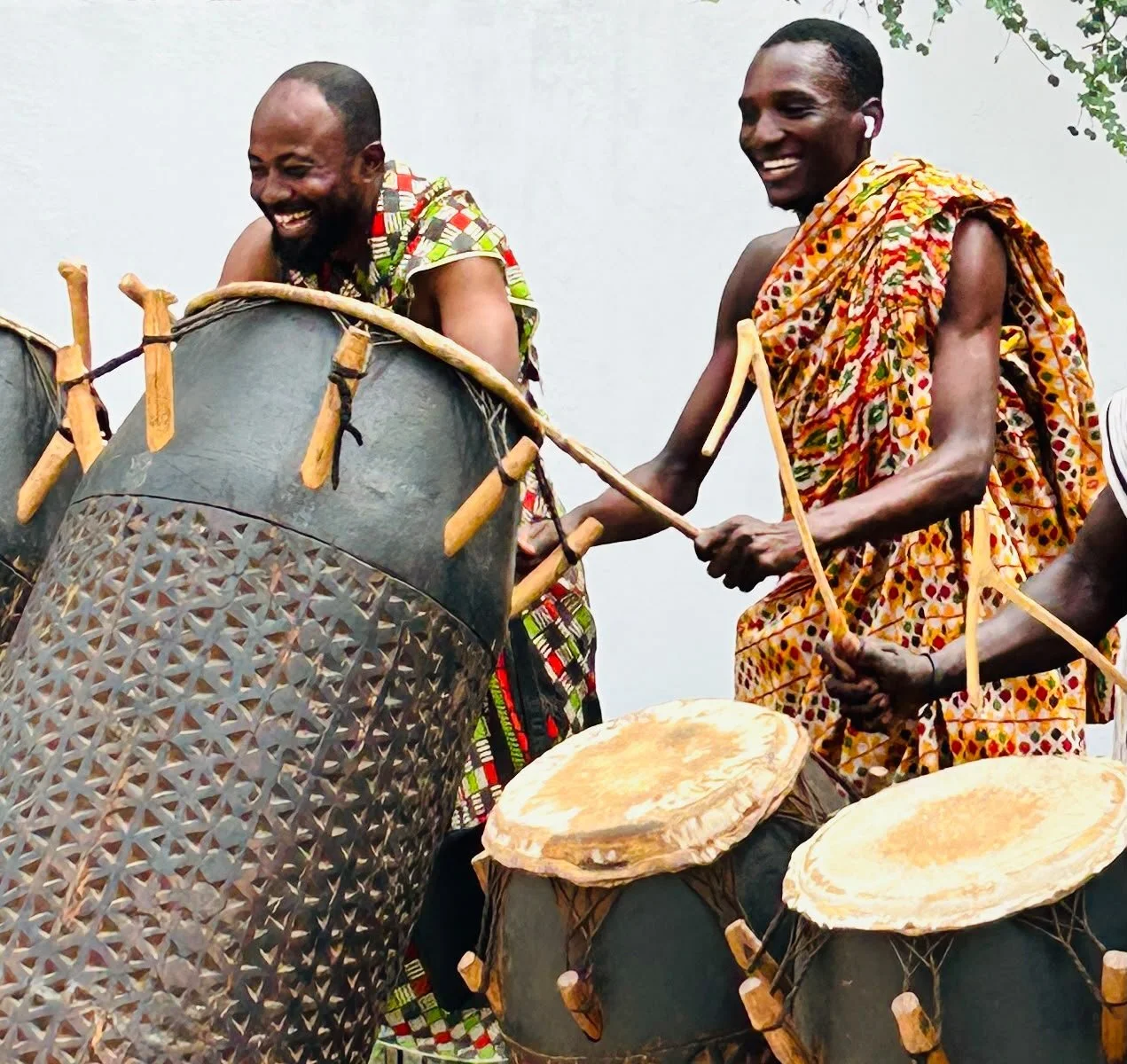
Perhaps that is also why the sense of community here feels so different. There is a joy on people’s faces that is difficult to describe. I hope the photographs I have shared, especially of the two drummers, capture even a fraction of it. It is not that hardship, suffering, or poverty do not exist. They do, alongside world-class research institutes, universities, museums, and theaters. But what feels different is that no one seems expected to carry life alone.
Another expression I have heard repeatedly here is, “I am because we are. We are because I am.” It is a reminder that our lives are intertwined and that our flourishing depends upon one another. I believe that is true everywhere, but I do not believe we acknowledge or live that truth in the United States, where we instead “pull ourselves up by our own bootstraps.” No one actually does that, of course, but saying so diminishes the contributions of others that inevitably led to any one individual’s success.
As I reflect on what I have experienced here, I cannot help but think about what this means for school leadership. Leadership is not simply about setting direction or managing systems. It is about taking the time to know teachers and staff, to be genuinely curious about who they are, to listen with humility, and to ensure they know they are valued. After all, they are the ones who shape the daily experiences of students. When educators experience that same sense of belonging, how much more likely they are to create it for the children in their care!
Perhaps that is why returning to Ghana feels less like traveling and more like coming home. Not because it is familiar, but because the people I have met here embody a spirit of joy, generosity, and community that I did not realize I was yearning for until I experienced it.
As I begin another journey here, I find myself wondering: What might our communities, our schools, and our countries become if we treated every stranger as the one most in need of our attention? What might change if we all sought to understand before seeking to be understood?
Barbara Beachley is.a former head of school, WTIG alum and co-leader.