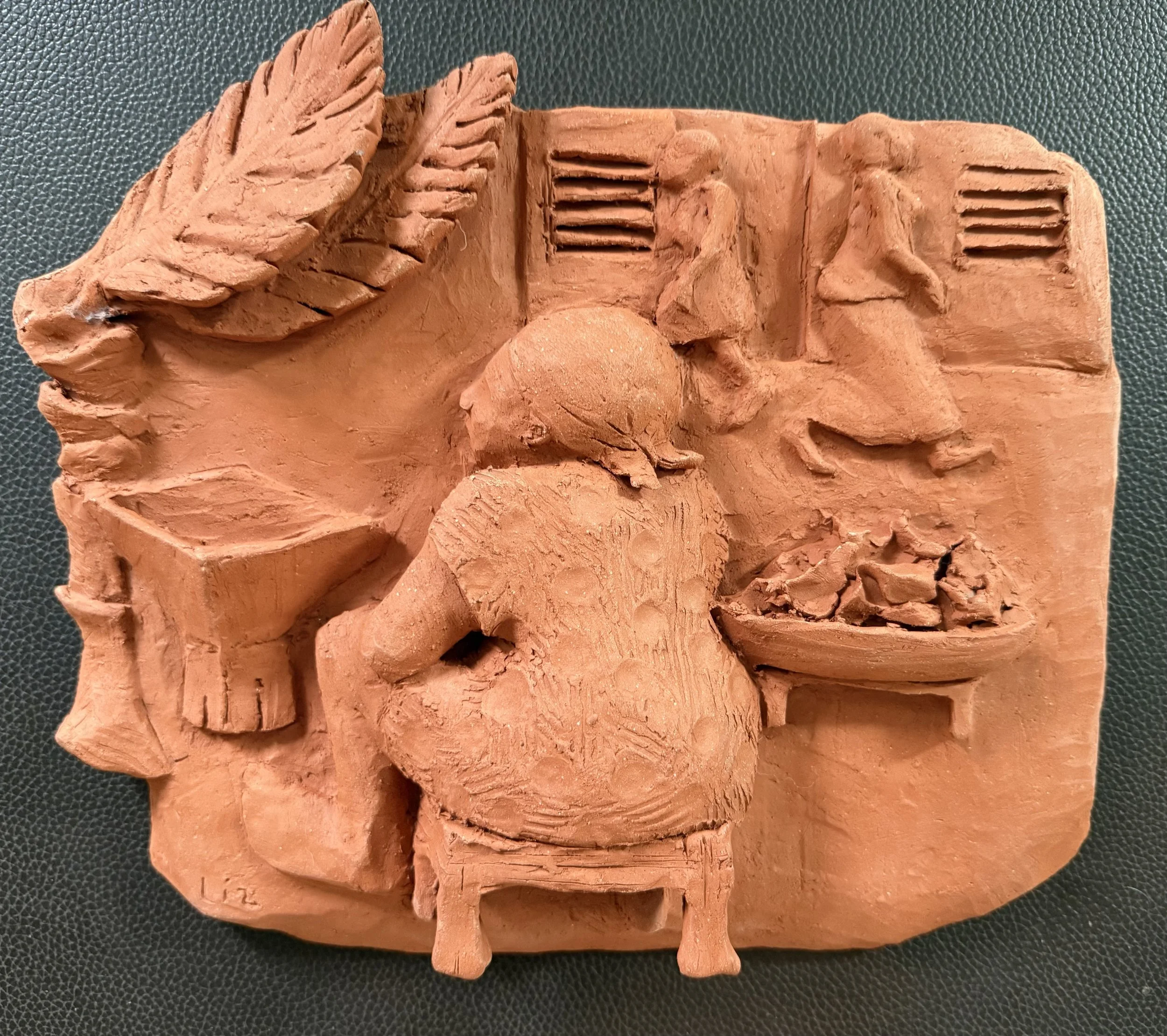
Ghana 1985
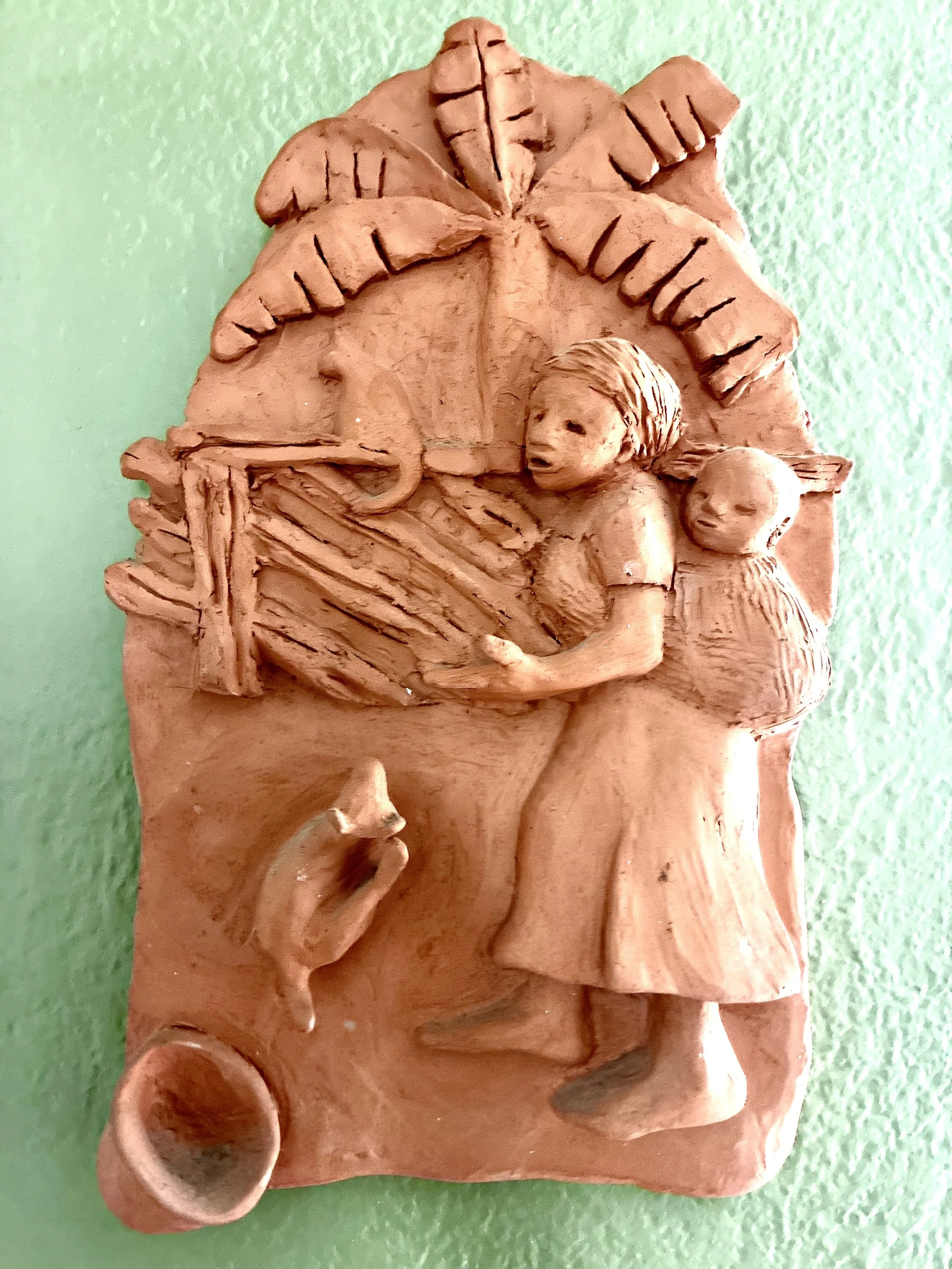
The cabin erupts in applause
as Ghana Airways from London
touches down,
roars to a halt at KIA.
Heat, humidity and a tropical scent
engulf us on the tarmac.
Sweaty boisterous activity
in the crowded baggage claim,
then a wall of African faces.
Drivers, porters volleying their voices.
More sweat, more tropical air.
We have arrived.
Along the road to Bubuashie –
Head-bearing loads, babies on backs,
hawkers hawking, drivers beeping,
unregulated emissions,
fruit sellers, iccccce, icccce wattah, bells,
scissors, wooden boxes sounding out
their invitations to buy, to sharpen, to mend.
Low buildings. Human scale.
Concrete walls, zinc roofs, rust and dust,
banana trees and palms.
Necessary shade. Red earth. A mosque!
Chickens and goats. Hand painted sign boards.
The blue gate opens, more excitement,
our baby is scooped up, we are given water,
then breakfast.
Tete’s grandmother, mother and sisters
gave the most humbling welcome.
Tete’s father will pour libation later.
We settle in. The pace is slow and gentle.
I learn the value of water. A tank fills in the night,
some nights it doesn’t.
Boiled water chills in glass bottles,
A thermos of hot water awaits
Grandmother’s tea-time.
Bathing is from a bucket,
Key Soap and fishing net in hand.
We wash clothes outside on low stools
scrubbing, rinsing, wringing over large basins.
Early morning sounds
are sequenced -
first the Muslim call to prayer,
then the roosters
before metal buckets
hit the concrete, receiving water from the tank
to fill the barrels in the house,
then the sound of sweeping begins.
The young and strong start the day this way.
The smells of cooking
- onion, garlic, ginger, pepper - soon follow.
I walk down the red earth road
to a small market with my basket.
Kids run past with wheels on sticks,
small chicks peck around a hen’s feet,
laundry is hung,
banku is stirred over an open coal fire.
Greetings are exchanged along the way.
I marvel at my proximity to lives being lived
in open passageways, on roadsides,
-the intimacy, effort and intricate web of living here.
I return with a tea towel draped over my purchases,
as instructed by my sister-in-law.
Tomatoes, oil, soap, matches, bread.
Bean stew and fried plantain
have been dished into my family’s ceramic container.
No polythene bag. No polystyrene container.
Chilled water in a repurposed glass bottle awaits me.
Plastic wasn’t choking Ghanaian gutters in 1985.
And there were many, many more trees!
But Ghanaian generosity, warmth and spirit
of goodness continue - society’s anchor and oars.
Elizabeth Updike Cobblah Is a retired art teacher and a board member of WTIG